A Complete Guide to Crabapple Planting Methods and Techniques
Crabapple (scientific name: Malus spectabilis (Ait.) Borkh): a tree, up to 8 m tall; branchlets stout, cylindrical, with short pubescence when young, gradually falling off, reddish-brown or purplish-brown and hairless when old. Leaves elliptical to oblong-elliptical, 5-8 cm long, 2-3 cm wide, margins with closely appressed fine serrations, sometimes partly nearly entire, with sparse short pubescence on both sides when young, later falling off, old leaves hairless.
Crabapple prefers sunlight, and can also tolerate partial shade, tolerates cold, and is not demanding about its environment; it is suited to growing in loose, fertile, deep, well-drained sandy soil. Chaenomeles speciosa is highly adaptable and its cultivation and management are relatively simple.
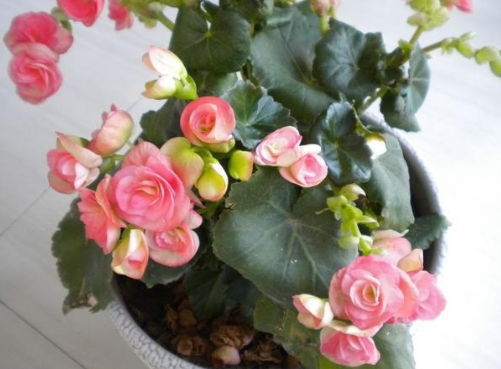
During the growing period, water according to the plant's growth condition and changes in temperature. Water little during the budding stage, keeping the potting soil slightly dry; excessive moisture will cause root rot. During the growing period, water once every two days, and frequently spray water around the plant to increase air humidity. It is worth noting that when watering, do not pour water down from above the leaves and stem tip; water along the edge of the flowerpot, otherwise the stems and leaves easily accumulate water and rot.
1. Light:
Most crabapples are sun-loving flowers, and sun-loving flowers like strong light but do not tolerate shade.
If there is insufficient light, the branches and leaves of the crabapple will grow leggy, the color of the leaves will become increasingly pale, and they will turn yellow. It will also cause failure to bloom or unattractive blooms, and makes the plant highly susceptible to pests and diseases, among other serious adverse effects.
2. Temperature:
Different flowers, at different periods, each have their own most suitable temperature, maximum temperature and minimum temperature. Beyond the maximum and minimum temperatures, the growth of the flower plant will stop, or even die.
In summer, cooling measures such as shading, watering, and spraying water on the leaves can be used.
Winter warmth is a very important step; in areas south of the Yangtze River, when planted in the ground, it can generally overwinter safely.
3. Air:
Harmful gases are a very unfavorable factor for the growth of flowers; at best they cause yellowing of leaves and withered shoot tips, and at worst they cause the plant to die, so when growing flowers, be sure to pay attention to the surrounding air conditions.
4. Water:
Most crabapples do not belong to aquatic flowers or xerophytic flowers; they belong to mesophytic flowers, one of the flowers that need to grow in moist soil, for example, crabapples of the begonia type require the relative air humidity to be kept at around 80%.