A Detailed Guide to Jacaranda Planting Methods and Key Technical Points
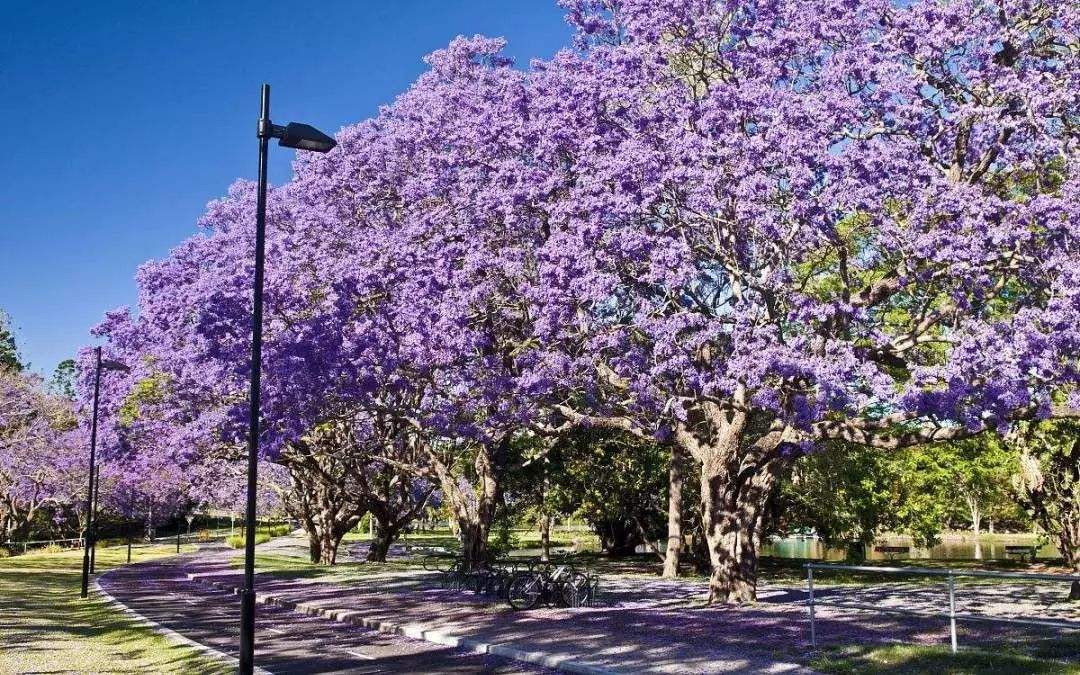
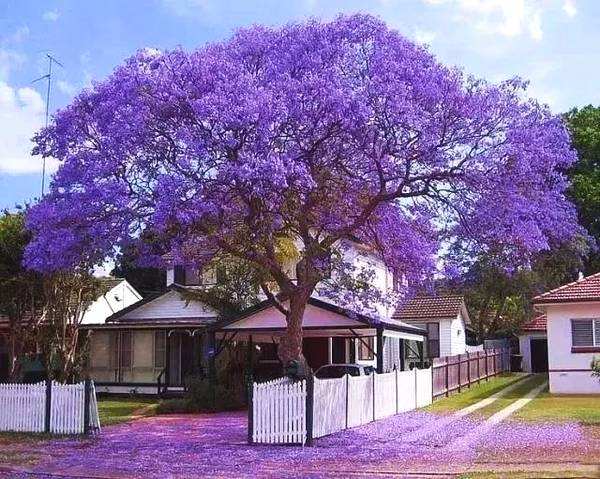
Jacaranda (Jacaranda mimosifolia) is a tree valued for its ornamental display, foliage and flowers, and is widely planted as a street tree in tropical and warm subtropical regions. Its wood is yellow-white to gray, soft and light, with straight grain, easy to work, and can be used as furniture timber. This species has both ornamental and economic value.
Propagation Methods
Jacaranda propagation methods are divided into seed propagation; cutting propagation; and tissue culture propagation.
Seed propagation:
The fruit of Jacaranda ripens in November. After harvesting, it should be placed in a windless spot for sun-drying or piled up, and stored after drying, then sown in March of the following year. Since Jacaranda is native to tropical regions, the temperature at sowing time should be around 20 degrees.
Cutting propagation:
Jacaranda can be propagated by cuttings in both spring and autumn. When taking cuttings, select medium-mature branches as the cuttings, as this gives a high rooting rate.
Tissue culture propagation:
Tissue culture is also relatively easy. Some research institutions in China have used the stem tips and stem segments of seedlings as explants and propagated large numbers of test-tube plantlets.
Planting and Management
Temperature and Light
It prefers a warm, humid environment with plenty of sunlight and is not tolerant of frost or snow. The suitable growing temperature is 22 to 30°C; if the winter temperature falls below 15°C, growth stops; if it falls below 3 to 5°C there is cold damage, and if the summer temperature rises above 32°C, growth is also inhibited. It likes light and can tolerate partial shade.
It prefers fertile, moist sandy loam or loam. When planting out, apply sufficient base fertilizer; after it becomes established, topdress once each in spring and autumn, and carry out a pruning and shaping once every early spring. Old, aged plants need heavy pruning. When grown in pots, the trunk can be cut back or grafted for dwarfing, and watering and nitrogen fertilizer application should be controlled.
Pest and Disease Control
Jacaranda has relatively few diseases. The main pest is the longhorn beetle. If reddish-brown frass is found at the base of the trunk, a small knife can be used to pry open the bark to catch the larvae; alternatively, before the adults emerge, apply a mixture of 10 parts quicklime, 1 part sulfur and salt below 80 cm on the trunk base to prevent the adults from laying eggs.