Detailed Explanation of Salvia miltiorrhiza Planting Methods and Technical Key Points
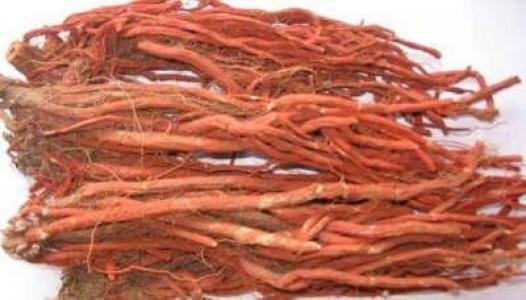
Salvia miltiorrhiza (Danshen), a name in traditional Chinese medicine. It is the dried root and rhizome of the plant Salvia miltiorrhiza Bge. of the family Lamiaceae. It is harvested in spring and autumn, cleaned of mud and sand, and dried. It is distributed in most parts of the country. It has the effects of activating blood and removing stasis, unblocking meridians and relieving pain, clearing the heart and relieving restlessness, and cooling blood and dispersing abscesses. It is used for chest impediment and heart pain, epigastric and hypochondriac pain, abdominal masses and accumulations, heat impediment pain, heart vexation and insomnia, irregular menstruation, painful menstruation and amenorrhea, and sores and ulcers with swelling and pain.
Cultivation Techniques
I. Site Selection
1. Suitable Environment
Salvia miltiorrhiza prefers warm climate, abundant sunlight, and humid air environmental conditions, and can be planted in areas with an average annual temperature of 12.5-17.1°C. Among these, environments with a temperature of 20-25°C, relative air humidity of 70%-80%, and average daily sunlight of 6-8 hours or more are most suitable.
2. Suitable Soil
Salvia miltiorrhiza has a deep root system (over 30 cm). To promote root growth and development, it is advisable to choose flatland plots or gentle mountain slopes with good light conditions that have not been treated with chemical fertilizers or pesticides for more than 2 years and have no residual harmful substances, with fertile, loose and deep soil, high terrain, and good drainage; sandy loam is best, and neutral, slightly acidic, or slightly alkaline soil can also be used for planting. Salvia miltiorrhiza is not tolerant of continuous cropping (after 3 consecutive years of planting, soil-borne root diseases become relatively severe). It is best to plant on virgin land, or choose sweet potato, corn, peanut, etc. as previous crops; it can also be intercropped in three-dimensional systems under mulberry, tea, citrus orchards, or under young poplar, fir, and other tree plantations.
II. Strong Seedling Cultivation
The main cultivated varieties of Salvia miltiorrhiza include Lu Danshen (No. 1, No. 2, No. 3), Dian Danshen, Gan Danshen, etc. (Lu Danshen has the highest content of active ingredients). Timely self-propagation of Salvia miltiorrhiza seedlings reduces the cost of purchasing seedlings for establishing plantations.
1. Seed Propagation
Before establishing a new plantation, purchase freshly harvested seeds (old seeds have an extremely low germination rate). In the north, sow around Grain Rain; in the south, sow around Summer Solstice, generally by broadcasting. Before sowing, seed treatment is required: soak the seeds in warm water at 30-35°C for 10-12 hours, remove and let them dry slightly, then add a very small amount of edible alkali and rub them, then rinse clean with water and place them in a germination bag, and place in a high-humidity environment with a temperature of 25-30°C and humidity above 95% for 5-6 days of germination, turning 2-3 times daily. When 40%-60% of the seeds show radicles, they can be sown. Broadcast the seeds on a leveled seedbed surface, cover with a thin layer of wheat straw, then sprinkle water to maintain moisture until seedlings emerge. When the seedlings grow 3-5 true leaves, thin them to promote seedling growth.
2. Root Division Propagation
When expanding planting based on an existing Salvia miltiorrhiza plantation, root division propagation can also be used to directly establish a plantation. From Start of Spring to Awakening of Insects, select healthy new roots about 1 cm in diameter as planting strips. Before planting, first cut the seed roots into 6 cm long root segments. Open furrows at a density of 36-40 cm row spacing and 21-26 cm plant spacing, place the root segments with the upper end facing up in the furrow, and cover with soil after planting (adventitious buds sprout when the soil temperature reaches 15-17°C), and seedlings emerge around Grain Rain. Root division propagation seedlings generally bloom later and produce fewer seeds in the same year, but the roots grow faster.
3. Cutting Propagation
Use the aboveground stems of Salvia miltiorrhiza for cutting propagation. In the south, do this in April-May; in the north, in June-July. Cut thick aboveground stems of Salvia miltiorrhiza, cut every 2-3 nodes into 12-15 cm small segments, remove the lower leaves, keep a few upper leaves, and insert immediately after cutting. Open shallow furrows at a density of 20 cm row spacing and 10 cm plant spacing, insert the cuttings obliquely along the furrow, burying 6-10 cm into the soil so that the buds are slightly exposed above the soil surface. After insertion, irrigate and shade, and spray water with a sprayer in the morning and evening to keep the seedbed surface moist. When roots reach 3 cm, they can be transplanted at wider spacing to cultivate large seedlings.
III. Careful Land Preparation
1. Applying Base Fertilizer
Salvia miltiorrhiza is a root-type medicinal material with a long growth period, requiring careful land preparation. When preparing the land, first apply organic fertilizer and phosphate fertilizer as base fertilizer, applying 2500-4000 kg of decomposed organic fertilizer per mu, and plow it into the soil as base fertilizer. Before planting, deep plow more than 30 cm, harrow fine and level.
2. Making Beds and Ridges
For plots with thicker soil layers and good soil conditions, make flat beds with a bed surface width of 1.5 m, where 4 rows can be planted, and the bed length depends on the plot. For plots with medium-thick soil layers, make high beds 25 cm above the ground, with a bed surface width of 1.5 m, also planting 4 rows, and the bed length depends on the terrain. For plots with thinner soil layers, use ridge cultivation, with a ridge surface width of 60 cm, planting 2 rows, and the ridge 20 cm above the ground.
IV. Timely Transplanting
1. Transplanting Timing
Cutting seedlings are transplanted before Pure Brightness in the spring of the following year; sown seedlings raised in summer can be transplanted in September-October of the same year. Earlier transplanting leads to earlier rooting, which is conducive to high yield.
2. Planting Density
Generally plant at a density of 21-26 cm plant spacing and 36-40 cm row spacing, planting 7000-8000 plants per mu.
V. Field Management
1. Loosening Soil and Weeding
Salvia miltiorrhiza grows slowly in the early stage, so soil should be loosened and weeds removed in a timely manner to keep the soil loose. Manual weeding is carried out in 3 sessions: May (when seedlings are about 15 cm tall), June, and August. Labor-saving weeding can also be done by covering inter-row black weed-control film or horticultural weed-control fabric, but chemical herbicides must not be used; loosening the soil should be shallow rather than deep to prevent root damage.
2. Fertilization Management
During the growth period, in combination with intertillage and weeding, topdress 3 times: at spring green-up, from mid-April to late May, and in June-July (mainly organic fertilizer, with cake fertilizer or superphosphate added in the latter two applications; urea and other nitrogen chemical fertilizers are taboo to avoid reducing medicinal material quality), using 3000-3500 kg of decomposed organic fertilizer and 50 kg of cake fertilizer (or 25 kg of superphosphate) per mu. Furrow application or hole application is preferable, and after application cover with soil and irrigate. After the flowering period, spray foliar fertilizers such as 0.2% potassium dihydrogen phosphate and boron fertilizer on the leaves to promote leaves and nourish roots and increase yield.
3. Water Management
Salvia miltiorrhiza is intolerant of waterlogging. During the growth period, pay attention to clearing ditches and maintaining smooth drainage, and prevent waterlogging during the rainy season. Irrigate promptly when the soil is dry, and the water quality must be pollution-free. Furrow irrigation should be carried out in the morning and evening, and should be fast irrigated and fast drained.
4. Flower Bud Management
Removing flower buds during the flowering period allows the plant's nutrients to be concentrated for the growth of Salvia miltiorrhiza roots and rhizomes, significantly increasing Salvia miltiorrhiza yield.
① Completely thin out and do not retain seed inflorescences. For Salvia miltiorrhiza not intended for seed production, starting from mid-April, promptly pinch off inflorescences that have just emerged 2 cm long to ensure nutrients are concentrated in the roots and promote root growth. Inflorescences should be removed early and frequently, removing flower buds in stages, preferably once every week, continuously thinning them out.
② Selectively thin and retain seed inflorescences. Salvia miltiorrhiza flowers and sets seed across years, and seeds begin to mature successively from late May or June of the following year after planting. For Salvia miltiorrhiza retained for seed, keep healthy inflorescences during the flowering period and thin out weak ones to improve seed quality.
5. Plant Management ① Controlling excessive growth. Poor ventilation in the aboveground growth of Salvia miltiorrhiza makes it prone to lodging, affecting underground rhizome expansion. For Salvia miltiorrhiza with sufficient base fertilizer, high planting density, and excessive growth, spray 15% paclobutrazol 600-fold solution when seedlings are 25-30 cm tall to control the top and promote the bottom, prevent lodging, and increase yield.
② Timely removal of tillers. Tillers sprouting in the later stage of Salvia miltiorrhiza affect rhizome growth, so after the flowering period, all rhizome tillers should be broken off.
③ Pruning old stems. After harvesting seeds from Salvia miltiorrhiza retained for seed, the plants gradually age or wither, which is unfavorable for root growth. It is advisable to prune all old stems from Summer Solstice to Minor Heat to accelerate the re-sprouting of stem leaf clusters and promote continued root growth.
VI. Disease and Pest Control
1. Disease Control
Salvia miltiorrhiza has many diseases, especially prone to disease in high-temperature, rainy seasons. Common ones include root rot, sclerotinia disease, and leaf spot. To control Salvia miltiorrhiza diseases, persist in prevention first and integrated control. Preventive measures include selecting suitable planting plots, planting healthy seedlings, intertillage and weeding, and preventing waterlogging during the rainy season. Once disease occurs, spray fungicides for precise control in the early stage of onset (mostly in early May). Commonly used agents include: 70% carbendazim 1000-fold solution, agricultural antibiotic 120 200-fold solution, 70% thiophanate-methyl 800-fold solution, 50% lixianjun 1000-fold solution, 1:1:150 Bordeaux mixture, etc. In addition, for source plants affected by root rot, promptly pull them out and take them out of the plantation for centralized destruction.
2. Pest Control
The main pests of Salvia miltiorrhiza include aboveground pests such as aphids, silver Y moths, and cotton bollworms, and underground pests such as small cutworms and white grubs. During the damage period of aboveground pests, spray 10% imidacloprid 2000-fold solution or 1.8% abamectin 4000-5000-fold solution for control, once every 10 days, spraying 2-3 times consecutively; for winged aphids, yellow sticky boards can also be hung to trap and kill them. For small cutworms and white grubs, use poisoned bait made from fried bran mixed with trichlorfon and scatter it in the field in the evening to trap and kill them. In addition, insect phototaxis can be used: during the adult occurrence period of pests such as silver Y moths, cotton bollworms, and scarab beetles, hang frequency-vibration insect-killing lamps to trap and kill them.