A Detailed Guide to Oncidium Planting Methods and Care Techniques
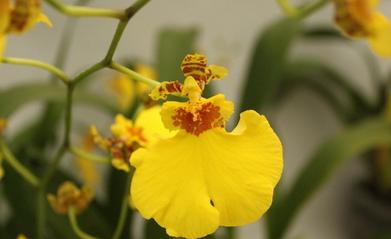
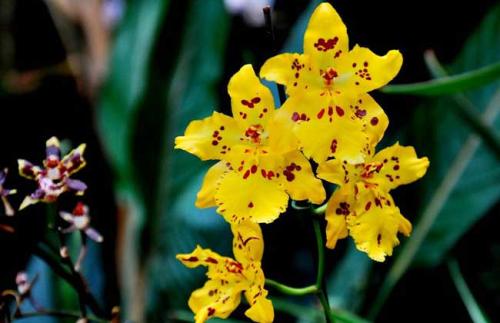
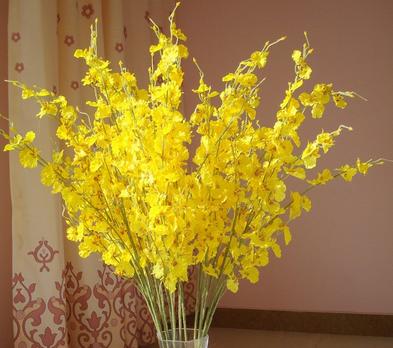
Oncidium (Oncidium hybridum), also known as the auspicious orchid, dancing orchid, dancing-lady orchid, golden butterfly orchid, tuberculate-lipped orchid, etc., has 1 to 3 leaves and can be divided into thin-leaved species, thick-leaved species and sword-leaved species. It is the general name for plants of the genus Oncidium in the orchid family. This genus has more than 750 native species worldwide, while the diverse commercial varieties are mostly hybrids. The plants are light and elegant, the flower stems slender and drooping, and the flowers strange and lovely, shaped like flying golden butterflies, full of movement; it is one of the world's important potted flower and cut flower types.
Cultivation Techniques
Temperature
Humidity
Like most tropical orchids, Oncidium likes relatively high air humidity, but because different types of Oncidium differ greatly in plant size, their resistance to drought also differs. Relative humidity should be controlled at 60% to 80% to increase air humidity, while good ventilation must also be maintained.
Light
Light should not be too strong or too weak. If too strong, it easily causes scorch, with mild cases injuring the tissue and turning the leaves yellow, and severe cases turning them grayish white and triggering anthracnose. If light is too weak, photosynthetic capacity decreases, causing leaves to grow leggy, weak and drooping, which is not conducive to flower bud differentiation, resulting in few flowers and poor growth. For newly planted seedlings, light should be 10000 to 15000 lux; as the seedlings grow, light gradually increases, up to a maximum of 30000 to 35000 lux. Under these light conditions, Oncidium flower bud differentiation is fast, and vegetative growth can better shift to reproductive growth. Generally, shade 60% to 75% in summer, 40% to 50% in spring and autumn, and 20% to 30% of sunlight in winter. The shade frame should not be too low; 4 to 4 m is suitable, as too low affects ventilation, and the cultivation bench should be 0.6 to 1.0 m.
Substrate
The substrate required for Oncidium must be airy, breathable and well drained. Commonly used substrates include bark, fern roots, sphagnum moss, charcoal, etc. Practice suggests that using sphagnum moss for small seedlings and charcoal as the cultivation substrate for medium and large seedlings has the characteristics of good growth and low cost. Charcoal should preferably be 0.5 to 2 cm, and before planting it should be soaked and rinsed in water to remove charcoal powder. For potting, it is best to choose unglazed clay pots with many air pores or shallow pots with smaller volume, using tree fern and charcoal residue and coconut coir as planting material, and adding small brick granules or weathered stone at the bottom of the pot to facilitate drainage and moisture retention. After the plant is planted, a layer of moss can be spread on the pot surface to prevent drought and retain moisture, which is beneficial to the growth of aerial roots.
40% roots, 10% peat soil, 20% crushed charcoal, 20% vermiculite, 10% sphagnum moss. When planting, use crushed stone or broken bricks to line about 1/3 of the bottom of the flower pot, which is beneficial to ventilation and drainage. Flowering plants are best planted after the flowers fade, and non-flowering plants before sprouting, which is beneficial to the growth of new Oncidium roots. May to October is the vigorous growth period of Oncidium, with fertilizer applied once every half month. During the winter dormant period, fertilization and watering can be stopped, and spraying water can be increased to raise air humidity. Liquid fertilizer is seriously lost, so every half month 0.05% to 0.1% compound fertilizer can be sprayed on the leaves as a supplement. After flowering, faded flower stems and dead leaves should be removed promptly. Oncidium is basically grown in pots. The potting medium is similar to that for Phalaenopsis. Such as sphagnum moss, crushed fern roots, wood chips, charcoal, perlite, broken bricks, peat soil, etc. These medium combinations have good effects; for example, a mixture of 40% fine fern roots, 10% peat soil, 20% charcoal, 20% perlite or vermiculite, and 10% crushed stone and broken bricks has a good effect. When planting, use crushed stone or broken bricks to line about 1/3 of the bottom of the flower pot to facilitate ventilation and drainage. The flower pots used for cultivation can be plastic pots, unglazed clay pots, porcelain pots, etc. For Oncidium cultivated for more than 2 to 3 years, the plant gradually grows larger and produces small offsets, and the root system becomes overfull, so it must be repotted promptly. Repotting is usually carried out after flowering; for non-flowering plants, it can be chosen before the growth period. Oncidium repotting is usually carried out after the orchid's flowering period, and repotting once every 2 to 3 years is sufficient.
Fertilizer and Water
Most Oncidium plants prefer a drier environment, so when watering, the dryness of the medium should be used as the standard. When the medium surface is dry, it should be watered thoroughly immediately; in the vigorous growth season, because water demand increases, it is best to water once in the morning and once in the evening each day; in winter, reducing water is beneficial to flowering, and watering should be stopped when the temperature is below 10°C. In hot summer, water should be sprayed on the ground around the plant, the bench, the paths and the plant to increase air humidity, otherwise growth will be affected. In midsummer and autumn, water thoroughly once a day, that is, until water comes out of the drainage hole at the bottom of the pot. Varieties without pseudobulbs have poor drought resistance, so the medium in the pot must often be kept moist, and water must be replenished as soon as the medium dries.
The general watering principle is alternating dry and wet. Each watering should be thorough, and the next watering should wait until the medium is slightly dry. Water less just after division in spring; in summer the plant grows vigorously and evaporates water quickly, so water more. It can be watered once a day. After watering in the morning, spray the leaves again in the afternoon; this mist can not only lower leaf surface temperature but also, from time to time, enhance the plant's respiratory function. After evening, spraying should generally no longer be done, otherwise the leaves retain water for too long and disease is easily induced.
Because the Oncidium cultivation medium is mainly coconut shell and stones, it does not easily retain water or fertilizer, so some slow-release fertilizer should be placed in the pot to increase fertilizer efficiency. The type and amount of fertilizer should be adjusted according to the plant's growth; generally, one fertilization then one watering, or two fertilizations then one watering. To prevent pathogen breeding in the coconut shell, it can often be irrigated with 1000-times liquid carbendazim or 1500-times liquid thiophanate-methyl. The substrate pH should be controlled at 5.5 to 6.5 and the EC value at 1.2 to 1.6 mS/cm.
Fertilizer and Water Management for Small Seedlings
After sufficient hardening off, washing clean, use dewatered sphagnum moss as the substrate and plant in a Ф3 cm plastic soft cup. On the day after planting, spray with a mixture of 1000-times 65% Hokko-sheng and 3000-times 72% agricultural streptomycin sulfate for disease prevention. When the sphagnum in the pot is relatively dry, water half-way with clean water to make the sphagnum moist. After about 15 days, new roots begin to grow, and 3000-times 20-20-20 Peter's fertilizer can be used for irrigation once a week. [7]
Repotting and Fertilizer and Water Management for Medium and Large Pots
After 3 to 4 months, when small seedlings have grown to 4 to 6 pseudobulbs, the root system is dense, and some roots grow out of the pot, they should be repotted. When repotting, first remove the small seedlings from the pot and place them in a plastic pot with a small amount of charcoal pieces as the bottom layer, then add an appropriate amount of charcoal pieces around the plant,
After 5 to 6 months, when medium seedlings have grown to 6 to 8 pseudobulbs and the root system has wrapped well around the charcoal pieces, the medium seedlings should be repotted.
Fertilizer and Water Management for Medium and Large Seedlings
On the day of repotting for small and medium seedlings, spray once with a mixture of 1000-times 65% Hokko-sheng and 3000-times 72% agricultural streptomycin sulfate for disease prevention, and water once 3 to 5 days after planting. Because summer, autumn and dry weather require increased watering frequency, add one leaf-surface water spray each day; in dry and cold winter weather, spray leaf-surface water once every 2 to 3 days and water thoroughly once every 6 to 7 days. April to October is the peak growth period of Oncidium, and at this time 5-11-26 Peter's fertilizer should also be applied 1 to 2 times monthly to prevent leggy growth and improve disease resistance; in addition, calcium should be appropriately supplemented to increase leaf thickness.
Ventilation
Fertilization The timing of fertilization must match the plant's growth condition. Although the growth conditions of different Oncidium varieties are not consistent, the general basic principles of fertilization can still be followed. First, once the plant sends up a flower stem, fertilization should stop, and it can only resume after the flowering period ends; second, when the temperature is below 10°C, fertilization must also stop. At other times, diluted liquid fertilizer can be applied 2 to 3 times a month, and solid fertilizer can also be applied at the same time.
Potting Medium and Repotting Because Oncidium prefers a drier environment, a medium with good drainage and aeration should be used, so tree fern chips are the best choice; it is best to add a little water-retaining sphagnum moss to make the plant grow better.
Propagation Division is the main propagation method. The best time for division propagation is also after the flowering period, so when division is needed, it can be done at the same time as repotting.