Lemon Planting Methods and Cultivation Techniques
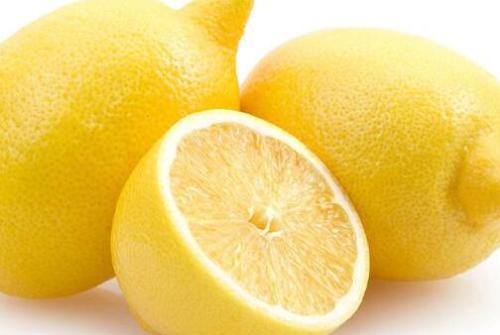
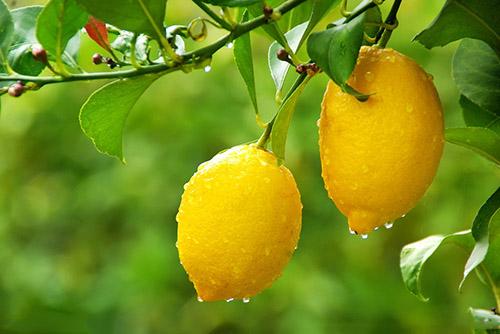
Lemon (scientific name: Citrus limon (L.) Burm. f.), a plant of the genus Citrus in the family Rutaceae under the class Dicotyledoneae, is also known as ningmeng, yangningmeng, yimuguo and so on. It is a small tree with few thorns or nearly thornless branches; young leaves and flower buds are dark purplish red; the leaves are thickly papery, ovate or elliptic. Flowers are solitary and axillary or borne in small clusters.
Planting Methods
Seedling Raising and Potting
Where cultivation is extensive in the south, grafting propagation should be used; where cultivation is limited in the north, cuttings are mainly used, or grafted seedlings can be purchased for cultivation. The lemon root system has high requirements for water, nutrients and soil, so the potting soil should be prepared as a slightly acidic culture soil that is permeable and aerated, and retains water and fertilizer. Potting and repotting can be done either after autumn or in early spring, flexibly according to the local climate.
Light and Temperature
Lemon is a light-loving plant, yet excessively strong sunlight leads to poor growth and development. Generally at noon the plant needs to be moved to a suitable growing spot; the annual average temperature for growth should be above 15°C, the optimal growth temperature is 23°C to 29°C, growth stops above 35°C, and freezing damage occurs at -2°C. In summer, lemon generally does not need cooling; move it indoors before Frost's Descent and outdoors after Qingming, and it can overwinter safely.
Watering and Fertilizing
Lemon needs a fair amount of water during growth and development, but too much water easily causes root rot. Generally speaking, spring is the period of shoot flushing and leaf expansion, flower bud formation and blooming, so watering should be moderate. In summer, with strong light and high temperatures, more water is needed. But it must be timely and moderate, otherwise fruit drop will be caused. Autumn is the period of autumn shoot growth and rapid fruit enlargement, so sufficient water is essential. Late autumn and winter are the flower bud differentiation period, when the potting soil should be on the dry side. Lemon prefers fertilizer; besides applying enough base fertilizer when potting and repotting, the principle of light fertilizer applied frequently should be followed during the growing period. The number of fertilizer applications and the amount applied must be determined by growth vigor and phenological phase. For liquid fertilizer, fully fermented cake fertilizer water is good, with a cake-to-water ratio of 1:200. Northern soil tends to be alkaline, so ferrous sulfate can be added to the fertilizer solution to make a slightly acidic nutrient solution.
Pruning
Pruning is generally divided into winter pruning and summer pruning. Winter pruning should follow the principle of "remove the dense and keep the sparse, remove the weak and keep the strong", cutting out dead branches, cutting back weak branches and removing water sprouts that serve no purpose. Summer pruning, on trees without fruit, mainly involves cutting back overly long shoots; on fruiting trees, it involves removing summer shoots and cutting back declining branches on the outer middle and upper part of the canopy.
Promoting Flowers and Preserving Fruit
Lemon is by nature a species that flowers and fruits in all four seasons, but potted plants in the north mostly flower and fruit in spring. Therefore, after the autumn shoots stop growing, water must be controlled. Wait until the two sides of the leaves begin to curl inward, then water moderately, to promote flower bud differentiation. Pay attention to fertilizing in the pot and spraying fertilizer on the leaves, to cultivate robust fruiting mother branches. The main measures for preserving fruit are: first, strengthening the supply of fertilizer and water to accumulate nutrients; second, carrying out artificial pollination; third, thinning flowers and fruit. Lemon fruits are large and need a lot of nutrients; the normal leaf-to-fruit ratio is 30 to 40:1. Following the principle of removing the weak and keeping the strong and even distribution, first thin out excessive and overly dense flower buds; then, when the young fruits are 1 cm in size, thin out some of the fruits; finally, after physiological fruit drop, set the fruit according to the leaf-to-fruit ratio. Alternatively, leave no fruit on weak branches and only 1 fruit on strong branches.