Detailed Explanation of Murcott Mandarin Cultivation Techniques and Management Methods
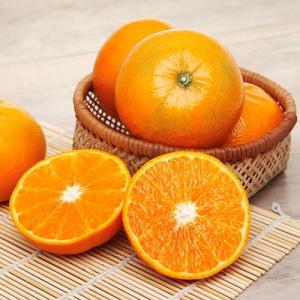
The Murcott mandarin is a hybrid of mandarin and sweet orange, i.e. a tangor, developed in 1913 by W.T. Swingle and others at the Miami Agricultural Experiment Station in Florida, USA. In the 1970s, Professor Lin Pu of the Department of Horticulture at National Taiwan University introduced this variety to northern Taiwan, China for trial planting. Because the Murcott mandarin has high sugar content, a rich and excellent flavor, thin skin and abundant juice, and ripens later than the Ponkan mandarin, it sells for a much higher price than the Ponkan mandarin on the Taiwan, China market, and its cultivation area has increased year by year.
How to Cultivate Murcott Mandarin
1. Suitable Planting Areas
The Murcott mandarin has wide adaptability and is suitable for cultivation in the mid- and south-subtropical climate zones; whether planted on hillsides or flat land, it generally bears fruit early and yields well. The best planting sites are areas where the extreme low temperature stays above 0°C.
2. Pre-planting Preparation
Choose loose, fertile, well-drained and well-irrigated sloping land or paddy field with a pH of 5.5-6.5, sheltered from the wind and facing the sun, as the orchard site. Before planting, planting holes (trenches) must be dug. At present, digging large holes (trenches) is recommended, with a depth of 0.6 m and a width of 0.8 m, and sufficient base fertilizer applied. The excavated topsoil and subsoil should be piled separately, that is, the 30 cm thick layer of mature topsoil is placed on one side of the hole (trench) when dug out, and the lower 50 cm thick layer of raw soil is placed on the other side. After digging the hole (trench), first put the topsoil into the bottom layer, then layer by layer put in compost, green manure, weeds, decomposed garbage fertilizer, livestock manure, etc. into each hole (trench); put 50 kg of farmyard manure or weed green manure, 25 kg of pig and cattle pen manure, 1 kg of phosphate fertilizer, 0.25 kg of potassium fertilizer, and 0.5 kg of lime into each hole. When backfilling, place weeds and farmyard manure in the lower layer, and livestock manure and phosphorus and potassium fertilizers in the middle and upper layers. Mix the farmyard manure, garbage, weeds, compost, etc. with the soil and place them in the bottom layer of the hole (trench), filling to 1/2-2/3 of the depth, then mix in livestock manure and phosphorus and potassium fertilizers according to the plant spacing, and finally shape it into a planting hole. The planting hole should be 15-20 cm higher than the original soil surface, to prevent the fertilizer and loosened soil from sinking and burying the graft union of the seedling, which would cause root crown rot.
3. Planting Methods
1) Planting density and timing. Use a row-to-plant spacing of 3 x 2 m, 111 plants per mu, or a row-to-plant spacing of 2.5 x 2 m, 133 plants per mu; plant in spring before bud break, about 15 days after the Start of Spring, when the roots have already begun to grow and the survival rate is relatively high. Areas with good irrigation can also plant in autumn.
2) Planting method. 1. When lifting the seedlings, be careful to wrap the roots with yellow mud slurry to protect the root system. 2. When planting, choose strong, superior seedlings with well-developed root systems. 3. After planting the seedling, when the soil has been filled to 80%, gently lift the seedling upward a little so that the soil enters the gaps between the roots, then press the soil firmly around the seedling with your feet, and continue filling soil up to the root crown, forming a disc-shaped tree basin.
Four Key Points for Murcott Mandarin Cultivation
Preventing Fruit Cracking
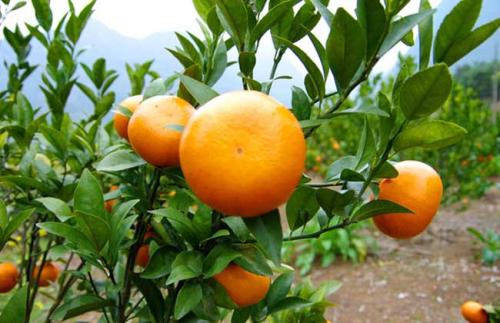
The Murcott mandarin has extremely thin peel. If there is relatively heavy rain during the period from August to October, fruit cracking is likely to occur. The preventive measure is to pay attention to maintaining soil moisture and ensuring a uniform and normal water supply during the fruit growth period, while also increasing the application of potassium fertilizer, so as to achieve the effect of increasing fruit weight and thickening the peel to reduce fruit cracking.
Preventing Sunburn
In the Murcott mandarin, the fruit, peel and flesh are extremely tightly connected, and the fruit grows at the tips of the branches, so the possibility of sunburn is greater than in other varieties. The currently common control method is to smear the fruit with diluted lime liquid.
Susceptible to Citrus Canker and Black Rot
Young Murcott mandarin trees and fruiting trees during the fruit-bearing period are susceptible to citrus canker, so timely prevention and control are needed. Every year during the spring shoot period, especially after mid-April, attention should be paid to preventing and controlling black rot on new shoots and young fruit, and protective spraying should be done promptly before and after rain.
Improper Management Easily Leads to Alternate Bearing
The Murcott mandarin has many flowers and a high fruit-setting rate, which easily causes insufficient nutrient supply, leading to poor growth and development of flowers and fruit, small fruit, and poor quality, and it also easily causes alternate bearing. If the above situation occurs, part of the flowers and fruit need to be thinned, that is, weak flowers and weak fruit, diseased and insect-damaged flowers and fruit, and flowers and fruit on leafless or few-leaved branches should all be removed.