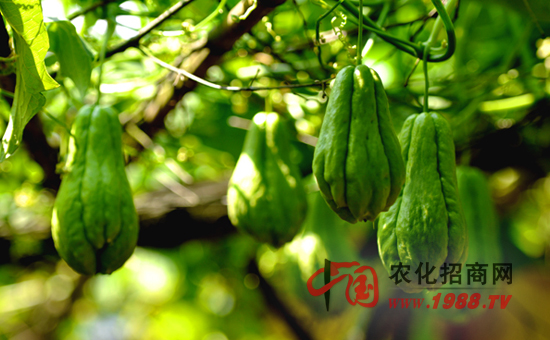
Chayote, also known as longevity melon, originated in Mexico, Central America and the West Indies, and was introduced to China in 1915. Chayote is rich in nutrients. Every kilogram of fresh chayote contains 5 g protein, 1 g fat, 30 g cellulose, 77 g carbohydrates, and also contains 220 mg vitamin C, 0.1 mg riboflavin, 500 mg calcium, 320 mg phosphorus and 40 mg iron.
Planting Methods
Raising Seedlings
After about half a month, the top of the seed chayote cracks open and young roots grow. When the seed chayote sprouts, raise the seedlings. For a small number, use large nutrient bags or flower pots placed in a warm room for cultivation; for a large number, use simple protected cultivation. For the nutrient soil, mix well-aerated sandy soil and vegetable garden soil in a half-and-half ratio. Place the seed chayote with the sprouting end facing up and the stalk facing down, cover with 4-6 cm of soil, and keep the soil moisture at the level where it forms a ball when squeezed in the hand and breaks apart when dropped. Do not allow water to accumulate. During the seedling-raising period, it is advisable to keep 2-3 vines or young shoots of the chayote vine, and promptly remove excess weak shoots. For overly vigorous vines, leave 4-5 leaves and pinch off the growing tip to control excessive growth and promote side buds. During seedling raising, maintain 20-25°C, and also pay attention to maintaining good ventilation and light conditions. Sowing whole chayote requires a large amount of seed chayote and has a relatively high cost. To reduce the amount of seed chayote used and expand the propagation coefficient, the Vegetable Research Institute of the Shandong Academy of Agricultural Sciences successfully adopted stem segment cutting propagation for seedling raising. The specific method is: raise seedlings from seed chayote in advance to cultivate robust vines for stem segment cuttings. Where there is a greenhouse, seedlings can be raised in November-December; extending the seedling-raising period can make the seedlings send out more branches and strong branches. In early to mid-March, cut the seedling vines into segments, each segment containing 2-3 nodes. Soak the cut stem base in a 500 ppm naphthaleneacetic acid solution for 5-10 minutes, then take it out and insert it into seedling-raising nutrient soil or light media such as vermiculite, perlite or sieved cinder, keeping it warm and moist to promote rooting. According to experiments, the survival rate of cuttings by this method reaches more than 80%.
Field Planting Methods
Chayote can be planted after the frost period ends. For greenhouse cultivation, planting can be done in early to mid-March; for open-field planting, mid-April is suitable. When planting, the hole should be large and deep, about 1 m square and 1 m deep. Put one third of the excavated soil back into the hole, apply 200-250 kg of fully decomposed high-quality barnyard manure per hole, and mix it thoroughly and evenly with the hole soil, then cover with another 20 cm of soil and tread it firm with the foot. When planting, remove the seedling-raising flower pot or plastic bag, place it into the hole with the soil, keep the soil surface level with the ground, and then cover with soil. Water after planting to help the seedlings recover. For planting density, if using seed chayote to raise seedlings and planting large seedlings, 20-30 plants can be planted per 667 sq m. If using small seedlings from stem segment cuttings, the density can be appropriately increased, with row spacing of 3 m-4 m and plant spacing of 2 m, 80-120 plants per 667 sq m.
Trellising, Vine Guiding and Pruning
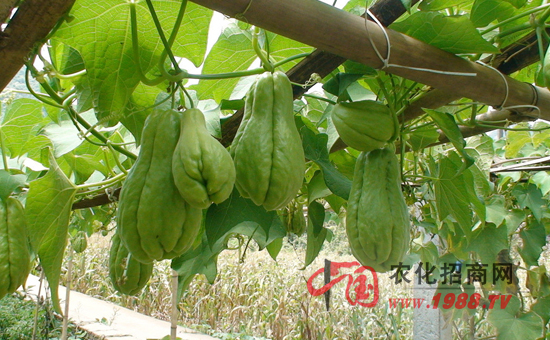
Chayote has strong reproductive and climbing ability, grows rapidly, and has dense leaves and vines that shade each other. If allowed to grow freely, it is most prone to wilting and flower and fruit drop. Therefore, when the vine grows to about 40 cm, use local materials according to local conditions, such as bamboo poles and ropes, to let the tendrils of chayote curl and guide the leaves and vines to climb trellises, trees or walls. Chayote has strong lateral branch growth ability, and each leaf axil can sprout one lateral bud. From planting to the stage of vigorous plant growth, the aboveground stem elongates relatively slowly, while the lateral branches at the stem base branch relatively quickly and easily form a clustered shape, affecting stem and vine extension and trellising. Therefore, in the early stage, promptly remove the lateral buds at the stem base, leaving only 2-3 sub-vines per plant. After trellising, no longer remove lateral branches and let them grow, but attention should be paid to adjusting the extension direction of the stems and vines so that they are evenly distributed and have ventilation and light penetration.
Water and Fertilizer Management
(1) Within 1 month after planting, mainly cover the seedlings to increase temperature and promote growth and development. During this period, do not apply additional fertilizer; only water lightly.
(2) During the period of rapid root development, cultivate and loosen the soil more often to promote root development and lay the foundation for vigorous plant growth after autumn. During the summer-crossing period, water frequently to keep the soil moist and increase air humidity so that chayote can safely pass the summer.
(3) Entering autumn, the aboveground part of the plant grows noticeably faster and enters a vigorous growth period. Apply heavy fertilizer and water to enable the aboveground part of the plant to grow and develop rapidly and send out more lateral branches, laying the material foundation for more flowering and more fruiting.
(4) During the full flowering and full fruiting period, daily transpiration is large, so sufficient water and fertilizer are needed. Keep the soil moist with water, and foliar spray nitrogen and phosphorus fertilizer 2-3 times, or apply decomposed human and livestock manure.