A Detailed Guide to Oxalis Planting Methods and Care Tips
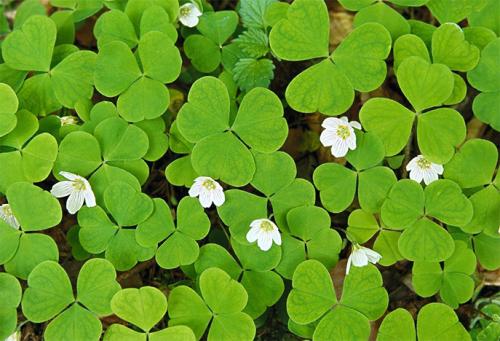
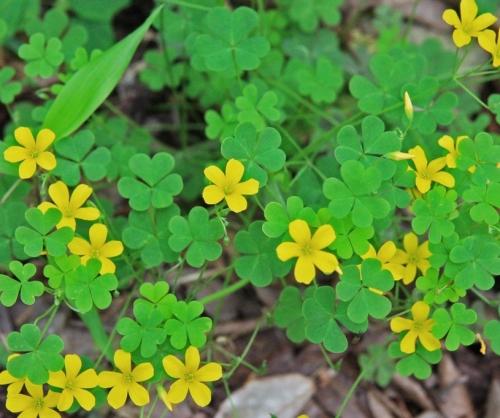
Oxalis (scientific name: Oxalis corniculata L.): a perennial herbaceous plant, the whole plant bearing sparse soft hairs; stems creeping or ascending obliquely, much branched. Leaves alternate, palmately compound with 3 leaflets, obcordate, leaflets sessile. Flowers yellow; it prefers a sunny, warm, humid environment, and in hot summer regions it is best given half shade; its drought resistance is fairly strong, and it is not cold-tolerant. It can generally grow in any garden soil, but grows most vigorously in sandy loam rich in humus, and it undergoes a short dormant period in summer. The whole plant is used as medicine, with the effects of clearing heat and detoxifying, reducing swelling and dispersing accumulations.
Oxalis Planting Methods
1. Medium: Bulbous oxalis species all rather prefer a water-permeable, airy medium. Generally, granular peat, orchid stone, perlite and the like are mixed together. You can also use only perlite mixed with peat. But the medium must remain water-permeable and airy.
2. Growing environment: Oxalis is generally fairly cold-tolerant; most bulbous oxalis will have no problem at around 5°C in winter, and a few can withstand below zero. In winter, generally only on the colder nights do they need to be moved indoors. At other times they can overwinter outdoors. (Oxalis planting methods and precautions)
3. Sunlight: Bulbous oxalis species all greatly love sunlight. Apart from avoiding harsh exposure to strong sunlight in early autumn, generally in late autumn and winter they must be given plenty of sun. This way the plants grow fast, bloom more, and produce a few more small bulbs. If sunlight is insufficient, the whole plant becomes weak and spindly, the number of flowers decreases, and small-bulb reproduction is also affected. (Oxalis planting methods and precautions)
4. Water: When planting bulbous oxalis, you must be careful. Do not water too much. Even more so, the potting soil must not stay moist long-term. Generally it is best to water only after the soil has dried out completely. If there is too much water, the bulbs will rot. (Among them, Oxalis purpurea is rather special and prefers a humid environment)
5. Fertilizer: I do not know much about fertilizer for oxalis. You can add a few granules of slow-release fertilizer. Bulbous types all like potassium fertilizer. If the base fertilizer is organic fertilizer, it must be fully decomposed. (Oxalis planting methods and precautions)
6. Propagation: Bulbous oxalis species reproduce by producing small bulbs, but Oxalis purpurea, Oxalis hirta and others can be propagated by cuttings. Moreover, cuttings are fairly simple and have a high survival rate. After cutting, the plants will continue to grow bulbs and produce small bulbs. Flower lovers who are interested can try cutting propagation.
7. Dormancy and harvesting small bulbs: Autumn-planted oxalis will go dormant in early summer, when temperatures begin to rise. This shows as the above-ground part of the plant slowly beginning to turn yellow and wither. At this time, stop watering. Do not fertilize. After the above-ground part of the plant has completely withered, the potting soil will already be very dry; wait one or two weeks, then take the soil out of the pot. Find the small bulbs in the soil. Alternatively, you can leave them in the pot, stop watering, and place them in a cool place; then when the weather begins to cool in autumn, water directly and they will continue to grow. (Oxalis planting methods and precautions)
8. Planting: Generally, autumn-planted oxalis, once autumn arrives, will begin to sprout one after another depending on the region, in August, September or October. By August you should frequently take out the oxalis bulbs and observe them. If they have sprouted but the sprout tip is not very long, and the weather is still very hot at this time, then wait a little. If the sprout tip is already very long, then plant them directly regardless of the temperature. Also, if the weather is already quite cool and some oxalis still have not sprouted, then there is no need to wait; plant them directly.