Detailed Explanation of Teasel Root Planting Methods and Technical Points
Teasel Root, a traditional Chinese medicine name. Also known as Heshangtou, it is the dried root of Dipsacus asper Wall.ex Henry, a perennial herb of the Dipsacaceae family, named for its ability to "rejoin fractures and set bones." It is harvested in autumn, with the root head and fibrous roots removed, dried over a low fire until half-dry, piled to "sweat" until the interior turns green, then dried again.
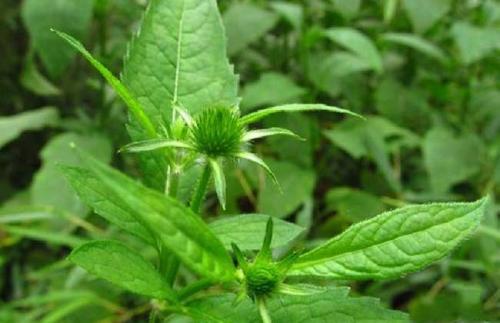
Teasel Root Planting Methods
1. Site Selection and Land Preparation
(1) Site selection: Choose fields with deep soil layers, loose sandy loam soil, and good drainage and irrigation conditions for planting.
(2) Land preparation and fertilization: Irrigate the plot 2-3 days before land preparation (soak thoroughly) to ensure soil moisture and guarantee seedling emergence. First evenly spread 2000kg of farmyard manure and 50kg of compound fertilizer per mu over the plot, then plow and harrow twice, with a tillage depth of no less than 25cm.
(3) Bed making: Use a line to make beds, keeping the bed surface level and fine. The bed surface width is 120cm, the surface height is 15-20cm, and the drainage and irrigation ditch between beds is 25cm wide.
2. Propagation Methods
Propagation is mainly by seed, primarily including drilling, hole sowing, direct sowing, and seedling transplanting. The Lijiang area commonly uses the method of punching holes in plastic film with a wooden stick for spot sowing, while Dali Prefecture mainly uses direct sowing, with a few areas adopting seedling transplanting. Direct sowing is divided into spring sowing and autumn sowing. Spring sowing is generally from late April to May, and autumn sowing is from September to October. In areas at an altitude of 2000-3000 m, sowing is generally done in June-July.
3. Sowing Methods
For direct sowing, use 2kg of seed per mu; for seedling transplanting, use 10kg of seed per mu, which can be transplanted to 5 mu of field. When sowing, evenly scatter the seeds on the thoroughly soaked seedbed surface, then cover with 1-2cm of fine thin soil, with no seeds visible on the bed surface as the standard. A 2cm-thick layer of pine needles may be covered to retain water and prevent weeds. Water thoroughly. Seedlings gradually emerge after 15-20 days. Weeds should be pulled by hand in time, and soil moisture should be maintained above 60%.
4. Transplanting
For seedling transplanting, begin transplanting in the following spring after the ground thaws. At transplanting, the plant spacing and row spacing are 20×25cm, with about 10000 plants established per mu.
5. Field Management
(1) Thinning and final thinning: When seedlings are 3-5cm tall, carry out thinning and final thinning, removing the weak and keeping the strong, with a plant spacing of 20cm.
(2) Cultivation and weeding: Pull weeds as soon as they appear, and cultivate in combination with thinning and final thinning. Cultivate shallowly so as not to damage roots and leaves.
(3) Topdressing: After final thinning, apply 1000kg of dilute human and animal urine water, then water; before greening up in spring, apply 3000kg of decomposed farmyard manure per mu.
(4) Removing flower buds: Except for seed-production fields, when the flower stalk of teasel root bolts, it should be removed immediately.
(5) Seed saving: For transplanted teasel root, by early October the seeds mature successively. The main stem matures first and is harvested first, and the side branches mature later and are harvested later. After harvesting, dry them in the sun and thresh. After seed set, the old roots become lignified and cannot be sold as commercial product.
6. Pest and Disease Control
(1) Diseases: The main diseases of teasel root are powdery mildew, root rot, and leaf spot. Powdery mildew often occurs in the hot, dry summer season. In the early stage of the disease, spray with 0.2% triadimefon. Root rot is the main disease of teasel root and is prone to occur in hot and humid seasons. For prevention, disinfect the soil during land preparation with 1 kg of 70% quintozene per mu. In the early stage of the disease, spray with 100g of liluzhijing per mu mixed with 50kg of water. Leaf spot can be controlled with prochloraz and dimethomorph.
(2) Insect pests: The main pests are aphids and small cutworms. Aphids damage young leaves and flower stems in summer and autumn, affecting plant growth, flowering, and seed production. Control method: spray with 1000-fold dilution of 40% dimethoate. Underground pests such as small cutworms and mole crickets bite off seedlings and rhizomes. Larvae can be caught manually, or poisoned bait can be used to trap and kill the pests. Use 1000-fold spray of 90% crystal trichlorfon per mu or mix with water and pour at the roots.
7. Harvesting, Processing, and Storage
(1) Harvesting: Teasel root can be harvested after 2 years of cultivation. Harvesting can begin after the aboveground parts wither in autumn. At harvest, first cut off the aboveground stems and leaves, then dig up all the roots, removing soil, the root head, and fine roots. Field teasel root transplanted at the Start of Spring solar term can be harvested in the same year.
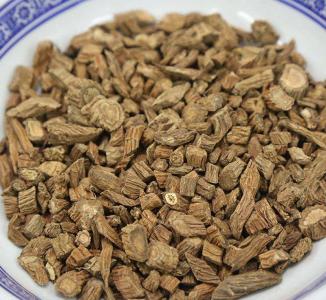
(2) Processing: Sun-dry clean fresh teasel root until half-dry, pile it centrally, cover with gunny sacks, let it "sweat" and soften, then sun-dry again, and rub off the fine fibrous roots.
(3) Storage: Put the processed teasel root neatly into special gunny sacks, place in a cool and dry place, and wait for sale according to market conditions.
Efficacy and Effects of Teasel Root
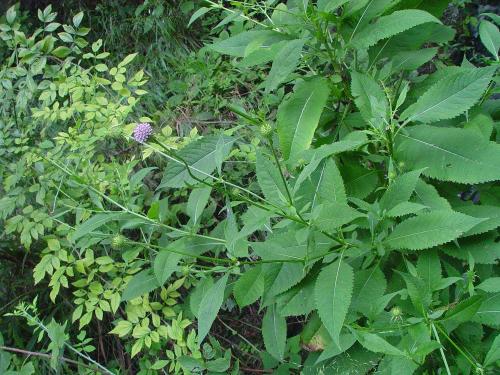
The traditional Chinese medicinal material Teasel Root is the dried root of the Dipsacaceae plant Dipsacus asper. It is slightly warm in nature and bitter and pungent in taste; it enters the liver and kidney meridians. It has the effects of tonifying the liver and kidneys, strengthening tendons and bones, rejoining fractures, and stopping abnormal uterine bleeding. It can be used to treat conditions such as liver and kidney deficiency, soreness and weakness of the waist and knees, rheumatic arthralgia, tendon injury and fractures, abnormal uterine bleeding, threatened abortion, and traumatic injuries. Among these, wine-processed teasel root is mostly used for rheumatic arthralgia, tendon injury and fractures, and traumatic injuries, while salt-processed teasel root is mostly used for soreness and weakness of the waist and knees.