Detailed Explanation of Cabbage Planting Techniques and Management Methods
Cabbage (Brassica oleracea L.): an annual or biennial herbaceous plant of the Brassicaceae family and Brassica genus, biennial herb, covered with a powdery bloom. The annual stem is short and sturdy, fleshy, unbranched, green or grayish-green. The basal leaves are thick and tightly wrapped layer upon layer into a spherical head, flat-spherical, milky white or pale green; the biennial stem is branched and bears stem leaves. The basal leaves have a rounded apex and a base that abruptly narrows into a very short, broadly winged petiole, with wavy, inconspicuous serrations along the margin; the upper stem leaves are ovate or oblong-ovate, with a stem-clasping base; the uppermost leaves are oblong, about 4.5 cm long and about 1 cm wide, stem-clasping. Racemes are terminal and axillary; flowers are pale yellow, 2-2.5 cm in diameter; pedicels are 7-15 mm long; sepals are erect, linear-oblong; petals are broadly elliptic-obovate or nearly round, with a slightly notched apex and a base that abruptly narrows into a claw, the claw 5-7 mm long. The silique is cylindrical, slightly flattened on both sides, with a prominent midvein and a conical beak; the fruit stalk is thick, erect and spreading. Seeds are spherical, brown. Flowering period is April, fruiting period is May.
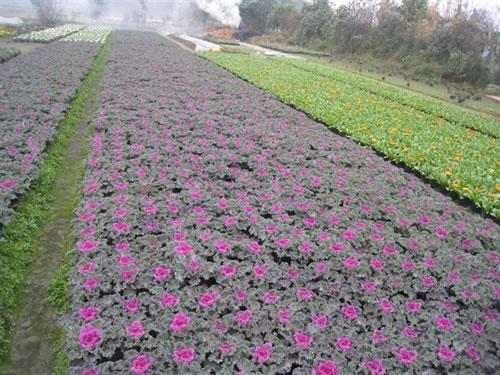
Propagation Methods
- Seed treatment: To prevent the seeds from carrying pathogens, soak the seeds in carbendazim for 24 hours before sowing.
- Seedbed disinfection: 20 days before sowing, pour 50 ml of formalin mixed with 3 kg of water onto the nutrient soil, then cover with film and pile it up for 5 days. You can also mix 50% carbendazim wettable powder into the nutrient soil to disinfect and sterilize the soil.
- Cultivating strong seedlings: Starting in mid-December, use the small arch shed method with seedling trays to raise seedlings. Avoid raising seedlings too early, as a long seedling age easily leads to bolting.
-
Seedbed management: Generally, seedlings emerge 5 days after sowing. Check the seedbed every day. When the temperature is high, pay attention to ventilation to prevent seedling scorching; when the temperature is low, cover the film well to prevent the seedlings from freezing; replenish water about once a week depending on soil moisture; when the seedlings grow to 2 leaves and 1 heart, thin them to prevent leggy growth and ensure uniform seedling size; when the seedling stem diameter reaches more than 0.5 cm, try to keep the temperature above 15°C to avoid passing through the vernalization stage; ventilate to harden the seedlings 7 days before transplanting. When the seedlings grow to 5-6 true leaves, transplanting can be carried out.
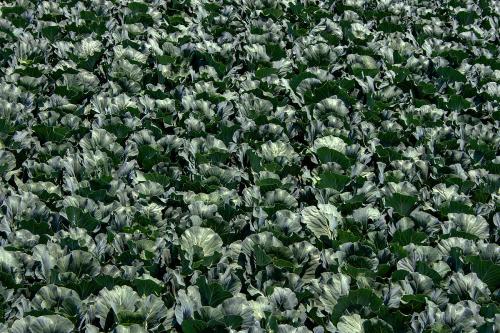
Planting: Choose strong seedlings about 40 days old with 6-8 true leaves, and plant them on a cloudy day or in the evening on a sunny day, with a row spacing of 55 cm and a plant spacing of 35-40 cm, planting 3000-3500 plants per mu.
Water and fertilizer: For early spring plastic film cultivation, after planting and seedling establishment, because spring temperatures are low, generally use light irrigation and appropriately control watering to raise soil temperature; do not flood-irrigate, and apply about 15 kg of urea with the water. If there is a cold wave, apply 15-22 kg of ammonium sulfate per mu in advance, and irrigating can enhance the cold resistance of the plants. As the temperature rises, entering the late rosette stage and early heading stage, increase fertilizer and water, applying about 20 kg of compound fertilizer, or 25-30 kg of urea per mu, combined with a certain amount of plant ash. In the late rosette stage, appropriately control watering and timely carry out intertillage and weeding. For farmers who transplant later, pay attention to drainage after rain to prevent waterlogging in the field from causing root rot and head rot.
Harvesting: Harvest when the head is firm. When harvesting, keep 2 outer leaves (rosette leaves) to protect the head, ensuring the surface is clean, free of pests, and free of split heads. At the same time, according to the standard requirements for fresh-keeping processing and export, grade according to head size. For those supplying the market, harvest and market in a timely manner according to demand.