Detailed Explanation of Trident Maple Planting Methods and Technical Key Points
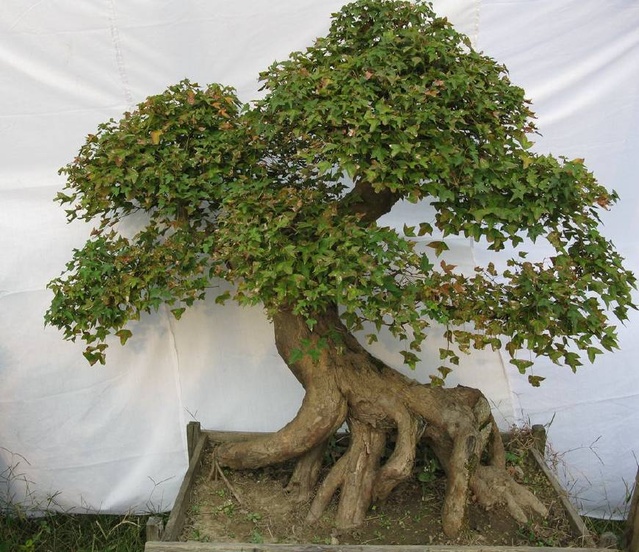
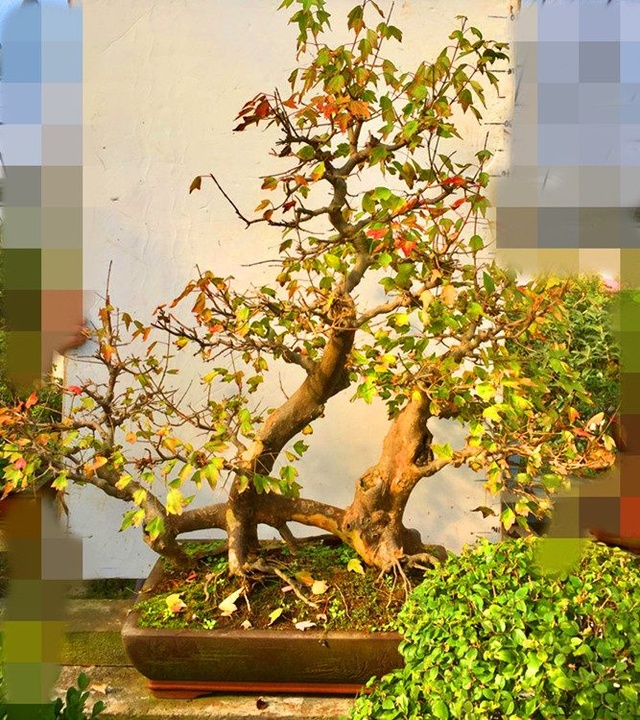
Trident maple (Acer buergerianum) belongs to the Aceraceae family and is a deciduous tree, also known as the duck-foot tree. Bonsai made from trident maple show tender leaves covering the branches in early spring, a striking and appealing crimson; in summer, sparse green leaves present an elegant and graceful look; in late autumn, yellow leaves fill the tree with a bright and flowing beauty; in deep winter, the fallen leaves reveal the branches, embodying elegance and purity. Because of its many advantages, it is widely adopted in the bonsai world.
Planting
1. Seedling sources
Propagation can be done by sowing seeds or grafting, and small trees can also be dug up from under the forest in the wild.
2. Shaping
1. Potting: Every year from February to March is the best period for potting trident maple. For the potting soil, use loose, fertile leaf mold rich in humus. For the pot, choose a relatively shallow oval or rectangular glazed ceramic pot.
2. Shaping: The root system of trident maple is robust and well developed, making it very suitable for exposed-root or rock-clinging bonsai. In the early stage of creation, there must be a long period of branch development to ensure that the branches and trunk are robust. After the branches grow to 40 cm long, wiring should be carried out. At this time, the processing technique should focus mainly on wiring, with pruning as a supplement. The branches of trident maple are relatively brittle and hard, so care must be taken when wiring not to break the branches. Once the bonsai has basically taken shape, pruning should become the main method to maintain the tree form. Around early August, remove the old leaves in several sessions to make the trident maple leaves smaller and the autumn leaves redder.
Care
(1) Location: Trident maple likes sufficient light, so it should be grown in a sunny place. During the high-temperature period in summer, attention should be paid to shading, and in winter it should be moved indoors to overwinter.
(2) Watering: Trident maple likes plenty of water, so the potting soil should be kept moist regularly. After autumn begins, when the leaves turn red, it can be slightly drier.
(3) Fertilizing: Trident maple grows rapidly, so it has a high fertilizer requirement. During the peak growth seasons of spring and summer, apply dilute cake fertilizer once every half month, and appropriately supplement phosphorus and potassium fertilizer to make the autumn leaves more brilliant.
(4) Repotting: Every year in spring from February to March is the best period for repotting. Trident maple has a well-developed root system and grows rapidly, so it can be repotted once a year.