Detailed Explanation of Palm Tree Planting Methods and Technical Key Points
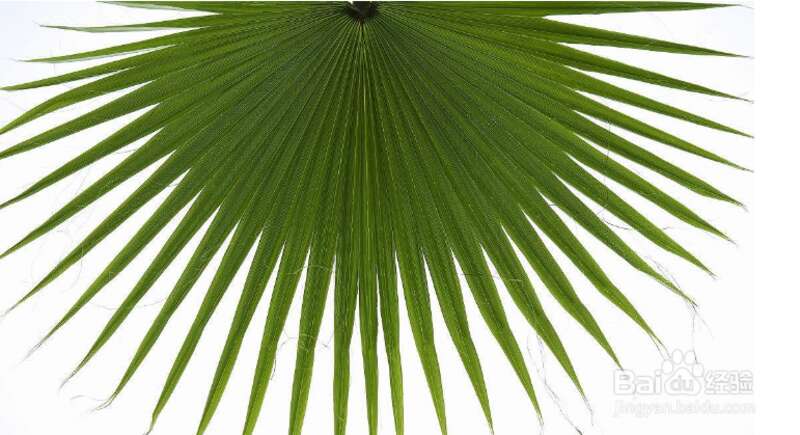
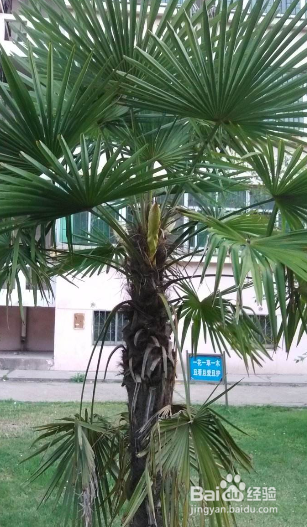
Palm trees are evergreen trees. The trunk is cylindrical, often retaining old leaf stalks and the leaf bases below them. It originated in China, and apart from Tibet, it is distributed throughout the regions south of the Qinling Mountains in China. It is commonly used in courtyards, along roadsides and in flower beds, and is suitable for viewing in all four seasons. The wood can be made into utensils, the leaves can be made into fans, hats and other handicrafts, and the roots are used as medicine. The leaf clusters of the palm tree stand upright at the top of the trunk, shaped like a fan, nearly circular, with a stem of 50-70cm, and palmate splits reaching deep into the middle and lower part; the leaf stalk is 40-100cm long, with obvious fine teeth on both sides. It is dioecious, with conical spadix inflorescences borne in the leaf axils, and the flowers are small and yellow. The drupe is kidney-shaped and spherical, about 1cm in stem, blue-brown, covered with white powder. The flowering period is April-May, and the fruit ripens in October-November.
Planting methods:
-
Growing conditions:
In the south, palm trees grow in a warm, humid climate, have a certain drought resistance, are shade-tolerant and not cold-tolerant. The roots of the palm are short and fine, with no main root, and are easily blown over by wind. Growth is slow; in the south it grows one leaf a month, while in the north it grows about one leaf in about 3 months.
-
Planting
First propagate seedlings. Seedlings grow slowly in the early stage, and after 3 years they are transplanted into courtyards or flower pots. When transplanting, they can be moved without soil, but more root hairs should be retained. Large seedlings need to be moved with soil, and two-thirds of the leaves should be cut off to reduce water transpiration.
-
Methods of watering and pruning
For palms, follow the principle of watering less in winter. Newly planted palms or palms that need watering should be watered thoroughly and placed in a dry, sunny place. Weeding and loosening the soil should be done in time, and some old leaves can be appropriately cut off.
-
Fertilizing
In spring and winter each year, bean dregs and fertilizer can be applied to the soil beside the roots. Fertilizer should be applied sufficiently. The time for transplanting small seedlings is between March and April, and the seedlings are placed into the soil,
-
Palm tree seeds mature around November. Harvesting method: cut off the entire fruit cluster, dry it in the shade and then remove the seeds, and sow immediately after collection, or store them in sand until next year for planting. Germination method: soak in 65-degree water for a whole night to promote germination. After sowing, it takes 55 days before germination.
Production and harvesting of palm fiber:
The palm grows very slowly in its juvenile stage and requires appropriate shade. It takes about 3-5 years for its stem to grow out of the soil surface, 3-4 years to form normal palmate wrinkled leaves, and more than 8 years before it begins production, at which time the palm tree is only 1.3-1.5m tall. This slow growth process is especially obvious under exposed, unshaded conditions. With the same soil and variety, growth is more vigorous at 1/4-1/5 of full sunlight intensity than at 1/2 light intensity. Before production begins, the characteristics of annual growth show a growth period, with small growth increments and an insufficiently obvious rapid-growth period. In the juvenile stage, this characteristic of the palm is basically consistent among varieties. In order to speed up the growth of the palm, longer continuous management is needed throughout the juvenile stage. Especially in May-September, when new leaves grow that year, because the palm's height and diameter growth occur almost simultaneously, the early growth mainly depends on the supply of photosynthetic products accumulated earlier.