Detailed Explanation of Hibiscus mutabilis Planting Methods and Technical Points
Hibiscus mutabilis Linn., also known as cotton rose, frost-rejecting flower, wood lotus, ground hibiscus, and Chinese wood, is native to China. It prefers warm, humid environments, is not cold-tolerant, dislikes drought, and tolerates waterlogged conditions. It has low soil requirements and can even grow in poor, thin soil. It is a deciduous shrub or small tree in the Malvaceae family, genus Hibiscus. Flowers are borne singly in the leaf axils at the branch tips. Both flowers and leaves can be used medicinally, with effects of clearing heat and detoxifying, reducing swelling and discharging pus, and cooling blood and stopping bleeding. Hibiscus mutabilis is also the city flower of Chengdu, and its flower language is delicate beauty, chastity, and purity.
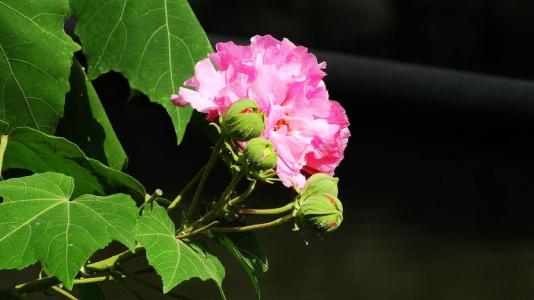
Growth Habits
Hibiscus mutabilis prefers light and is slightly shade-tolerant; it likes warm, humid climates and is not cold-tolerant. When planted outdoors in areas north of the Yangtze River basin, the aboveground parts often freeze to death in winter, but in the second year's spring, new shoots can sprout from the roots, and it can flower normally in autumn. It prefers fertile, moist, well-drained sandy loam. It grows relatively quickly and has strong sprouting ability. It has particularly strong resistance to SO2 and also has some resistance to Cl2 and HCl.
Propagation Methods
(1) Cutting method: Cuttings should be taken after leaf fall in late autumn. First, select robust current-year branches, cut them into 15-20 cm segments, bundle them, and store them in sand in a sunny spot over winter. In February-March of the following spring, remove the cuttings and insert them into an open seedbed, with no more than 10 cm of the aboveground portion exposed, and cover with some straw to prevent late spring cold. The survival rate of cutting propagation can reach over 95%.
(2) Division method: Division should be carried out in early spring before the old plants sprout. First, dig out the entire old plant from the soil, divide it into several plants along the direction of the roots, and then immediately plant them in soil with sufficient base fertilizer, planting in moist soil while dry, and water after one week. Plants propagated by division grow very quickly and can bloom in the same year.
(3) Layering method: In July-August, bend the branches of Hibiscus mutabilis (do not break them) and bury them in the soil. After about 1 month, the buried portion of the branch will develop roots, and after another month, it can be separated from the mother plant, buried in a greenhouse or cellar for winter, and transplanted outdoors the following spring.
In addition, the seeds produced by Hibiscus mutabilis have fine hairs and can drift with the wind, germinate upon landing, and reproduce on their own. Seeds can also be collected manually for sowing propagation, and some can bloom in the same year. Hibiscus mutabilis prefers sunlight and a warm, humid climate, tolerates waterlogged conditions, is not cold-tolerant, and requires moist, well-drained soil. To accelerate its growth, base fertilizer should be applied at planting time.
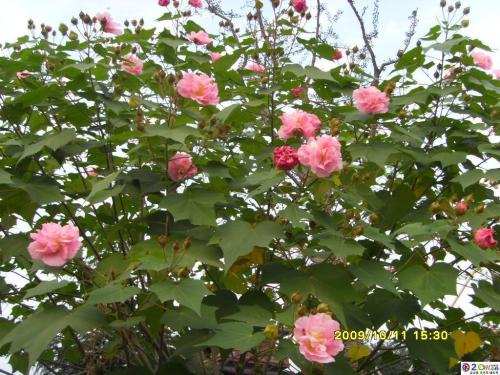
Management and Care