How to Grow and Care for New York Aster
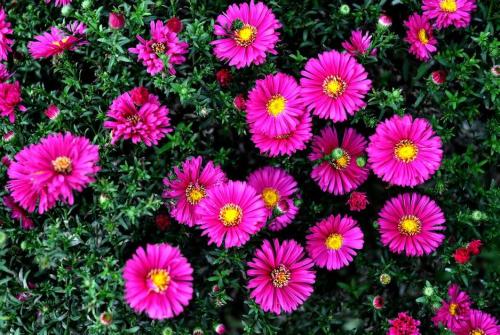
New York aster (scientific name: Aster novi-belgii), also known as: New York aster. It is a perennial herb in the Asteraceae family. It has many fibrous roots, underground runners, and clustered, much-branched stems, 60 cm to 100 cm tall. The leaves are linear-lanceolate, smooth, slightly purple when young, and form umbrella-shaped flower heads at the tips of the branches. The flowers are blue-purple, and the flowering period is October.
How to Grow New York Aster
1. Growing habits of New York aster. New York aster likes a sunny and well-ventilated environment. It is highly adaptable, likes moisture but is drought-tolerant, cold-tolerant, and tolerant of poor soil. It is not demanding about soil and grows best in fertile, loose sandy soil.
2. Sowing New York aster. The best sowing time is from July 25 to August 15. If New York aster seeds are sown too early, the plants will bolt ahead of time, shifting from vegetative growth to reproductive growth and losing the function of the fleshy root; if sown too late, the rhizomes will be damaged during overwintering, affecting the quality of the fleshy root. Sow in pots or beds indoors in a warm, sunny place. At a room temperature of no less than about 15°C, all seedlings can emerge in about 7 days. When the seedlings are about 5 cm tall, transplant them promptly for the first time to prevent leggy growth. You can choose small pots with a diameter of 12 cm or transplant them into beds. Carry out the second transplanting and final planting in early May, planting them into large pots or directly into the ground as needed. For ground planting, keep the plant spacing at about 40 cm to encourage further tillering and spreading.
Cultivation Techniques for New York Aster
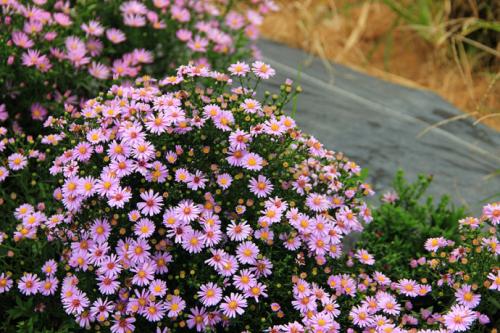
New York aster has dense flower heads. The flowering period is August to September, and the flower colors include blue, purple, red, white, and others. Propagation is commonly done by sowing, cuttings, and division. Sow in spring in April; germination occurs 12-14 days after sowing, but superior varieties tend to degenerate. Take cuttings in spring and summer, using young stems as cuttings. Roots form 18-20 days after planting. Division can be done in spring or autumn, generally once every 3 years. To make the plants full in shape and the flowers abundant and brightly colored, the following should be noted during cultivation:1. Prune and pinch back in a timely manner. New York aster is a plant that tolerates pruning, and pinching and pruning can promote denser flowering.
2. Fertilizing and watering. Apply sufficient base fertilizer before planting, and apply a dilute cake fertilizer once every 2 weeks during the growing season to promote vigorous growth. Water as appropriate, and water promptly during drought.
3. If pests and diseases are found during cultivation, spray pesticides promptly. New York aster is generally susceptible to powdery mildew, so planting should not be too dense. Pay attention to controlling humidity and ventilation, and spray pesticides promptly once infection is found.
Choose the plot reasonably: New York aster is a dryland crop, so choose a plot with convenient transportation and close to a water source. It requires loose-textured, finely crumbled, well-aerated sandy soil or sandy loam with a pH of 6.5-7.
Select superior varieties: Based on many years of local planting, generally use seeds imported from the Netherlands, with varieties such as Fogus, Tabor, and Vintor, which are easy to cultivate and manage.
Prepare well before sowing: Plan early and establish drainage ditches inside and outside the field. Dig 1 cross ditch every 30 m of bed length, with a ditch width of 35 cm and depth of 35 cm; establish 1 main vertical ditch every 10 beds, with a ditch width of 30-40 cm and depth of 40 cm; the surrounding ditch should be 40 cm wide and 50 cm deep; the ditch outside the field should be 80-100 cm deep to ensure smooth drainage. Plow the land early, apply base fertilizer well, and apply 10-15 kg of potassium sulfate compound fertilizer per mu; make beds running north-south, with a bed surface width of 90 cm, sow 3 rows, and make ditches 30 cm wide and more than 30 cm deep to enhance soil permeability.
Sow at the right time: Bolting causes vegetative growth to shift to reproductive growth and lose the function of the fleshy root; if sown too late, the rhizomes will be damaged during overwintering, affecting the quality of the fleshy root.
Precision sowing: On the bed, sow in drills with a row spacing of 30 cm, generally using 50-60 g of seed per mu (25,000-30,000 seeds).
Sowing method: For large-area sowing, use a seeder, with a sowing depth of 1 cm, and check the covering thickness after sowing. If it rains, manual sowing can be used as a supplement.
Cover promptly: After sowing, water first, then cover with grass. After covering, check emergence and humidity conditions and remove the cover in a timely manner to prevent leggy seedlings. This can prevent the effects of high-temperature exposure and heavy rain washing on New York aster, ensuring uniform, complete seedlings.
Thin in a timely manner: Carry out the first thinning at the 5-6 leaf stage, with a plant spacing of 6-7 cm, using a small knife to gently cut away the seedlings to be removed; carry out the second thinning at the 9-10 leaf stage, with a plant spacing of 13-15 cm, and the seedlings can be gently pulled out with their roots. At the same time, combine with clearing ditches, loosening soil, and weeding.
Apply supplemental fertilizer reasonably and in a timely manner: In the middle growth stage of chicory, the leaf color fades noticeably. For fields with poor growth, apply a small amount of potassium sulfate compound fertilizer at 5 kg per mu, or use amino acid high-efficiency liquid fertilizer for foliar topdressing. Never use excessive chemical fertilizer.
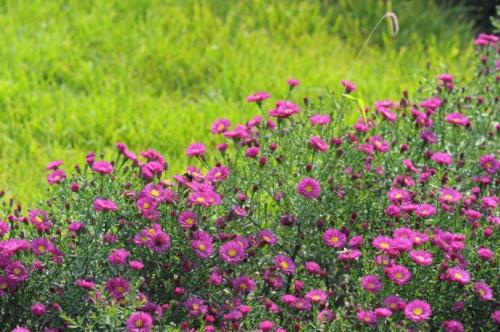
It likes a warm, humid, and sunny environment and is highly cold-tolerant. It also tolerates drought and heat, and is suitable for fertile, well-drained sandy loam or leaf mold.
The division method is mostly carried out after new shoots grow in spring from April to May. Dig up the roots, cut them with a knife, keeping 3 to 5 buds per piece, then plant, firm the soil, and water. The cutting method is generally carried out from May to June. Cut young shoots 5 cm to 6 cm long with 3 to 4 nodes as cuttings. The cutting bed is best with sandy soil or coarse sand. Provide appropriate shade and maintain humidity. Roots form about half a month after planting, and once roots have formed, they can be moved to open-field cultivation or potted.
For pot cultivation, use fertile culture soil. Pot the small seedlings from division or cuttings, pay attention to watering, and topdress in a timely manner, mostly with human manure, soybean cake water, horse manure water, and others. Small seedlings need less fertilizer and can be topdressed once every 7 to 10 days. After autumn, make the fertilizer more concentrated. After flower buds form, apply once every 4 to 5 days. Prune promptly as needed during the growing season. After flowering, cut off the aboveground parts and place the pots in a cold room to overwinter. If in a warm room, you can knock the plants out of the pots and plant them in a 30 cm deep pool, crowded together, and cover with soil or grass to overwinter.
Open-field transplanting is mostly carried out from April to May in spring, choosing a sunny, fertile, well-drained site for cultivation. When preparing the land, apply sufficient compost or barnyard manure as base fertilizer, plant well, firm the soil, and water. After emergence or before flowering, open ditches around the roots to apply fertilizer and water thoroughly. During normal times, water promptly during drought. During the growing period, pruning and shaping can be done several times according to different cultivation purposes. After entering September, pruning should no longer be done to avoid cutting off flower buds and affecting flowering. It is prone to aphids and red spiders, which mainly harm the leaves and stems, causing the leaves to wither and yellow and affecting growth. They can be controlled with a 1000-fold to 1500-fold dilution of dimethoate.
Note: Choose a sunny, ventilated environment and fertile, well-drained sandy loam. Fertilize once every half month during the growing season, and carry out shaping and pinching in summer to encourage more branching and more flowering, but the plants should not be too dense, otherwise powdery mildew is likely to occur.