Bupleurum Planting Methods and Key Technical Points
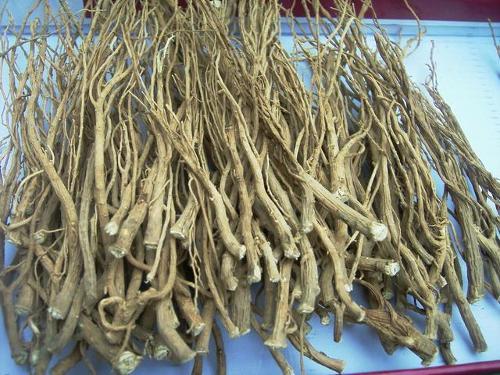
Bupleurum, a name in traditional Chinese medicine. It is a medicinal herb listed in the "Pharmacopoeia of the People's Republic of China"; the medicinal part is the dried root of the umbellifer Bupleurum chinense or Bupleurum scorzonerifolium. It is dug up in spring and autumn, the stems and leaves as well as soil and sand are removed, and then it is dried. Bupleurum is a commonly used exterior-releasing medicine. Also known as Di Xun, Shan Cai, Gu Cao, and Chai Cao, it is bitter in flavor and slightly cold in nature, and enters the Liver and Gallbladder meridians. It has the effects of harmonizing the exterior and interior, soothing the liver, and raising yang. It is used for common cold with fever, alternating chills and fever, malaria, liver qi stagnation, distending pain in the chest and ribs, rectal prolapse, uterine prolapse, and irregular menstruation.
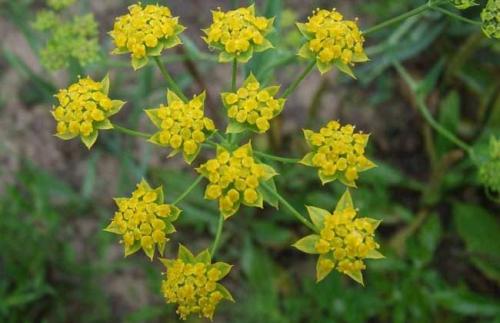
The growing environment of Bupleurum.
Bupleurum generally grows in dry grasslands or at the edges of shrub forests.
Methods for planting Bupleurum.
(1) Site selection and land preparation: It is best to plant on hillsides with humus soil or sandy soil. When reclaiming wasteland for sowing, stones, branches, and weeds in the field need to be cleared away. Before sowing, sufficient base fertilizer should be applied. 1 mu of land requires 1500 kg-1800 kg of farmyard manure. Apply the farmyard manure into the pits turned up by plowing; the depth of the pits should be 25 cm-30 cm. After applying the fertilizer, rake the land level. After this is done, make beds. The width of the beds should be 100 cm-130 cm.
(2) Propagation methods.
There are two methods of propagating by seed: one is direct sowing, and the other is raising seedlings and then transplanting. Those who want to plant on a large scale can use the direct sowing method; with this method, the seed germination success rate is about 50 percent.
1. Direct sowing: Spring sowing should be carried out from late March to early April. Before sowing, the ground needs to be watered first. After the water seeps into the ground, open furrows on the sloping land at a row spacing of 17 cm-20 cm and a depth of 1.8 cm-2 cm. After opening the furrows, scatter the seeds, then cover with a layer of soil. 1 mu of land requires about 1.5 kg of seeds.
2. Raising seedlings: For raising seedlings and transplanting, sow from March to April using the drill sowing method. Drill sowing requires a row spacing of 10 cm. After sowing the seeds, sift a layer of fine soil over them using a bamboo sieve.
3. Transplanting: When the seedlings have grown to 7 cm, dig up the seedlings; when digging up the seedlings, the soil clumps should be kept with them. After digging up the seedlings, take them to the field and set them out at a plant spacing of 7 cm-10 cm and a row spacing of 17 cm-20 cm. After setting them out, watering is needed. When the leaves unfold, the soil needs to be loosened.
Field management.
(1) Intercropping: Bupleurum seedlings are very afraid of direct strong light, so crops such as corn and soybeans need to be used for intercropping. In spring, scatter the Bupleurum seeds between the soybean rows, then cover lightly with soil. After the soybeans are harvested, continue planting corn. After harvesting the corn in autumn, lay the corn stalks down and let the Bupleurum grow fully.
(2) Thinning and setting seedlings: Before Bupleurum emerges, the soil must be kept moist at all times. After emergence, growers need to loosen the soil and weed frequently. When the seedlings have grown to 3 cm, thin out the overly dense seedlings. When the seedlings have grown to about 7 cm, the seedlings can be set in place.
(3) Fertilizing: When the seedlings have grown to 17 cm, apply farmyard manure once in combination with cultivating and weeding.
(4) Cultivating: Newly planted Bupleurum has very thin stems, so before the rainy season arrives, cultivating and earthing up should be carried out; this can prevent lodging.
(5) Bud removal: In the first year, bud removal is not necessary. By July-September of the second year, bud removal should be carried out.
(6) Seed reservation: Because wild Bupleurum is not easy to harvest seeds from, a special seed collection plot needs to be built at the artificial planting site.
Harvesting and processing of Bupleurum
After Bupleurum is sown, it can be dug up after growing for 2 years. The digging time should be in autumn after the plants wither and before new shoots grow out the following spring. After digging up, remove the residual stems, then shake off the soil on them, and then dry them in the sun. 1 mu of land can produce 120 kg-180 kg.