A Complete Guide to Hoya Planting Methods and Care Tips
Hoya (scientific name: Hoya carnosa (L.f.) R. Br), also known as horse monkey knot, dog tongue vine, iron foot board, etc., is a perennial plant of the genus Hoya in the family Apocynaceae, order Gentianales. It is a climbing shrub that grows as an epiphyte on trees or rocks, with aerial roots growing from the stem nodes. It is distributed in Yunnan, Guangxi, Guangdong, and Taiwan, China; it is also cultivated or found wild in other tropical and subtropical regions. It grows on plains, in forests, or under cultivation.
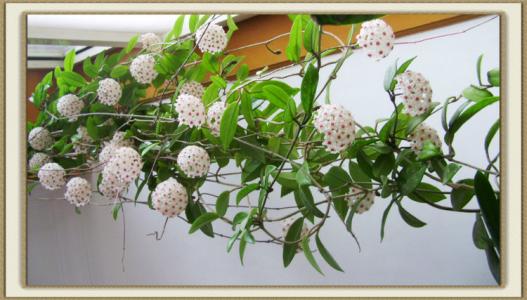
Growth habits of Hoya
Hoya likes warmth and moisture, with an optimal growing temperature of 18-28°C; the best soil for cultivation is humus loam, and drainage must be good. After mid-October, the temperature should be 10-14°C, and it should be placed in a dry, well-lit spot to overwinter, with a minimum overwintering temperature of 7°C. If it drops below 5°C, it is prone to cold damage, causing leaf drop, or even the death of the entire plant.
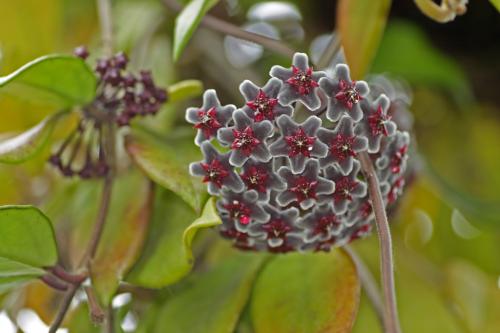
Hoya cultivation methods and precautions
1. Soil: The best soil for cultivating Hoya is humus loam, and drainage must be good.
2. Watering: Hoya is a succulent plant, and its leaves contain a fair amount of water, so during the growing season watering should follow the principle of watering when dry and letting it dry out between waterings. Overwatering easily causes root rot, but in summer watering should be sufficient. Because it likes moisture, attention should be paid to frequently spraying water on the leaves to increase air humidity.
3. Sunlight: When grown at home, Hoya is best placed in spring and autumn on a south-facing windowsill or near a south-facing indoor window in a bright spot, which keeps the leaves green and glossy and produces good flowering. But in summer it should be moved to a shaded place to prevent direct strong light, otherwise the leaves easily turn yellow. If it is kept in a place with insufficient light for a long time, the leaf color becomes pale and the flowers are few and not vivid.
4. Temperature: Hoya is not cold-tolerant, with an optimal growing temperature of 15°C-25°C. In winter the room temperature should be kept above 10°C. If it drops below 5°C, it is prone to cold damage, causing leaf drop, or even the death of the entire plant.
5. Fertilizing: Hoya fertilizing is mainly based on organic fertilizer or compound fertilizer; during the peak growing season, apply 1-2 times a month a thin cake fertilizer water combining nitrogen and phosphorus. At other times, because growth is slow, fertilizing should be stopped to avoid wasting fertilizer or causing fertilizer damage.
6. Pruning: Young Hoya plants should be pinched back early to encourage new branches to sprout, and support frames should be set up in time so they can climb upward. After the flowers fade, they should be allowed to wither and fall naturally, and the flower stems must not be cut off, because most of the flower buds for the second year will still sprout in the same place. If you do not understand this habit and cut them off, it will affect the number of flowers the following year.
7. Pests and diseases: Hoya commonly suffers from anthracnose, bad spot disease, and leaf spot disease, which can be controlled by spraying 50% carbendazim wettable powder at 600 times dilution or 70% mancozeb wettable powder at 400-6w times dilution. It is also harmed by scale insects and aphids, which can be killed by spraying 40% omethoate emulsifiable concentrate at 800-100() times dilution or 80% dichlorvos emulsifiable concentrate at IOC. times dilution.