A Complete Guide to Planting Methods and Care Tips for Red Spider Lily
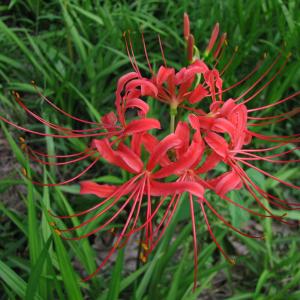
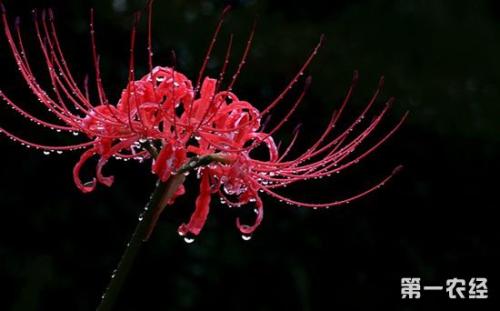
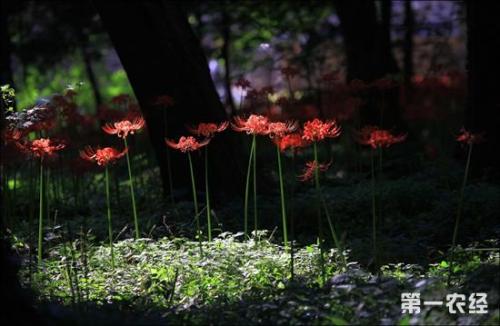
Red spider lily, also known as red Lycoris radiata, is also called "shezi flower." It is a perennial herbaceous plant with a spherical bulb underground, covered by a dark brown membranous tunic. The leaves are strap-shaped and rather narrow, dark green, emerging from the base, appearing in autumn after the flowers fade.

Cultivation Techniques
Pot Cultivation
Red spider lily likes diffused light and does not like strong light, so the light should not be too intense. Red spider lily generally has no special requirements for soil. However, since it is after all a southern flower, the soil should be acidic, somewhat sandy, airy and well-draining. Red spider lily has ornamental value above ground all year round, with leaves but no flowers, and flowers but no leaves.
Lycoris radiata has strong adaptability, and the bulbs have a dormant phenomenon. In the north, pot cultivation is needed for ornamental purposes, and Lycoris radiata planted at the end of May should also be able to bloom. The suitable time for cultivation in the north: it should be planted in spring (April-May). Most varieties prefer a warm climate, with a maximum temperature not exceeding 30°C and a ten-day average temperature of 24°C, suitable for Lycoris radiata growth. Ten days after sowing, the root system grows vigorously, and leaves successively emerge above the ground. In winter, when the daily average temperature is above 8°C and the minimum temperature reaches 1°C, Lycoris radiata growth is not affected. Watering should not be excessive, otherwise it will cause the rhizome to rot.
Remove the small bulbs around the main bulb for propagation. Trim off the residual roots of the main bulb, dry it in the sun for two days, and plant it once the wound is dry. When covering with soil, the top of the bulb should be exposed above the soil surface. For pot cultivation, choose large bulbs that have grown for 3 years and can bloom (diameter above 7 cm). You can plant one bulb per pot, or 3-4 bulbs in a large pot. Plant shallowly, so that 1/3-1/2 of the bulb sits above the soil surface. After potting, water once, just enough to make the soil slightly moist. Water again after new leaves emerge. Apply liquid fertilizer once every half month. When the leaves thicken and mature in autumn, watering can be stopped.
During the summer dormant period, water less; in spring and autumn, keep the potting soil moist regularly. During the growing season, apply diluted cake fertilizer water once every half month. Lycoris radiata likes semi-shade; avoid direct sunlight in summer, keep it in a semi-shady place in spring and autumn, strictly control watering during overwintering, and stop fertilizing. 4. Post-bloom handling and pest and disease control. After Lycoris radiata blooms, the flower scape should be cut off to reduce nutrient loss. Lycoris radiata is managed extensively. Common diseases include anthracnose and bacterial soft rot. Before planting the bulbs, soak them in 0.3% copper sulfate solution for 30 minutes, wash with water, dry, and then plant. Spray 50% carbendazim wettable powder at 500 times dilution every half month for prevention and control. At the early stage of disease, spray 50% benomyl at 2500 times dilution.
The planting depth should not be too deep; it is best if the top of the bulb is just buried at the soil surface. The soil should be sandy soil with good drainage or loose potting soil, preferably acidic soil. Apply an appropriate amount of base fertilizer when planting and water thoroughly after planting; during the vegetative growth period, water frequently to keep the soil moist, but do not let water accumulate, to prevent the bulbs from rotting. From 20 days before flowering to the flowering period, an appropriate amount of water must be supplied to achieve uniform flowering and to make the flowers easier to maintain.
Propagation Methods
Propagate by bulb division, sowing, basal plate cutting of bulbs, and tissue culture, with bulb division as the main method.
Bulb division propagation method: During the dormant period or after flowering, dig up the plant and remove the offset bulbs attached near the mother bulb for planting. They can bloom in about one to two years.
Sowing method: Generally used only for hybrid breeding. Because the seeds have no dormancy, they should be sown immediately after collection, and the radicle can be seen emerging after 15 days at 20°C. When sown in a natural environment, in the first growth cycle only a few seedlings put out one leaf, and the seedlings can be transplanted once. Seedlings take about 4-5 years from sowing to flowering. [2-3]
Bulb basal plate cutting method: Cut the cleaned bulb base into eight parts in a star pattern, with the cutting depth about 1/2-2/3 of the bulb length. After disinfection and drying in the shade, insert into moist sand, perlite, or other substrate. After 3 months, adventitious buds can be seen forming at the junction of the scales and the basal plate, gradually producing small bulbils, which can become seedlings after separation and cultivation.
Tissue culture propagation method: Use MS medium, take pedicels and ovaries as explant materials, and after culture, callus tissue can be produced at the cut. After 1 month, adventitious roots can form, and after 3-4 months, adventitious buds can form. Using pedicels and scales with stem as explant materials can also produce adventitious buds and bulbils.
Cultivation Methods
Open-field cultivation: The cultivation site should be high-lying and well-draining; otherwise, raised beds with deep furrows should be made to prevent waterlogging damage. The plant and row spacing is 15 cm x 20 cm. When covering with soil, the top of the bulb should be exposed above the soil surface. Generally, fertilize 2-4 times per year. The first time is after leaf fall and before flowering; organic fertilizer or compound
fertilizer can be used. For cut flower production, apply additional fertilizer before the buds are ready to open. The second time is after flowering at the end of October or early November and before the growth period. After harvesting flowers, continue to supply water and fertilizer, but reduce nitrogen fertilizer and increase phosphorus and potassium fertilizer to make the bulbs robust and plump.
After autumn, stop fertilizing and watering to allow it to gradually enter dormancy. When digging bulbs, choose a sunny day, dig them up when the soil is dry, remove the soil, dry them slightly, and then store them. Alternatively, after cutting off the leaves, place them with soil in a greenhouse for dormancy, keeping the room temperature at 5°C-10°C, keeping the room dry and the air circulating to prevent the bulbs from rotting.
Frame cultivation method: In production, a 40 cm x 60 cm frame cultivation method can also be used, generally planting 16 bulbs per basket. The advantage of this method is that it is convenient for transplanting and easy for maintenance and management. During production, pay attention to weeding; generally, herbicides can be sprayed when weeds are too tall, and the spraying time is generally chosen after leaf fall and after harvest.
Pot cultivation method: Generally choose large bulbs that have grown in the field for 3 years and can bloom, with a diameter above 7 cm. You can plant one bulb per pot, or 3-4 bulbs in a large pot. Plant shallowly, so that 1/3-1/2 of the bulb sits above the soil surface. After potting, water once, just enough to make the soil slightly moist, and water again after new leaves emerge. Apply liquid fertilizer once every half month. When the leaves thicken and mature in autumn, watering can be stopped. After sprouting in February-March, repot or replace the potting soil. The potting soil can be made by mixing 2 parts peat, 2 parts garden soil, and 1 part perlite, while adding a small amount of base fertilizer. During the summer dormant period, water less, while in spring and autumn keep the potting soil moist regularly. During the growing season, apply diluted cake fertilizer water once every half month.
Disease Control
Lycoris radiata is managed extensively. Common diseases include anthracnose and bacterial soft rot. Before planting the bulbs, soak them in 0.3% copper sulfate solution for 30 minutes, wash with water, dry, and then plant. Spray 50% carbendazim wettable powder at 500 times dilution every half month for prevention and control. At the early stage of disease, spray 50% benomyl at 2500 times dilution.
Pest Control
Spodoptera litura: Mainly the larvae damage leaves, flower buds, and fruits, gnawing on the leaf mesophyll and boring into flower scapes and seeds. Damage generally occurs from late spring to November. It can be controlled with 5% fipronil suspension concentrate at 2500 times dilution or wanling at 1000 times dilution.
Lycoris noctuid: In plants invaded by its larvae, the leaves are usually hollowed out, and they can directly bore into the inside of the bulb. The damaged areas usually leave a large amount of green or brown frass. Pay frequent attention to whether there are neatly arranged eggs on the underside of leaves, and remove them immediately when found. For control, combine winter or early spring plowing to dig out overwintering pupae and reduce the pest population base; when infestation occurs, spray chlorpyrifos at 1500 times dilution or phoxim emulsifiable concentrate at 800 times dilution, choosing to spray in the morning or evening when the larvae come out to move and feed, for better control results.
Thrips: The whole body is red, mainly sucking nutrients at the leafing area of the corm, causing leaves to lose green color, especially found in greater numbers after the fruits mature. They can be controlled by alternating sprays of 25% imidacloprid at 3000 times dilution and 70% acetamiprid at 6000-10000 times dilution.
White grubs: Once found, timely control with drugs such as phoxim or trichlorfon.