Alstroemeria (Alstroemeria aurantiaca D.Don), also known as Chilean lily, Peruvian lily, etc., is a perennial herb of the Amaryllidaceae family and the genus Alstroemeria, native to Chile, growing 60 to 120 cm tall. The flowers resemble azaleas and also daffodils, while the stems and leaves look like those of lilies. The leaves are numerous, lanceolate, with short petioles or sessile. The inflorescence is an umbel with 10 to 30 flowers; the tepals are orange-yellow, pinkish-red, etc., and the inner whorl has purple or red stripes and spots.
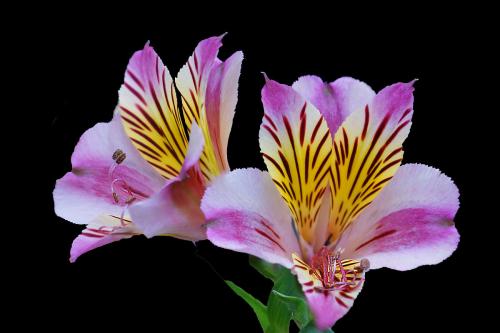
Cultivation Techniques
1. Soil: For the planting site of Alstroemeria, choose a fertile sandy loam with good permeability, with a soil layer more than 50 cm thick and good drainage. The most suitable soil for Alstroemeria cultivation is slightly acidic, so the pH should be adjusted to about 6.5 according to the soil's physical and chemical properties.
2. Water: During the vigorous growing season, Alstroemeria should have a sufficient water supply and relatively high air humidity, with relative humidity ideally controlled at 80 to 85%. In hot summers it enters a semi-dormant state. When temperatures are low in winter, attention should be paid to controlling water.
3. Fertilizer: When planting Alstroemeria, in combination with improving the soil's physical and chemical properties and structure, a large amount of decomposed organic fertilizer, such as barnyard manure, should be applied, preferably at 30 to 40 kg per sq m, or an appropriate amount of superphosphate may be added as a supplement. Throughout the entire growth and development cycle of the plant, base fertilizer alone cannot meet the needs of growth and development, so topdressing should be applied as needed at different growth stages.
4. Temperature: Giving Alstroemeria an appropriate low temperature (not lower than 5°C) within 1 to 2 months after planting is very beneficial for rejuvenating the root system and restoring the plant. During the growing season, maintain the temperature at 8 to 15°C, and in summer it is best to keep the soil temperature at around 20°C. The most suitable temperature for flower bud differentiation is 20 to 22°C. In summer, to prevent the soil temperature from becoming too high, water supply pipes, perlite, etc. can be buried underground to achieve cooling.
5. Light: Alstroemeria is a strongly sun-loving plant, and there should be sufficient light during the growing season, with the optimum sunshine duration being 13 to 14 hours. In winter and early spring, natural daylight hours are short, so supplemental lighting should be provided when cultivating in protected areas. To save energy, supplemental lighting should be started when the plants have entered the vigorous growth stage. Supplement light for 4 to 5 hours per day, and stop supplemental lighting once natural light reaches about 13 hours.
6. Pruning: Alstroemeria pot cultivation commonly uses 12 to 15 cm pots. Pot them in mid-October, with a planting depth of 3 to 5 cm, water thoroughly after planting, and leaf buds will grow after 30 days. After winter begins, new buds grow rapidly and the stems and leaves become densely packed, affecting the growth of flower buds at the base. It is necessary to thin the leaves and remove small, thin leaf buds while retaining thick, strong flower buds, so as to achieve the goal of shorter plants with more flowers.
7. Pests and diseases: Alstroemeria is often harmed by root rot, which can be sprayed with a 600-fold dilution of 65% zineb wettable powder. Among insect pests, aphids harm the flower stems and can be killed by spraying with a 2000-fold dilution of 40% dimethoate emulsifiable concentrate. Alstroemeria is not sensitive to diseases; by contrast, aphids, thrips, mites, slugs, caterpillars, white butterflies, and nematodes cause great harm. Pythium rot is prone to occur when soil humidity is too high, while diseases caused by Rhizoctonia solani are prone to occur under warm and humid conditions.
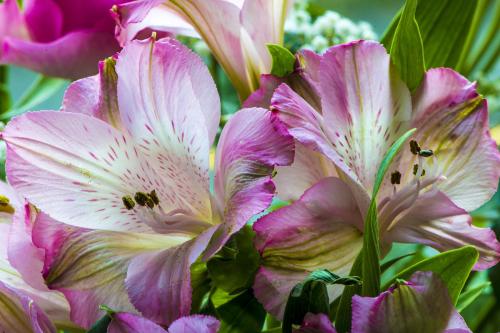
The flower language of Alstroemeria: The blooming Alstroemeria is elegant and richly beautiful, symbolizing friendship. The flower stems of the Peruvian lily curving upward as they grow imply the continuous deepening of friendship.