Dandelion Planting Methods and Key Technical Points
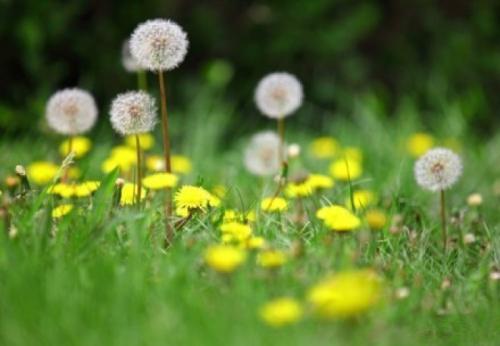
Dandelion (Latin scientific name: Taraxacum mongolicum Hand.-Mazz.), family Asteraceae, genus Taraxacum, is a perennial herbaceous plant. The root is conical, brown on the surface, wrinkled; the leaf margins sometimes have wavy teeth or pinnate deep lobes, narrowing gradually at the base into a petiole; the petiole and main veins often have a reddish-purple tinge; the upper part of the flower scape is purplish-red, densely covered with white cobweb-like long soft hairs; the flower head is a capitulum, the involucre is bell-shaped, the achene is dark brown, and the pappus is white; the flowering and fruiting period is from April to October.

Planting Methods
1. Seed preparation: Dandelion is a perennial plant with persistent roots. Under wild conditions, biennial plants can flower and set seed. Early summer is the flowering and seeding period. The number of flowers per plant increases with the number of years of growth; some individual plants produce more than 20 flowers, and superior varieties can produce as many as more than 100 flowers per plant. After flowering, the seeds mature in 13-15 days. When the outer shell of the flower head turns from green to yellow-green and the seeds turn from milky white to brown, they can be harvested. Do not wait until the flower head splits open to harvest, otherwise the seeds will easily scatter and be lost, causing relatively large losses. Generally, each capitulum contains more than 100 seeds. The 1000-seed weight of large-leaf dandelion is about 2 grams, and the 1000-seed weight of small-leaf dandelion is about 0.8-1.2 grams. When collecting seeds, the dandelion flower heads can be picked and kept indoors for one day to after-ripen. Once the flower heads have fully opened, dry them in the shade for 1-2 days until the seeds are half-dry, then rub off the fluff at the tips of the seeds by hand, and finally sun-dry the seeds for later use.
2. Land preparation and fertilization: Choose loose, fertile, well-drained sandy loam soil for planting. Apply 2000-3500 kg of organic fertilizer per mu, mix with 15 kg of superphosphate, and spread evenly over the ground. Deeply plow the soil 20-25 cm, level and harrow it finely, and make flat beds 1.2 m wide and 10 m long, with small ridges 20 cm high. Before sowing dandelion, first plow the land and make beds, then open shallow furrows in the beds with a row spacing of 12 cm and a furrow width of 10 cm. Then sow the seeds in the furrows and cover with soil 0.3-0.5 cm thick. The soil should be moist at sowing; if the soil is dry, water thoroughly two days before sowing. For spring sowing, it is best to use plastic film mulching; for summer sowing, there is sufficient rain, so mulching may be omitted.
3. Sowing: Dandelion propagation uses seed propagation. The seeds have no dormancy period, and mature harvested seeds can be sown at any time from spring to autumn. According to market demand, they can also be sown in greenhouses in winter. Open-field direct sowing uses drilling: open shallow horizontal furrows on the bed surface at a row spacing of 25-30 cm, with a sowing width of about 10 cm. After sowing the seeds, cover with 1 cm of soil and then press lightly. The sowing rate is 0.5-0.75 kg per mu. For broadcast sowing on flat beds, use 1.5-2.0 kg of seed per mu. For high-quality dandelion varieties, the sowing rate per mu is only 25-50 grams. After sowing, cover with grass to keep warm, and remove the covering grass when seedlings emerge; seedlings can emerge in about 6 days. To promote earlier emergence, hot-water seed treatment can be used for germination: place the seeds in warm water at 50-55degC, stir until the water cools, then soak for another 8 hours, remove the seeds and wrap them in a wet cloth, place them in a spot at about 25degC, cover with a wet cloth on top, and water once with warm water every morning and evening; after about 3-4 days the seeds begin to sprout and can be sown. Mature dandelion seeds have no dormancy period. When the temperature is above 15degC, the seeds can be sown in moist soil. They germinate after about 90 hours. Seeds germinate relatively quickly when the soil temperature is about 15degC, and germinate slowly above 25-30degC, so sowing can be done from early spring to midsummer. According to experimental results: when seeds are harvested at the end of May and sown immediately, it takes 10-12 days from sowing to emergence; if sowing is delayed until July-August in summer, it takes 15 days from sowing to emergence. The sowing rate is generally about 3-4 grams per square meter, which can maintain 700-1000 seedlings.
4. Field management: (1) Field management in the sowing year: Before emergence, keep the soil moist. If the soil is dry before emergence, first scatter a little wheat straw or thatch thinly over the surface of the sowing bed; then water lightly, and after the seedlings have all emerged, rake away the covering grass with a fork; after emergence, appropriately control moisture so that the seedlings grow vigorously and to prevent excessive vegetative growth and lodging; during the period of rapid leaf growth, keep the field moist to promote vigorous leaf growth; before winter, water thoroughly once, then cover with horse manure or wheat straw, etc., to help overwintering. (2) Cultivation and weeding: About 10 days after dandelion emergence, carry out the first cultivation and weeding, and thereafter cultivate and weed once about every 10 days until the rows close; keep the field free of weeds. After the rows close, weeds can be pulled by hand. (3) Thinning and final thinning: Thin and final-thin the seedlings in combination with cultivation and weeding. Thin about 10 days after emergence with a plant spacing of 3-5 cm; after 20-30 days, final thinning can be carried out with a plant spacing of 8-10 cm; for broadcast sowing, a plant spacing of 5 cm is sufficient. (4) Fertilizer and water management: Dandelion has strong disease and insect resistance, so pesticide and disease control are generally not needed. The main focus of field management is fertilizer and water. Although dandelion is not strict about soil conditions, it still prefers fertile, moist, loose soil with high organic matter content. Therefore, when planting dandelion, apply 2000-3500 kg of farmyard manure per 667 square meters as base fertilizer, and also apply 17-20 kg of ammonium nitrate per 667 square meters as seed fertilizer. After sowing, if the soil surface is not covered, water frequently to keep the soil moist and ensure full stands. After emergence, also always maintain appropriate soil moisture.
During the growing period, topdress 1-2 times. Water frequently to keep the soil moist, so as to ensure full stands and the growth needs after emergence. Young tender plants in the sowing year may be left unharvested for leaves, and harvesting can begin in the second year, when the plants have good quality and high yield. For autumn-sown plants, after winter begins, broadcast 2500 kg of organic fertilizer and 20 kg of superphosphate per mu over the bed surface, which both fertilizes and protects the roots for safe overwintering. After green-up the following spring, chemical fertilizer can be applied together with watering (10-15 kg of urea and 8 kg of superphosphate per mu). To bring them to market earlier, small arched sheds can be used for covering in early spring. In late autumn and early winter, water thoroughly once, then cover the bed surface with horse manure or wheat straw, etc., to help the roots overwinter and to promote earlier sprouting of new plants the following spring. (5) Harvesting: Dandelion can be harvested in batches during the seedling stage by picking the outer large leaves for food, or by cutting leaves other than the heart leaves with a knife for eating. Cut once every 15-20 days. The whole plant can also be cut at one time for market. Generally, each harvest can yield 700-800 kg per mu. When harvesting, a hook knife or small knife can be used to dig and lift, cutting horizontally along the ground surface at 1-1.5 cm, keeping the underground root so that new shoots can grow. Pick the large plants first and leave the medium and small plants to continue growing; harvesting can also be done as in some places in Northeast China where celery leaves are snapped off for harvest, but the leaves are scattered and do not form leaf bundles. Yield per unit area: open-field cultivation, average 0.8-1.0 kg per square meter; greenhouse cultivation, average 1.2-1.7 kg per square meter; conservatory cultivation, average 1.5-2.4 kg per square meter.
5. Early-maturing cultivation of dandelion: In early spring, when the soil temperature at a depth of 5 cm reaches 1-2degC, dandelions planted the previous year begin to sprout and grow new shoots. Generally, before Qingming Festival (April 5), the new shoots emerge above ground, and at this time the "white shoot" part in the soil is already 3-4 cm long. Therefore, wild dandelions can generally be marketed around April 20, when there are few fresh leafy vegetables on the market, making them very popular with consumers. Artificially cultivated dandelions, because of improved growth environment conditions and measures such as plastic film mulching, come to market earlier than wild ones, which is of even greater practical significance for vegetable market supply. Carry out bed-surface mulching: In northern regions, when the soil begins to thaw on March 20, plastic film or used plastic agricultural film can be laid flat as cover, so that harvest and marketing can occur from April 7 to 10, about 10 days earlier than wild dandelion. When carrying out early-maturing cultivation in Northeast China, dandelions are usually planted in late July to early August, covered with agricultural film in late February to early March of the following year, and can be harvested and marketed in late March.
6. Field management of perennial plants: The longer the dandelion plants grow, the more developed the root system becomes, and the more luxuriant the aboveground plant growth, resulting in higher yield and better quality of the harvested product. Therefore, perennial cultivation should be carried out in production. For plots under perennial cultivation, attention should be paid to repeatedly pulling weeds, strengthening water and fertilizer management during the growing season, and harvesting at the right time. To bring them to market earlier, small arched sheds can be used for covering in early spring. In late autumn and early winter, water thoroughly once, then cover the bed surface with horse manure or wheat straw, etc., to help the roots overwinter and to promote earlier sprouting of new plants the following spring.