A Detailed Guide to Torch Lily Planting Methods and Key Technical Points
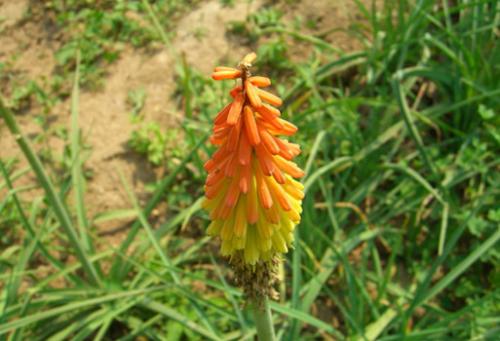
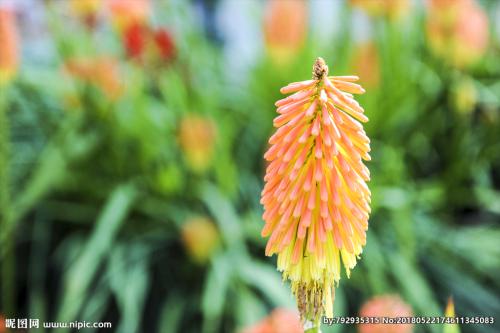
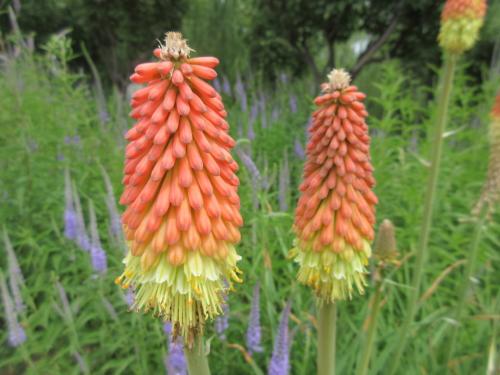
The torch lily (scientific name: Kniphofia uvaria (L.) Oken) is a perennial herbaceous plant in the family Liliaceae, genus Kniphofia. The plant can reach a height of 120 cm, with an upright stem. The leaves are clustered, grassy, and sword-shaped. The middle or upper-middle part of the leaf blade begins to curve and droop downward, rarely standing upright; the raceme bears hundreds of tubular florets in a torch shape, with an orange-red corolla, and the seeds are brownish-black and irregularly triangular. It flowers from June to October. It fruits in September.
Growth Habits of the Torch Lily
The torch lily grows at an altitude of 1800-3000 m on high mountains and on rocky peat layers along the coastal splash line. It grows vigorously and is cold-hardy; some varieties can withstand short periods of low temperatures down to 20°C. In North China, the aboveground parts wither in winter, while the underground parts can overwinter in the open field. In the Yangtze River basin, it can be cultivated as an evergreen plant; at 5°C, the upper leaves will show dry-frozen conditions. It prefers a warm environment with abundant sunlight and is not demanding about soil, but humus-rich, well-drained loam is best, and it dislikes waterlogging from rain.
Propagation Methods of the Torch Lily
1. Sowing: Propagation of the torch lily by sowing can be carried out in spring, summer, and autumn, usually in spring and autumn, and it can also be sown immediately after harvest. Sow seeds in a greenhouse in January to raise seedlings, transplant to the open field in April, and it can bloom in autumn of the same year. In spring and autumn, cut and plant the tiller buds with roots, and they can become independent plants. Apply an appropriate amount of decomposed organic fertilizer to the cultivation site, with a plant spacing of 30×40 cm. Those sown at natural temperatures can bloom the following year.
2. Division: Division of the torch lily is mostly carried out in autumn, and the time can be chosen after the autumn flowering period. First dig up the entire mother plant, cut it from the root crown into one plant per 2-3 sprouting tiller buds for planting, with at least 2-3 roots attached. The plant spacing is 30-40 cm, and watering after planting is sufficient. After field planting, water and fertilizer management must be strengthened; in the second year, 2-3 flower scapes can emerge, and it will flower and grow normally the following year.
Cultivation Methods of the Torch Lily
1. Soil: Before planting the torch lily, deeply plow the land and apply some decomposed organic fertilizer. For pot cultivation, deep, fertile, and well-drained sandy loam is required.
2. Sunlight: The torch lily prefers a warm environment with abundant sunlight. If a potted plant is placed in a shaded place for a long time, the leaves will turn yellow due to insufficient light.
3. Temperature: The torch lily grows vigorously and is relatively cold-hardy. In winter, it can overwinter at temperatures above 5°C, and some varieties can even withstand short periods of low temperatures down to -20°C.
4. Watering: Special attention should be paid to watering the torch lily. In arid areas in winter and spring, water thoroughly before freezing, and cover the plants roughly with dry grass or fallen leaves to prevent death from drying and freezing.
5. Fertilizing: When the flower stems of the torch lily appear, root-side topdressing with potassium dihydrogen phosphate should be carried out 2-3 times, at a concentration of 0.1%, with an interval of 7-10 days each time.
6. Pruning: During cultivation, attention should be paid to pruning the torch lily. After flowering, the spent flower branches should be cut off as early as possible so that they do not set seed, so as to avoid consuming nutrients.
7. Pests and Diseases: The torch lily mainly suffers from rust disease damaging the leaves and flower stems. In the early stage of the disease, spray with lime-sulfur mixture or 25% carboxin EC diluted 400 times for control.
Precautions for the Torch Lily
1. In order for the torch lily to grow well and produce abundant, colorful flowers, sufficient fully decomposed organic fertilizer and a certain amount of superphosphate or bone meal should be applied before planting.
2. The torch lily is a sun-loving plant and requires abundant sunlight during the growing period, so it must be planted in a sunny place, otherwise flowering will be affected.
3. Although the torch lily is not demanding about soil quality, humus-rich, well-drained loam is best, and it grows even better in clayey soil.
4. In order to maintain the excellent characteristics of the torch lily, division propagation is better, preferably carried out in autumn; simply cut open the shortened rhizome with fibrous roots and plant it.