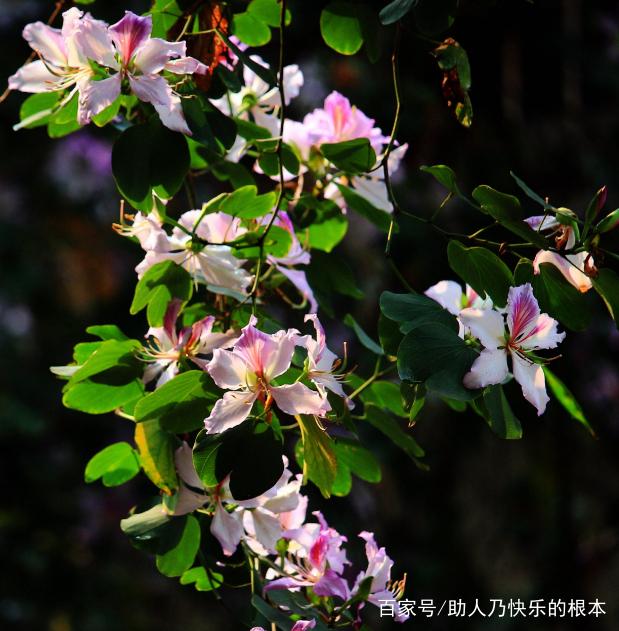
Redbud, also known as Honghua Zijing or Honghua Yangtijia (Bauhinia), has very slender twigs, leathery leaves that are round, broadly ovate, or kidney-shaped, and high ornamental value.
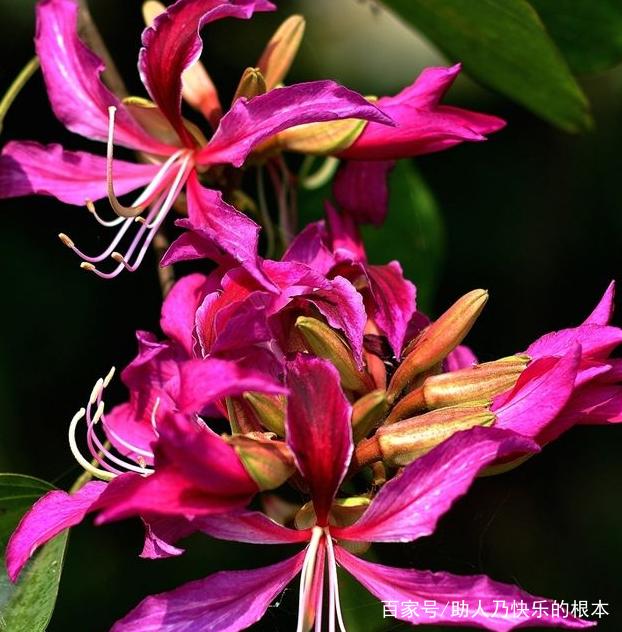
Cultivation Techniques:
Water and Fertilizer Management
Redbud prefers a moist environment. After planting, water immediately with the first watering, water a second time on the third day, and a third time after the sixth day. After these three waterings, water according to weather conditions, keeping the soil moist but not waterlogged. Water promptly in summer and spray the leaves; drain promptly after rain to prevent root rot from excess water. After autumn arrives, if temperatures are not high, control watering to prevent autumn growth. Before winter, water thoroughly with antifreeze water. In early March of the following year, water with green-up water. Except in July and August, when watering depends on rainfall, water thoroughly once each month from April to October, and water with antifreeze water before winter. Use the same watering method in the third year; by the fourth year, enter normal management, but antifreeze water and green-up water must be applied thoroughly. If conditions permit, water thoroughly once in mid-to-late April and once in late September; in other seasons, the plant can rely on natural rainfall. Some believe redbud is drought-tolerant and afraid of flooding, but in fact redbud prefers a moist environment; it simply cannot grow in waterlogged conditions.
Redbud prefers fertilizer. With sufficient fertilizer, branches are lush and leaves abundant, and flowers are numerous and vividly colored; with insufficient fertilizer, branches are sparse and leaves thin, and flowers are few and pale. At planting, apply sufficient base fertilizer, preferably leaf mold, barnyard manure, or dried chicken manure, mixed thoroughly with the planting soil before use, otherwise the roots will be burned. After entering normal management, apply a nitrogen fertilizer once each year after flowering to promote vigorous growth, and apply a phosphorus-potassium compound fertilizer once in early autumn to promote flower bud differentiation and safe overwintering after the new branches lignify. In early winter, combined with watering antifreeze water, apply cow or horse manure. If the plant grows poorly, spray the leaves with a 0.2% potassium dihydrogen phosphate solution and a 0.5% urea solution.
Shaping and Pruning
Redbud is often used as a shrub in landscaping, so pruning should be strengthened from the seedling stage to help form a good plant shape.
After transplanting, seedlings can be lightly cut back to encourage more branching, expand the nutritional area, accumulate nutrients, and develop the root system. In the following spring, cut back heavily to stimulate new shoots; select 3 well-growing branches to keep and prune away all the rest. During the growing season, strengthen water and fertilizer management and pinch the retained branches. After planting, promptly remove excess root suckers, strengthen the tending of branches retained from the previous year, and pinch frequently to encourage more secondary branches.
During cultivation, strengthen the renewal of flowering branches. Practice has shown that old branches over 5 years old bear fewer flowers, and the flower buds move upward, affecting ornamental value, so they should be renewed in a timely manner.
Management
At planting, water once. Afterward, aside from watering somewhat when the weather is dry, no routine irrigation is needed. In colder areas, one-year-old seedlings need to be covered with cold-protection soil to overwinter. If you want to view flowers during the Spring Festival, transplant into pots in November of the previous year and place in a greenhouse to force flowering. After flowering, choose fertile soil for outdoor planting and cultivation, and apply additional fertilizer. After redbud is planted, prune as needed for shaping, renewing part of the old branches each year. After flowering, lightly prune the branches to adjust the tree shape. Control water in autumn, water with antifreeze water once before winter, and cover the root area for cold protection.