A Detailed Guide to Pumpkin Planting Methods and Key Technical Points
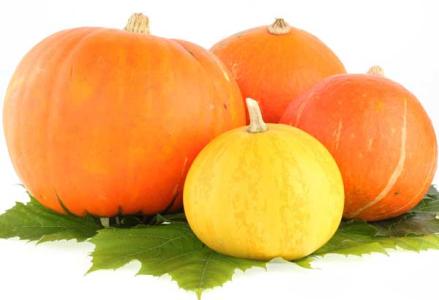
Pumpkin, also known as wogua, fangua, fangua, and fannangua, is a plant of the Cucurbitaceae family and the Cucurbita genus. It is an annual trailing herb. The stems often root at the nodes and extend 2-5 m, densely covered with short white bristles. The leaf stalks are stout. It originated in the region from Mexico to Central America and is widely cultivated throughout the world. It was introduced to China during the Ming Dynasty, and is now widely grown in both the north and the south.
Planting methods
1. Timely sowing: For open-field cultivation of chestnut-flavored pumpkin, spring planting is the main season, with sowing and seedling raising in January to February; for autumn planting, direct sowing can be done in August to September, but viral disease occurs seriously and the risk is relatively high. Zucchini has strong cold tolerance, and can be sown and raised as seedlings from December to mid-February of the following year, or directly sown in late autumn in October. For Chinese pumpkin, spring planting in February to March, with sowing and seedling raising in early March, and direct sowing in late July to early August for autumn planting are preferable. During the seedling period, adopt "high-low" temperature management, that is, maintain high temperature after sowing to promote emergence, and after most seedlings emerge, strengthen ventilation and appropriately lower the temperature inside the shed. Chestnut-flavored pumpkin and zucchini are better grown in winter under protected cultivation.
2. Timely transplanting: Choose plots that have not grown cucurbit vegetables for 2-3 years. Plant in loam or sandy loam soil with good light, convenient drainage and irrigation, and a soil pH of 5.5-6.8. Transplant when the seedlings have 2-3 true leaves. For dwarf varieties, the bed width is about 1.5 m, plant spacing about 0.6 m, with double-row planting. For long-vine varieties, the bed width is 2-2.5 m, plant spacing 0.6-0.7 m; single-row planting for ground-trailing cultivation, and double-row planting for trellis cultivation. Combined with land preparation and trenching, apply about 2000 kg of decomposed organic fertilizer, 0 kg of phosphate fertilizer, and 15 kg of compound fertilizer per mu to the planting trench. Choose a sunny day at the end of a cold spell and the beginning of warmth for transplanting. Viral disease occurs seriously in autumn planting, so appropriate close planting can be used, and seedlings should be thinned before vine extension to ensure a full stand.
3. Vine training and branch retention: Long-vine varieties usually retain 2-3 vines per plant. You can pinch off the growing tip when there are 5-6 true leaves, and select and retain 2-3 strong and evenly sized secondary vines, or retain the main vine and then select and retain 1-2 strong secondary vines. All other lateral vines must be removed. Dwarf zucchini generally does not undergo tip pinching or pruning. During growth, promptly remove old leaves and leaves.
4. Fertilizer and water management: After transplanting, water thoroughly to settle the roots. After the seedlings recover, apply 0.5% urea once or twice to promote seedling growth. Topdressing is generally divided into 2-3 applications. The first is at the vine extension stage or before the rows close, combined with intertillage and weeding, applying 10 kg of compound fertilizer per mu; the second is at the fruit enlargement stage, applying 15 kg of compound fertilizer per mu; the third depends on the plant's growth and is applied at the fruit enlargement stage of the second and third fruits, applying 10 kg of compound fertilizer per mu. The fruit enlargement stage requires more water, so timely irrigation is needed. The occurrence of viral disease in autumn planting is closely related to the fertilizer and water supply in the early growth period. Applying more water and fertilizer to promote rapid plant growth and avoiding water and fertilizer deficiency can effectively reduce the occurrence of viral disease. Spring planting has more rain, so drainage should be done well to reduce field humidity. In the middle and late stages of autumn planting, there is less rain, so furrow irrigation should be carried out well.