Enoki Mushroom Cultivation Methods and Key Technical Points
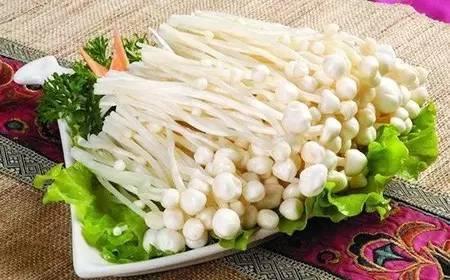
The scientific name of enoki mushroom is Flammulina velutipes, also known as velvet shank, winter mushroom, and enokitake, among other names. In English it is called: "Enoki Mushroom". Its botanical name is Flammulina velutiper (Fr.) Sing. Because its stipe is slender and resembles golden needle vegetables, it is called enoki mushroom. It belongs to the order Agaricales, family Physalacriaceae, genus Flammulina, and is a type of fungus-alga-lichen organism. Enoki mushroom has very high medicinal and dietary therapeutic value.
Cultivation Methods
1. Preparation of culture material Main formulas: (1) 89% cottonseed hulls, 10% rice bran or wheat bran, 1% gypsum; (2) 80% sawdust, 20% rice bran or wheat bran; (3) 73% corncob, 25% bran, 1% gypsum, 1% sucrose. Add water to the above culture material and mix thoroughly, then adjust the pH to about 6. The water content should be such that when the material is squeezed by hand, water droplets seep out but do not form a stream of water. After the culture material is prepared, choose plastic bags with specifications (length x width) of 17cm x 28cm and a thickness of 0.6mm, fill with about 300g of material, and tie off both ends. Sawdust from broadleaf trees is preferable; pine and fir sawdust is not suitable for cultivation. Sawdust mainly serves to retain moisture and provide aeration. If there is too much coarse sawdust, the medium dries easily; if the sawdust is too fine, permeability is poor. Rice bran and wheat bran contain all the nutrients needed for the growth and development of enoki mushroom, but adding too much rice bran or wheat bran causes slow colonization, easily produces watery mushrooms, and results in low yield and poor quality. When filling the bags with culture material, equal amounts of culture material should be placed in each bag so that colonization is uniform and fruiting occurs at the same time, which facilitates later management. Inoculate under sterile conditions, with the spawn inoculated at both ends of the bag. This should be carried out in a room under sterile or near-sterile conditions. The spawn should be selected from appropriate-period spawn with vigorous vitality, robustness, and no contamination by foreign microorganisms.
2. Management during the colonization period After inoculation, place the cultivation bags in a clean culture room for colonization. Keep the indoor temperature at 22-25℃. Under normal conditions, 10-15 days after inoculation the mycelium can extend 20-25mm into the culture medium. If colonization proceeds smoothly, 20-25 days after inoculation the mycelium can cover the entire surface of the material. At this stage, contaminated bags should be picked out, and bags whose mycelium has not fully colonized should be arranged together to continue colonizing.
3. Scratch fruiting and primordial induction After colonization is completed, scratching should be carried out immediately. Remove the inoculated spawn block so that fruiting bodies emerge evenly from the surface of the culture medium. If the surface of the culture medium is very dry, scraping and scratching can be used, that is, scraping off the old spawn skin together with 5-10mm of culture medium in blocks. Under the mechanical stimulation of scratching and low-temperature stimulation, the mycelium can form primordia. Maintain air humidity at 90%-95% and strengthen ventilation, which can inhibit the formation of aerial mycelium on the bag surface after scratching and help induce primordia and fruiting. At this stage, the relative air humidity should preferably be maintained at about 95%, and the temperature should preferably be controlled at 10-15℃. Cover with newspaper or film to retain moisture so as to induce fruiting. After one week, pointed mushroom primordia gradually grow out; white primordium tips are normal.
4. Management during the growth stage When the stipe grows to 0.5-1.0cm, increase light, which has the effect of increasing yield and improving quality. Because the fruiting body of enoki mushroom has strong phototropism, from the time the mushroom body grows to 2-3cm until harvest, covering with paper tubes and using a certain amount of light can induce the stipe to elongate toward the light. Therefore, hang a 15w bulb every 3-5m above the bed frames to produce vertical light and promote stipe elongation. At this stage, it is appropriate to keep the temperature at 8-15℃, the relative air humidity at 85%-90%, and the co2 content in the mushroom house at 0.10%-0.15%. This can achieve the purpose of inhibiting cap opening and promoting stipe elongation. After about 15 days, the cap diameter can reach 1-2cm and the stipe length can reach 8-15cm, at which point harvesting can begin.
5. Harvesting at the appropriate time When the stipe length is 13-14cm, uniform, the cap diameter is about 1cm, the margin is incurved, there are no abnormalities, the stipe and cap do not appear water-soaked, the stipes are clearly separated from one another, round and thick, the whole body is pure white, the mushroom body is firm, and the water content is not excessive, it is the harvest period. A few days before harvest, check the water content of the caps. If they contain a lot of water, ventilate 2 days before harvest to promote water evaporation. After harvest, remove the part of the culture medium connecting the base of the stipe to the culture medium and poorly growing mushrooms, carry out small packaging according to market requirements, or vacuum-seal in polyethylene film bags and store at low temperature. After the second flush, in order to improve yield and quality, the fungus column can be removed and bagged with the ends reversed, or the original fruiting bag opening can be closed and the other end opened for fruiting.
Functions and Effects
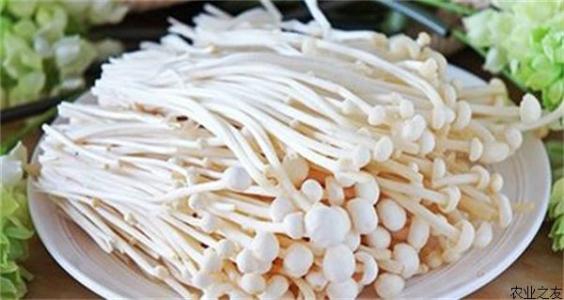
Enoki mushroom is cold in nature and sweet and salty in taste. It has the effects of tonifying the liver, benefiting the stomach and intestines, and resisting cancer. It mainly treats liver disease, gastrointestinal inflammation, ulcers, tumors, and other conditions. Enoki mushroom has a relatively high zinc content, which is helpful for preventing prostate disease in men. Moreover, enoki mushroom is also a high-potassium and low-sodium food, which can help prevent and treat high blood pressure and is also beneficial to elderly people.
Tonifies the liver, benefits the stomach and intestines, and resists cancer; mainly treats liver disease, gastrointestinal inflammation, ulcers, tumors, and other conditions, and benefits intelligence.