Detailed Explanation of Cashew Planting Methods and Technical Points
Cashew, Anacardium occidentalie Linn, is a plant in the class Dicotyledoneae, order Sapindales, family Anacardiaceae, genus Anacardium. Also known as the cashew tree, chicken cashew, and longevity fruit. It is an evergreen tree with an upright trunk, reaching up to 10 m tall. The cashew is a kidney-shaped nut in the order Sapindales, family Anacardiaceae, genus Anacardium. It is native to the Americas.
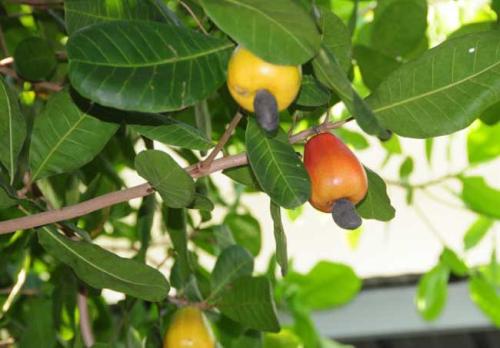
Planting Conditions
1. Temperature
The cashew is a tropical seasonal fruit tree, native to the Brazil region, and is a warmth-loving, sun-loving tree species. It is suitable for growing in environments with an average temperature of 24-28 degrees, with air temperatures between 25-30 degrees, where it grows extremely quickly and flowers and fruits normally. It is not cold-tolerant, but as the tree ages its cold tolerance gradually increases. When the temperature is below 10 degrees, one- to two-year-old fruit trees will dry up and die, while trees over three years old can tolerate slight cold, but whether old or young, trees are relatively sensitive to temperature, especially in low-temperature environments.
2. Light
The cashew is a light-loving tree species. In environments with sufficient sunlight it grows well, with more flowers and fruits. With too little light, and being in a relatively shaded environment for a long time, it grows poorly, with fewer flowers and fruits. In its native Brazil, the annual sunshine duration can reach 1500-2000 hours, so in China only Hainan or the southwestern region can meet its sunshine duration requirements, where the annual sunshine duration can reach 1500-2500 hours.
3. Soil
The cashew has strong environmental adaptability and is not strict about soil. It can grow normally in arid and barren red soil, sandy soil, or stony mountain land, but its growth and the number of flowers and fruits are not as good as in fertile soil. It prefers to grow in soil with good aeration, that is fertile and loose, and well-drained. It dislikes poorly drained low-lying land or soil with relatively high salinity and alkalinity. Generally, it grows and fruits best in areas below 400 m elevation.
4. Water
The peak growing season of the cashew tree is in the early rainy season, so its water demand is relatively high. With sufficient water it grows quickly, and areas with annual rainfall of 1000-1600 mm are most suitable. It dislikes areas with year-round rainy seasons or relatively high groundwater levels, as this causes the root system to be submerged for a long time, leading to root rot and, in the worst case, plant death.
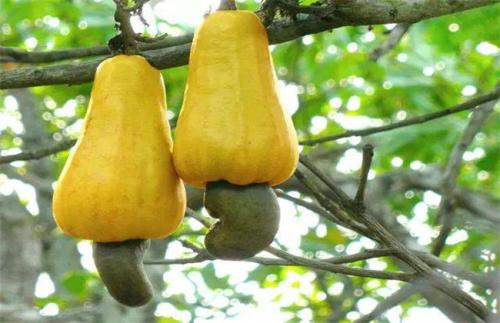
Management
Pest and Disease Control