A Detailed Guide to Growing and Caring for the Queen of the Night
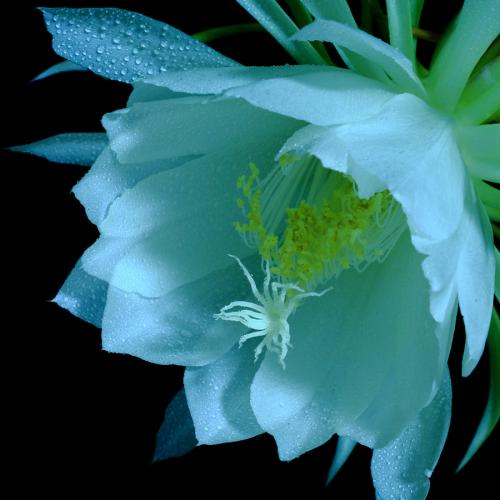
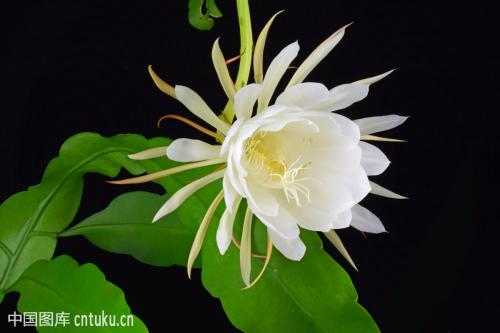
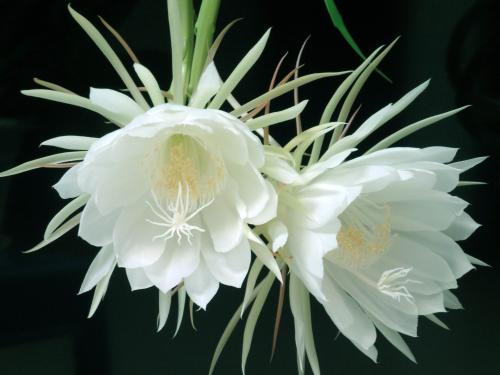
Queen of the Night (scientific name: Epiphyllum oxypetalum (DC.) Haw): an epiphytic succulent shrub, 2-6 m tall, with old stems cylindrical and woody. Branches numerous, leaf-like, laterally flattened, lanceolate to oblong-lanceolate; flowers solitary in the small areoles on the sides of the branches, funnel-shaped, opening at night, fragrant; the receptacle is green, slightly angled, covered with short triangular scales; the petal-like perianth segments are white, obovate-lanceolate to obovate. The berry is oblong-spherical, with longitudinal ridges, hairless, purple-red. Seeds numerous, ovate-reniform, glossy black, wrinkled, hairless.
Planting Methods
Soil: For pot culture, a well-drained, fertile leaf mold is commonly used. The potting soil should not be too wet; in summer, maintain relatively high air humidity. Avoid being drenched by showers, so as to prevent waterlogging and root rot. During the growing season, fertilize once every half month; in early summer, at the bud-forming and flowering stage, apply an additional phosphorus fertilizer once. Proper application of fertilizer and water can prolong the flowering period; too much fertilizer and water, or excessive shading, easily causes excessive elongation of the stem segments, which conversely affects flowering.
Light: It prefers a semi-shaded, warm environment. In summer, it should be kept under a shade screen, or grown in a place without direct sunlight. The suitable growing temperatures in spring and summer are 21-24℃ during the day and 16-18℃ at night. In winter, it should be moved into a greenhouse, placed in a sunny spot, and given sufficient light; the overwintering temperature is best kept at 10-13℃.
Watering: In summer, keep the potting soil moist, but do not let water accumulate, so as to avoid root rot. Provide shade to avoid direct sunlight. Water more in summer, and mist once or twice in the morning and evening to increase air humidity; avoid being drenched by showers, so as to prevent waterlogging and root rot. In spring and autumn, watering should be reduced; in winter, watering must be strictly controlled, keeping the potting soil merely not too dry.
During the growing season, apply decomposed cake fertilizer water once every half month, and ferrous sulfate may also be added and applied at the same time. At the bud-forming and flowering stage, apply an additional topdressing of bone meal or superphosphate once. Proper application of fertilizer and water can prolong the flowering time. Too much fertilizer and water, or excessive shading, will cause excessive elongation of the stem segments and affect flowering. While exposure to the sun or overly strong sunlight will cause the modified stems to shrivel and turn yellow.
Support and protection: Because the modified stems of potted Queen of the Night are weak and tender, they should be tied up promptly or given supports. The Queen of the Night is a shade-loving plant; in summer, potted plants may be placed under tree shade or under the eaves, but avoid dripping rainwater, so as to prevent the plant from exposing its roots and toppling, which affects growth. In winter, they need to be moved indoors to overwinter.
Controlling the flowering period: In order to change the Queen of the Night's habit of blooming at night, the method of "reversing day and night" can be used to make it bloom during the day. When the flower buds of the Queen of the Night swell, move it during the day to a dark room or cover it with a black light-blocking cover made of black plastic film, without letting any light through, while at night, from 8 p.m. to 6 a.m. the next morning, use lamplight to illuminate it. After treating it this way for 7-8 days, the Queen of the Night can bloom during the day according to people's wishes.