Detailed Explanation of Key Techniques and Management Methods for Poria Cultivation
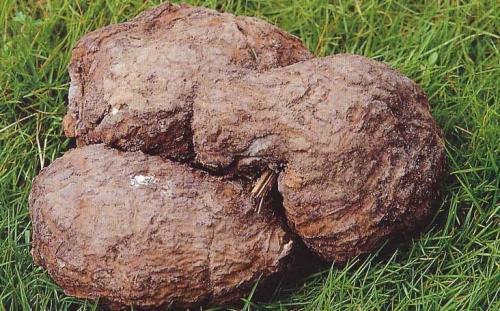
Poria, a name in traditional Chinese medicine. It is the dried sclerotium of the polypore fungus Poria cocos (Schw.) Wolf. It is mostly harvested from July to September. After digging out, remove the mud and sand, pile it up for "sweating," then spread it out to air-dry until the surface is dry, then "sweat" it again, repeating several times until wrinkles appear and most of the internal moisture has dissipated, then dry it in the shade; this is called "Poria whole"; or cut fresh Poria into pieces according to different parts and dry them in the shade, called "Poria blocks" and "Poria slices" respectively.
Log cultivation
First prune the branches of the felled Simao pine, then use an axe to remove the bark while leaving the fibrous strips, saw the debarked trunk into 60-70cm long logs, stack them layer by layer in a well-crib pattern, cover with bark and thatch, expose to sun and wind to dry, turn the pile at regular intervals to ensure the logs dry evenly, until the logs have many fine cracks all over, make a crisp "knock-knock" sound when struck by hand, and the moisture content is about 25%-28%, then they are ready for pit placement. Select stumps of Simao pine that have been cut within 2-3 months, are not rotten, have no insect damage, and have intact root bark, clear weeds, shrubs, stones and other debris within a 1m radius, and scrape away the topsoil around the stump; on a sunny day, dig a 30cm deep trench around the pine stump, use an axe to split away the exposed bark, and spray a long-lasting pesticide around it to prevent termites; then use a knife to open the bag containing the spawn (do not crush the spawn).
10d after inoculation, the mycelium has begun to grow into the stump; at this time check whether the fungus has established; if not, re-inoculate in time. Generally 2-3 months after inoculation, the stump will begin to form sclerotia. In late autumn and winter, Poria enters dormancy; after temperatures warm up the following year it begins to grow, and April to June is the vigorous growth period for Poria. At this time, frequently add soil around the Poria and stumps to prevent the Poria from being exposed above the soil and scorched by the sun.
Bag substrate cultivation
Mix rice bran (or wheat bran) with calcined gypsum evenly, then add pine sawdust, mix well, then add dissolved sucrose water, turn and mix evenly, so that the moisture content of the culture substrate is 44%-70%. After preparing the culture substrate, let it stand for 30 min, and after the water has evenly penetrated the material, proceed with bagging. Use polypropylene plastic culture bags; after filling each bag with substrate, insert a pine wood strip; the culture bag has openings at both ends and is fitted with rings.
To prevent the culture bag from being punctured by the culture material, put another identical culture bag on the outside, then sterilize under high pressure for 2h. After cooling, inoculate Poria spawn at both ends of the culture bag, and place in a 25 degrees C greenhouse to culture until the mycelium has fully colonized the culture bag. Referring to Poria log cultivation, select a suitable site and dig cultivation pits, size 80-90cm x 30-35cm x 20-25cm, with the pit bottom parallel to the slope surface, then score the culture bag and inoculate sclerotia, place the culture bag horizontally at the bottom of the pit, use 1 pine log as a "lure" to press the log and culture bag tightly together with no gaps, then cover with the excavated soil to a thickness of about 20cm, with the top of the soil slightly in a turtle-back shape; the area around the outer edge of the Poria pit may be slightly lower to facilitate drainage and avoid water accumulation in the Poria pit, which can cause mycelium death.