Cleome Planting Method and Daily Care Tips
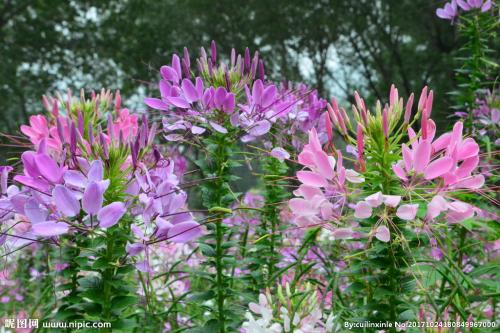
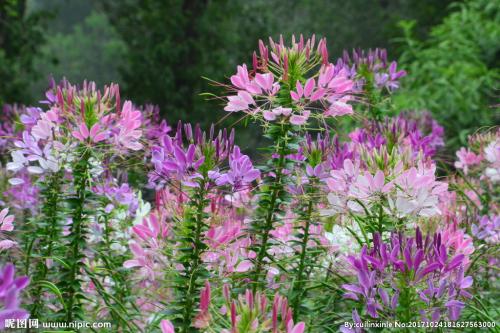
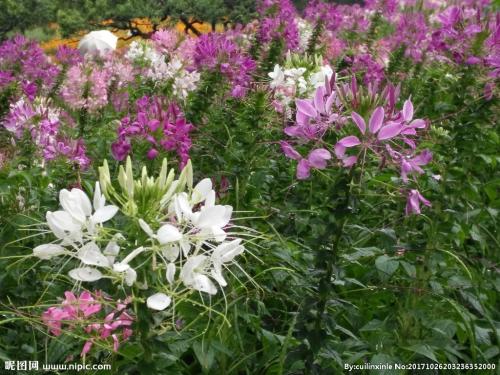
Cleome (scientific name: Cleome spinosa Jacq.): an annual herbaceous plant. The flower stems are upright, and the plant height is 40 cm-60 cm; some cultivars can reach 1 m. Its stems bear fine sticky hairs and give off a strong, distinctive odor; the leaves are palmately compound, with 5-7 leaflets that are oblong-lanceolate; the raceme is terminal, and the flowers open successively from the bottom upward, with lanceolate petals curling outward, red buds, rose-red or white petals, and very long stamens; the capsule is cylindrical, and the seeds are light brown. The flowering period is from June to September. Its flower stems are long and sturdy, and when the flowers are in full bloom, the raceme forms a full flower ball, with each small flower resembling a dancing butterfly, very beautiful.
Cultivation Techniques
Soil: No special soil is required; a well-drained sandy soil containing humus is best. Cleome has a relatively developed root system, so the pot should be slightly deeper and larger, preferably with a pot diameter of 20 cm to 30 cm. Except for poor growth in alkaline soil, it can grow in sandy soil and clay soil, and grows best in slightly acidic sandy loam. An equal mix of leaf mold and vegetable garden soil can be used as the growing medium. The soil should be loose and well-drained.
Fertilization: When transplanting seedlings, first dig the planting hole, sprinkle a layer of organic fertilizer at the bottom of the planting hole as base fertilizer, about 4-6 cm thick, then cover with a layer of soil and place the seedling in, so as to separate the fertilizer from the roots and avoid burning the roots. After placing the seedling in, backfill the soil to cover the roots, firm the soil with your foot, and water thoroughly once. Apply a light fertilizer once at the initial planting stage. Control fertilization during the mid-growth stage to keep the plant shape moderate and attractive. Like other herbaceous flowers, it has a relatively high demand for fertilizer and water, but the fertilization (and watering) principle of "apply light fertilizer frequently, use less at a time but more often, and keep nutrients complete" should be followed, and after fertilizing, keep the leaves and flowers dry at night. For potted plants, apply 2-3 times of diluted compound liquid fertilizer during the bud stage, and they can bloom during the Spring Festival period.
Pinching: Generally pinch twice before flowering to encourage more flowering branches: one to two weeks after potting, or when the seedlings are 6-10 cm tall and have more than six leaves, remove the growing tips and keep the lower 3-4 leaves to encourage branching. Three to five weeks after the first pinching, or when the side branches grow to 6-8 cm long, carry out the second pinching, that is, remove the growing tips of the side branches and keep the 4 leaves below the side branches. After two pinchings, the plant shape will be more ideal and the number of flowers will also be greater. When planting in flower beds, spent flowers should be removed promptly so that they do not set seed, thereby extending the flowering period.
Watering: It can tolerate drought, but grows better with higher air humidity. In midsummer, water daily and water thoroughly. It likes relatively high air humidity; if the air humidity is too low, individual flowers will fade faster. It also dislikes rain exposure, and the leaves need to remain dry at night. The optimal relative air humidity is 65-75%.
Light: It likes sunlight and warmth, tolerates heat, slightly tolerates semi-shade, and is not cold-tolerant. Summer is the growing period, and the plant will die when frost occurs. The suitable temperature for growth is 20-32°C.
Seed saving: Cleome sets seed quite easily. When the capsules begin to turn from green to yellow, they can be harvested. After the harvested seeds are air-dried, store them in a cool place for use the following year. Propagate by seed. The fruits are slender and mature successively from late summer to early autumn, and can be collected in stages. The seeds are tiny; after harvesting and drying in the shade, store them in bags indoors in a cool place or in the refrigerator. Early-maturing seeds can be sown immediately after collection, and will bloom in late autumn and early winter. Generally, the seeds are stored over winter and sown in early spring of the following year for summer flowering, or sown in late spring for summer and autumn flowering. Sow in an open seedbed and keep moist after covering with soil. When the seeds germinate, the temperature needs to be above 20°C. In early spring, sowing needs to be done under insulation in a plastic tunnel for uniform germination. If the temperature is suitable, germination will occur about 1 week after sowing. The seeds have the ability to self-sow and reproduce.
Cultivation management: Cleome seedlings grow slowly. When 2 true leaves have grown, transplant them once at a spacing of about 10 cm. Because it does not tolerate transplanting, careful management is needed when transplanting or planting out, with timely watering and covering with reed curtains to protect from sun and wind, and then gradually removing them once the seedlings resume growth. Watering during the growth period should be moderate; too much water can easily cause leggy growth, so loosen the soil in time to preserve moisture. Because the flowering period is relatively long, apply a quick-acting liquid fertilizer 1-2 times as a supplementary fertilizer to keep the flowers blooming abundantly and continuously. Spent flowers should be removed at any time to keep the flower bed neat and attractive. If saving seeds, pick the capsules promptly when the skin turns yellowish and is about to split, dry them in a centralized place, thresh, and store. Cleome can also be sown in autumn for pot cultivation; as a greenhouse flower, it can bloom during the Spring Festival.