Planting Methods and Technical Key Points for Bryophyllum pinnatum
Bryophyllum pinnatum (scientific name: Bryophyllum pinnatum (Lam.) Oken): a perennial herb, 40-150 cm tall; stems branched. Pinnately compound leaves, 10-30 cm long, leaflets oblong to elliptic, 6-8 cm long, 3-5 cm wide, apex obtuse, margins crenate, plantlets readily form at the base of the crenations, and once the buds grow larger and fall to the ground they become a new plant. Panicle terminal, 10-40 cm long; flowers pendulous, corolla salverform, up to 5 cm long, base slightly swollen, becoming tubular upward, lobes 4, ovate-lanceolate, pale red or purplish red. Follicles enclosed within the calyx and corolla; seeds small, striped. Flowering period January-March.
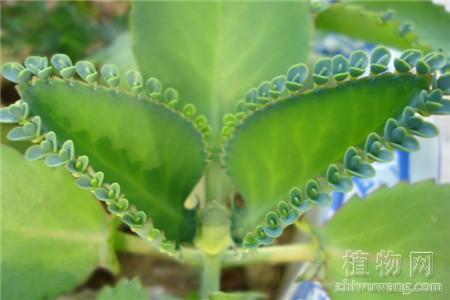
How to cultivate Bryophyllum pinnatum
Cultivation key points:
1. Temperature and light
Bryophyllum pinnatum likes a sunny, warm and humid environment, is cold-tolerant, and grows well in well-drained acidic soil. During high summer temperatures it needs slight shading; in other seasons it should have sufficient light, otherwise the color at the leaf margins will disappear. The optimum growing temperature is 13-19°C, and the winter temperature is 7-10°C.
2. Watering management
Bryophyllum pinnatum is drought-tolerant; normally water only after the soil has dried out completely, and there is no need to worry that it will die of drought. During the growing season water slightly more to keep the potting soil moist, but not waterlogged. As temperatures drop in autumn and winter, watering should be reduced. It flowers in winter, so watering must be strictly controlled.
3. Fertilization management
Fertilizing need not be too frequent, otherwise it causes excessive growth and may even cause the plant to rot; applying fertilizer 1-2 times a month during the growing season is sufficient.
4. Propagation methods
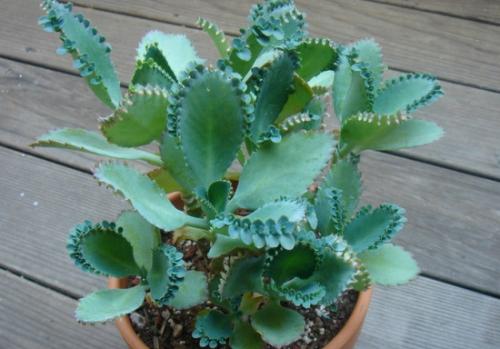
Bryophyllum pinnatum is commonly propagated by cuttings, adventitious buds and sowing. For cuttings, May-June is best; place healthy leaves flat on a sand bed, press them closely against the sand, and maintain humidity. One week after insertion, small plantlets grow out from the notches at the leaf margins. Once grown, cut them off and move them into pots. For stem cuttings, cut 8-10 cm-long tip shoots, let them dry slightly, then insert them into a sand bed; rooting begins after 1 week, and after 2 weeks they can be potted. Propagation by adventitious buds is even simpler: peel off the larger adventitious buds growing at the leaf margins and pot them directly. For sowing, the seeds are very small; do not cover with soil after sowing; they germinate about 12-15 days after sowing, with a high germination rate.
5. Growing medium
Bryophyllum pinnatum likes well-drained, fertile acidic soil; for pot cultivation, a mix of 3 parts leaf mold and 1 part sandy soil can be used as the growing medium.
6. Pests and diseases
Bryophyllum pinnatum is mainly affected by gray mold and powdery mildew, which can be sprayed with a 1000-fold dilution of 70% thiophanate-methyl wettable powder. Insect pests include scale insects and aphids, which can be killed by spraying a 1000-fold dilution of 40% dimethoate emulsifiable concentrate.