Detailed Explanation of Key Points and Management Methods for Camellia oleifera Planting Technology
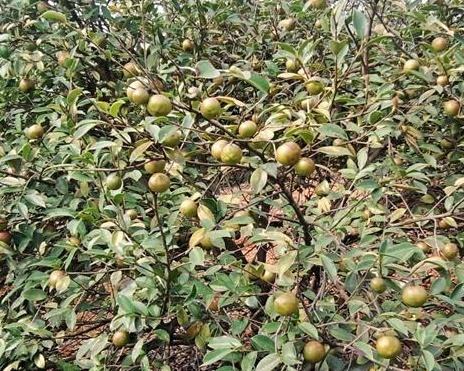
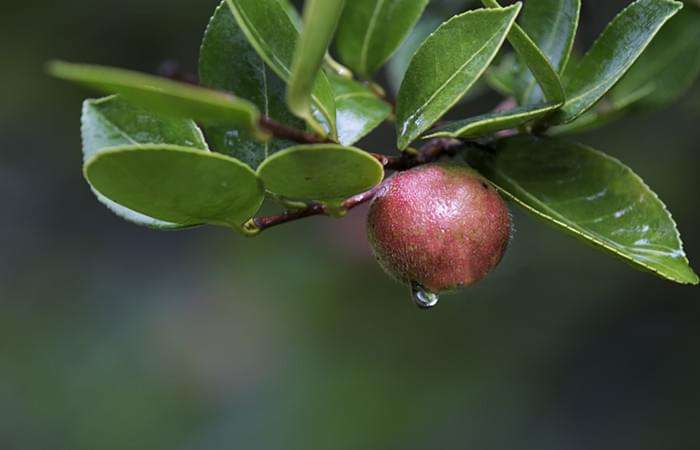
Camellia oleifera seedlings, evergreen shrubs or trees, tree height 3-4m. Bark yellowish-brown or grayish-brown, young twigs and shoot tips pubescent, terminal buds 1-3, purplish-red ones are flower buds, the central slender, yellow-green ones are leaf buds, scales tight. Leaves simple, alternate, leathery, smooth surface, petiolate, elliptical or ovate-elliptical, apex acuminate, margin serrate, midrib prominent, lateral veins inconspicuous. Flowers bisexual, white or red, terminal or axillary. Stamens numerous, arranged in 2-4 whorls, connate at the base, usually falling together with the petals, anthers yellow. Pistil stigma 3-5 lobed, ovary 3-5 locular. Capsule spherical, peach-shaped, olive-shaped, etc., colors include red, yellow, green and several others.
Planting Methods
1. Select improved varieties
Growing Camellia oleifera is for making money, and making money means high yield and good quality, so we need to choose high-quality seedlings. First, we need to select varieties according to the local climate and soil conditions; second, the flowering cycles of the selected Camellia oleifera trees should be consistent; finally, choose improved varieties identified by the relevant national authorities, with large fruit, but thin pericarp, high oil yield, and strong resistance. Next, Camellia oleifera planting generally uses seedling cuttings or grafting, so when selecting seedlings, choose relatively robust seedlings without disease, so that the survival rate and subsequent yield will be high.
2. Land selection and land preparation
The soil for Camellia oleifera planting is best slightly acidic, so that the survival rate will be high; second, the soil should be relatively fertile, preferably red soil or sandy soil; finally, Camellia oleifera is relatively shade-loving in its early growth stage, but later it needs sufficient light, so we should best choose a semi-sunny slope with relatively sufficient sunlight, or a sunny slope is also fine. Land preparation should be carried out according to specific conditions. On flat land, we need to plow everything, while on sloping land we can choose to plow only the small area to be planted, which can reduce labor and also prevent vegetation destruction.
3. Reasonable planting
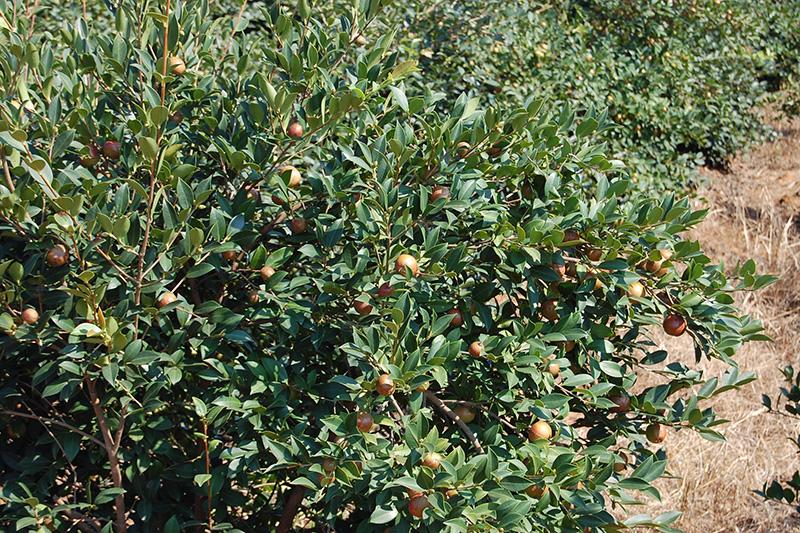
Camellia oleifera is generally planted in October or February each year. The survival rate of Camellia oleifera planted at this time will be much higher than usual. Second, the planting density is best controlled at about 100 trees per mu, that is, about 2 m between each plant and about 3 m between each row. Seed sowing can be used, and seedling cuttings or grafting can also be used, but the growth cycle of seed sowing will be relatively long, though basically it bears fruit in about two and a half to three years.
4. Scientific fertilization
Fertilization should be divided into three stages. The first is fertilization at the seedling stage, mainly nitrogen fertilizer, that is, what we commonly call urea, mainly to promote the growth of Camellia oleifera. The second stage is Camellia oleifera that has reached three years old and begun to bear fruit. At this time, Camellia oleifera is in its prime, so we need to fertilize in three steps: first, apply a growth fertilizer once in spring, then apply a flower-promoting fertilizer once when flowering, and finally apply a fruit-strengthening fertilizer once when fruiting. The third stage is when Camellia oleifera has some years, we need to add one maintenance fertilizer on the basis of the second stage, that is, after Camellia oleifera harvest. Growth fertilizer is mainly nitrogen fertilizer, flower fertilizer is mainly potassium fertilizer and phosphate fertilizer, and fruit fertilizer is mainly boron fertilizer.
5. Field management
Field management includes routine cultivating and weeding, pest and disease control, branch and leaf pruning, and orchard cleaning. Let us go through them one by one. Camellia oleifera needs about three cultivating and weeding sessions a year, which can improve its resistance and also speed up growth to a certain extent. Camellia oleifera has strong resistance, so pests and diseases rarely appear. Even so, we still carry out prevention, that is, regularly spraying Camellia oleifera with some Bordeaux mixture or carbendazim, and when there are pests, spraying some trichlorfon solution. Branch and leaf pruning is a relatively important step, because Camellia oleifera needs sufficient light in the middle and later stages, so we need to cut away some branches and leaves in places that grow too luxuriantly, and then also cut away the weaker branches and leaves at the bottom as well as dead branches and diseased branches, which can increase the yield of Camellia oleifera. Finally, orchard cleaning is generally needed immediately after Camellia oleifera harvest. We need to clean out field debris and dead branches together, then spread a layer of lime for disinfection.
Pests and Diseases