Detailed Explanation of Cilantro Planting Methods and Technical Points
Cilantro, scientific name coriander, belongs to the order Apiales, class Dicotyledoneae, and is a plant with a distinctive aroma, generally used as a food. It originated in the Mediterranean region of Europe and was brought back from the Western Regions by Zhang Qian during the Western Han Dynasty (first century BC) in China.
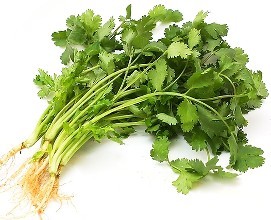
Cilantro planting methods
1. Variety selection. Coriander has large-leaf varieties and small-leaf varieties. Large-leaf varieties have taller plants, larger leaves, fewer and shallower notches, a milder fragrance and higher yields; small-leaf varieties have shorter plants, smaller leaves, deeper notches, a stronger fragrance, cold tolerance and strong adaptability, but slightly lower yields, so small-leaf varieties are generally chosen for cultivation.
2. Open-field cultivation. Coriander can be cultivated in open fields in spring, autumn and winter. Do not water too much during the seedling stage. When the seedlings grow to 10 cm, the plants grow vigorously and should be watered frequently to keep the soil surface moist. While watering, apply quick-acting nitrogen fertilizer 1 to 2 times. Pay attention to intertillage and appropriate thinning, and pull out weeds when thinning. In summer, appropriate shading is needed, and protection against torrential rain erosion is necessary; drain promptly after rain to ensure uniform emergence.
3. Greenhouse cultivation. Before winter begins, irrigate once with frozen water to help the seedlings overwinter. Cover the greenhouse in January; from January to February no ventilation is needed. When the seedlings turn green again, carry out intertillage, loosening of the soil and weeding. When the seedlings reach 10 cm in height, the plants enter the vigorous growth period, and the greenhouse should be kept at 15°C to 25°C. Apply about 15 kg of ammonium sulfate per mu each time, topdressing 1 to 2 times, which can advance the harvest.
3. Land and fertilization. In general, when planting cilantro (coriander), choose a plot with loose soil, rich organic matter and convenient drainage and irrigation. After the previous crop is harvested, turn the soil in time to a depth of 15-20 cm, and let it weather and sun-dry for more than 2 weeks, then spread 4000-5000 kg of fully rotted high-quality farmyard manure and 10-15 kg of compound fertilizer per mu as base fertilizer. After plowing and harrowing, make beds with a surface width of 140-150 cm and a height of 20-25 cm, with the length determined by the plot length, and a ditch width of 30-40 cm, which also serves as a walkway. The bed surface requires fine, loose and level soil. If drilling is used, open sowing furrows on the bed surface at a row spacing of 8-10 cm, 4-5 cm wide and about 2 cm deep, in preparation for sowing.
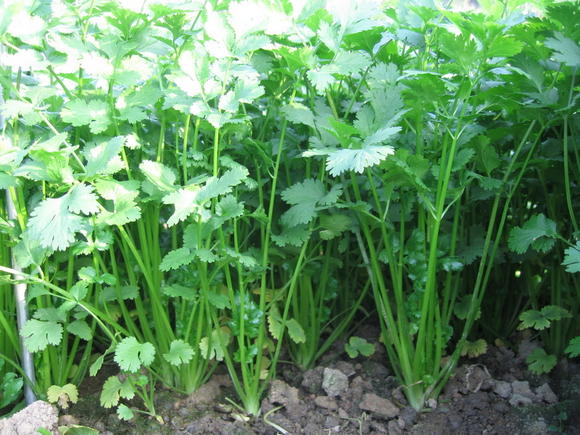
Effects
Cilantro is pungent and warm, entering the lung and spleen meridians; it has the effects of inducing sweating and promoting eruption, aiding digestion and descending qi, and awakening the spleen and harmonizing the middle. It mainly treats early-stage measles with poor eruption, food stagnation, loss of appetite, rectal prolapse and other conditions.
1. Measles: 3 whole coriander plants with roots, 3 water chestnuts, 3 grams of lithospermum arvense, add more than half a bowl of water, decoct for 15 minutes and then filter the juice, take in 2 doses, once every 4 hours, taken when the rash is about to appear, which can prevent complications; or 500 grams of coriander, after the water boils, boil the coriander for 1-2 boils, then pour the water into a basin, first fumigate with the hot steam, then wash the hands and feet with the water, which can treat measles that should appear but does not, or measles with incomplete eruption.
2. Stomach cold pain: 1000 grams of coriander leaves, 500 milliliters of wine, soak the coriander in it, remove the leaves after 3 days and drink the wine, taking 15 milliliters when pain occurs.
3. Hemorrhoid swelling and pain and rectal prolapse: boil coriander into a soup and use the soup to fumigate and wash the affected area.
4. Indigestion and poor appetite: 6 grams of coriander seed (fruit), 9 grams each of dried tangerine peel and medicated leaven, 3 slices of ginger, decoct in water and take.
5. High blood pressure: use 10 grams of fresh [coriander], add 10 grams of kudzu root, decoct in water and take, once in the morning and once in the evening, 50 milliliters each time, 10 days as one course of treatment, which has an auxiliary therapeutic effect on high blood pressure.
6. Hiccups: 6 grams of basil leaves (double if fresh leaves), 3 slices of ginger, brew in boiling water or decoct for one boil, and take while hot.
7. Chest and diaphragm fullness and oppression: grind coriander seed into powder, take 3 grams each time, swallow with boiling water.
8. Vomiting: nausea. Mash an appropriate amount of fresh herb into one spoonful of juice, add two spoonfuls of sugarcane juice, warm and take, twice a day.
9. Corneal opacity: 1-2 seeds, washed clean, placed into the inner corner of the eye, close the eyes for a short while; when the seeds swell with moisture, they adhere to the eye and are pulled out.
10. Common cold: 30 grams of coriander, 15 grams of maltose, add half a bowl of rice soup, steam until the sugar dissolves and take.