A Detailed Guide to Planting Methods and Care Tips for Gemshell Plants
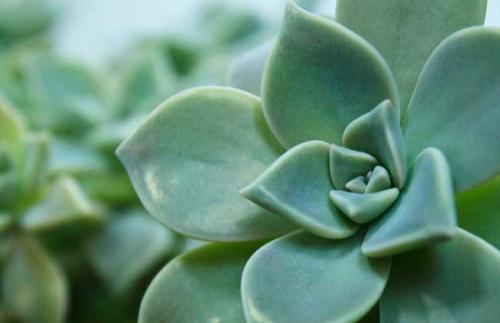
Gemshell plant is a general term for a class of succulents. Proper name: Shihua; other names: stone lotus, stone gallbladder grass, pink lotus, Graptopetalum paraguayense, early frost; in folk usage it broadly refers to rosette-shaped succulents. Examples include Pachyphytum oviferum, Echeveria secunda, Graptopetalum paraguayense, Echeveria 'Black Prince', Pachyphytum 'Cuijun', and so on.

Planting methods:
-
Preparing the potting soil for gemshell plants. Plants of the gemshell type have poorly developed root systems. In the wild, the soil for gemshell plants is mostly humus soil and weathered rock, and this kind of soil has very strong permeability. Based on this characteristic, the potting soil is best prepared as a loose, well-draining sandy soil. Generally, perlite, humus soil, and river sand can be used in a ratio of 5:3:2, sprayed with a disinfectant (such as carbendazim), then exposed to strong sunlight for sterilization before use.
-
Potting the gemshell plant. Potting is generally done in March or April, when the outdoor temperature is stable above 10°C, and September or October can also be chosen. For the pot, choose a ceramic pot with good breathability as much as possible, and do not choose a plastic pot. Before potting, stop watering for a few days. When potting, place some ash-free coal cinder at the bottom of the pot; if unavailable, some broken bricks, tiles, or similar can also be placed there. When placing the gemshell plant, be careful to prune off broken roots and dead roots, then let the wounds dry in a shady place before planting. Add culture soil according to the size of the pot so that the roots spread out, expose the stem base, and firm the soil.
-
Watering the gemshell plant. Gemshell plants like a dry soil environment, so watering must be controlled. After potting in spring, water lightly 2 or 3 days later, keeping the potting soil on the dry side and not too wet. In spring and summer, if the temperature rises above 20°C and is below 30°C, it is suitable to water thoroughly in one go, keeping the soil only slightly moist; if the temperature is 30°C, water cautiously, because high temperatures plus excessive watering will cause root rot. Just keep the soil from drying out completely. In autumn, keep the potting soil on the dry side. In winter, as the temperature drops, gemshell plants enter dormancy, so water less and just keep the soil from drying out completely. When summer temperatures are high, choose to water in the morning and evening; when winter temperatures are low, choose to water at noon when the temperature is higher.
-
Light and temperature management for gemshell plants. Gemshell plants relatively prefer sunny and warm environments. In a sunny environment, gemshell plants grow with a more shapely and attractive form; if light is insufficient, the plant shape becomes loose and the leaves sparse. Therefore, gemshell plants should be placed in a sunny spot, but note that when summer sunlight is too strong, move them to a brighter shady place to prevent leaf burn. When summer temperatures are too high, place them in a ventilated, shady place, and water the leaves to cool them down; when winter temperatures are too low, they should be placed in an environment above 5°C.
-
Fertilizing gemshell plants. Gemshell plants can adapt to poor soil, so fertilizing is very simple; some phosphorus and potassium fertilizer can be applied, and some plant ash can also be applied.
-
Prevention and control of pests and diseases in gemshell plants. Gemshell plants have strong disease resistance. Their main pest and disease problems are caused by scale insects, and in severe cases, sooty mold. Control methods: a. When the pest infestation is mild, prune off diseased or pest-carrying branches and leaves, and spray with a 1000-fold dilution of 40% omethoate emulsifiable concentrate. b. Once pests are found, replace the culture soil, carefully check the roots to see whether they have been attacked by pests, and if so, soak the roots in a 2000-fold dilution of 40% omethoate emulsifiable concentrate. c. Insecticides such as fenamiphos can be buried in the potting soil. d. Pay attention to maintaining ventilation for the gemshell plant and keeping it appropriately dry. For other diseases such as rust and leaf spot, spray with an 800-fold dilution of 75% chlorothalonil for control.