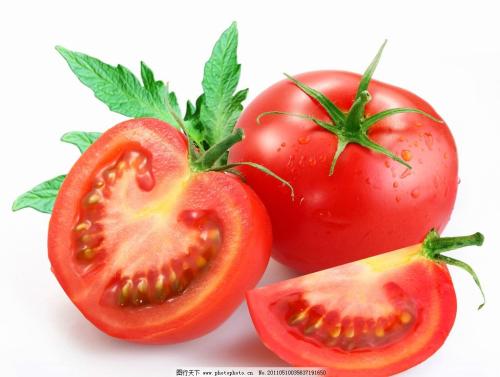
Detailed Explanation of Tomato Planting Methods and Technical Key Points
Tomato, also known as the tomato, is an annual or perennial herbaceous plant of the order Tubiflorae, family Solanaceae, genus Solanum, with a plant height of 0.6-2 m, covered all over with sticky glandular hairs, with a strong odor, stems prone to lodging, leaves pinnately compound or pinnately parted, inflorescence peduncle 2-5 cm long, usually with 3-7 flowers, calyx rotate, corolla rotate, berry oblate or nearly spherical, fleshy and juicy, seeds yellow, flowering and fruiting period in summer and autumn.
Planting time
Tomatoes have a long history of cultivation, and after many years of breeding there are numerous varieties, and their ability to adapt to the environment has greatly improved; the planting time must also change with the climate and temperature of the region. The planting time for spring tomatoes is from February to May, for the autumn-winter crop it is generally from July to September, and for the winter-spring crop it is from November to February of the following year.
Planting methods
1. Seed treatment
Before planting, soak the seeds in warm water; this not only breaks seed dormancy and promotes germination, but also has a certain sterilizing and disinfecting effect. First soak the seeds in clean water for one to two hours, then place the seeds in warm water at 50-60 degrees, stirring constantly, which prevents the seeds from being scalded; when the water temperature drops, add water to raise the temperature again, keeping the whole process at about 15 minutes. Then continue soaking the seeds for 3-5 hours before sowing.
2. Sowing and transplanting
After treating the seeds, sow them in a seedbed; sowing should not be too dense, with about 30 grams of seed per sq m being optimal. Keep the soil moist, with the temperature between 22-28 degrees, and sprouts will appear in about 3-4 days. But when the seedlings grow two or three true leaves, they can be transplanted; at transplanting, the ground temperature should be stable above 10°C, which is beneficial for root growth and improves the survival rate.
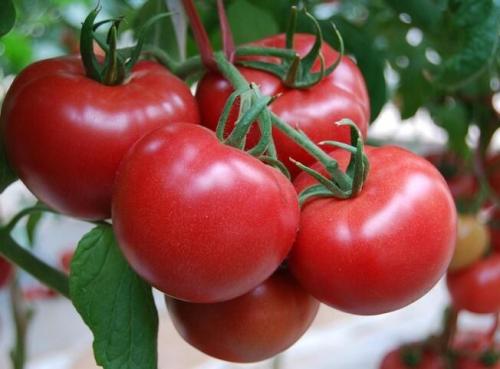
3. Field management
After transplanting, cultivate the soil promptly to promote rapid rooting and recovery growth; along with cultivation, loosen the soil and remove weeds. Fertilization should be mainly base fertilizer; apply sufficient base fertilizer to the cultivation site before transplanting, and basically no fertilizer is needed later. If you want rapid growth, you may apply fertilizer once or twice appropriately; after fertilizing, water immediately, which lowers the fertilizer concentration and prevents root burn. For ordinary watering, water according to seasonal climate changes; in dry seasons water more, in winter water as little as possible, and in the rainy season take good drainage measures to avoid excessive water accumulation causing root rot. Except for a few upright varieties, all other tomato varieties need trellising for cultivation.
4. Pruning
Pruning, trellising, and tying vines: after the first cluster of fruit sets, build an "A-shaped" trellis. There are mainly two pruning methods: one is to keep only the main stem and remove all side branches (it is best to remove side branches when they grow to 4-7 cm), called single-stem pruning; the other is to keep the main stem and also keep the side branch below the first inflorescence, removing all other side branches, called double-stem pruning. No matter which pruning method is used, be sure to tie the vines promptly.