Precautions for Angelica Essential Oil, and the Benefits of the Chinese Herb Angelica Dahurica
Let's take a look at the precautions for Angelica essential oil and the benefits of the Chinese herb Angelica dahurica.
Precautions When Using Angelica Essential Oil
Do not frequently use excessively high doses. To achieve therapeutic effects, a low dose is usually required, continued over a period of time; this gives the best results for regulating the body's functions.
For regular use, a concentration of 3-5% is appropriate. For more risky essential oils, do not exceed 3%.
Do not apply photosensitive essential oils to areas that will be exposed to the sun. Some essential oils contain ingredients that cause photosensitivity. If the skin is exposed to the sun after use, it will darken and may even lead to skin cancer. Photosensitivity also varies in severity. Mild ones such as grapefruit can be used at low doses at night, and exposure to the sun the next day is fine. However, citrus essential oils such as lemon, bergamot, mandarin, sweet orange, lime, angelica root, lemon verbena, and coriander are all photosensitive essential oils. They must not come into contact with the eyes, as essential oils are extremely concentrated.
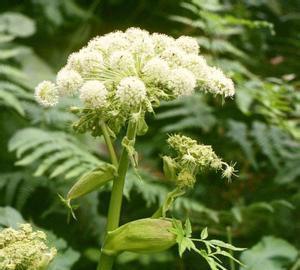
Benefits of the Chinese Herb Angelica Dahurica
[Benefits] Dispels wind and releases the exterior, relieves pain, reduces swelling and discharges pus, dries dampness and stops leukorrhea.
[Clinical Applications] 1. Used for wind-cold common cold, headache, nasal congestion, and similar conditions. Angelica dahurica disperses wind-cold and also has pain-relieving and nasal-clearing effects, so it is mainly used to treat wind-cold exterior syndromes accompanied by headache and nasal congestion. For severe headache, add notopterygium and asarum; for nasal congestion, combine with ageratum (mainly to regulate the qi of the spleen and lungs), mint, and similar herbs.
2. Used for headache, supraorbital bone pain, and toothache. Angelica dahurica dispels wind and relieves pain, and is mainly suitable for conditions located in the Yangming meridian. The forehead, supraorbital bone, and upper and lower gums all belong to the pathways of the Yangming meridian, so Angelica dahurica can be used to treat all of them. To treat headache, it can be combined with ligusticum and vitex; for supraorbital bone pain due to wind-cold, it can be used alone; for wind-heat, it can be combined with skullcap.
3. Used for sores and ulcers with swelling and pain. Angelica dahurica treats sores and ulcers: at the early stage it can disperse them, and after they rupture it can discharge pus, making it a commonly used auxiliary medicine in external medicine. For example, at the early stage of acute mastitis it can be combined with dandelion and trichosanthes; when pus does not discharge smoothly, combine with honeysuckle and trichosanthes root. For dispersing sores and ulcers, it can also be ground into powder and applied externally.
4. Used for leukorrhea in women. Angelica dahurica warms and dries cold-dampness, and is mainly used to treat cold-damp leukorrhea, often combined with cuttlefish bone and similar herbs. If it is damp-heat leukorrhea, it can also be combined with heat-clearing and dampness-drying medicines such as phellodendron and ailanthus bark.
In addition, Angelica dahurica is also an important medicine for treating sinusitis, with the effect of transforming dampness and clearing the nasal passages. It is often combined with magnolia flower and centipeda, and can be taken internally as well as used externally. It can also be used for venomous snake bites and has a detoxifying effect against snake venom. In ancient times there are records of using it alone, decocted and taken internally, with the residue applied externally, and some modern snakebite detoxification tablets include this herb in their formula.