An Introduction to the Chemical Composition of Verbena Essential Oil and the Plant's Morphological Characteristics
Verbena essential oil is mainly obtained from the plant verbena. Verbena essential oil can relieve stress and promote sleep, calm the nerves and relieve stress, and support gastrointestinal health. So what exactly are its components? What does verbena look like?
What are the main medicinal components and chemical components of verbena essential oil?
Chemical components: alcohols -- borneol, geraniol, coriandrol, nerol; aldehydes -- citral; terpenes -- artemisia ketone, limonene, myrcene
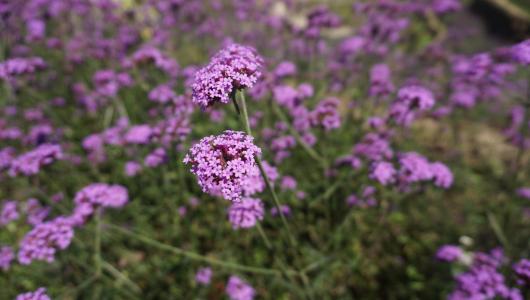
What does verbena look like?
Verbena is a perennial herb, 30-120 cm tall. The stem is square, and near the base it may be round, with stiff hairs on the nodes and ridges. The leaves are ovate to obovate or oblong-lanceolate, 2-8 cm long and 1-5 cm wide; the margins of the basal leaves usually have coarse teeth and incisions, while most stem leaves are deeply divided into 3 lobes, with irregular teeth along the lobe margins, and both surfaces have stiff hairs, especially abundant on the veins of the underside. The spikes are terminal and axillary, slender and weak, reaching up to 25 hundred meters when fruiting; the flowers are small and sessile, initially crowded and becoming separated at fruiting; the bracts are slightly shorter than the calyx and have stiff hairs; the calyx is about 2 mm long, has stiff hairs, and has 5 veins, with thin, pale tissue in the depressions between the veins; the corolla is pale purple to blue, 4-8 mm long, slightly hairy on the outside, with 5 lobes; there are 4 stamens, inserted at the middle of the corolla tube, with short filaments; the ovary is hairless. The fruit is oblong, about 2 mm long, with a thin exocarp, and splits into 4 valves when mature. The flowering period is June-August, and the fruiting period is July-October.