A Complete Analysis of Melaleuca Oil Components and the Value of the Melaleuca Tree
What are the main components and chemical constituents of melaleuca oil, and how much of each is present? Do you know? What kinds of value does the melaleuca tree have? Do you know? Let's find out together.
Melaleuca oil components:
Chemical constituents: cineole, terpineol, terpinene, and other aldehydes
Main components: A-pinene, -terpineol, aromadendrene, terpineol-4 at 39.43%, A-terpinene at 9.44%, C-terpinene at 18.82%, 1,8-cineole at 3.22%.
Economic uses
An aromatic oil can be extracted and refined from the branches and leaves of the melaleuca tree, known as tea tree oil. Tea tree oil has antibacterial, disinfecting, anti-itch, and preservative effects, and is currently one of the main raw materials for detergents, beauty and health products, and other daily chemical products and medical supplies, with broad and enormous demand. The melaleuca tree can yield 2000-3000 kg of branches and leaves per mu per year, and can be harvested twice a year, bringing very substantial economic benefits.
Medicinal value
Melaleuca bark is a Chinese medicinal herb, with the effects of opening the orifices and releasing the exterior, dispelling wind and relieving pain. It is commonly used for colds and fever, rheumatic joint pain, neuralgia, and enteritis with diarrhea; when applied externally, it can also treat allergic dermatitis, eczema, and other conditions. It is also a commonly selected herb in traditional Chinese medicine formulations.
Landscaping uses
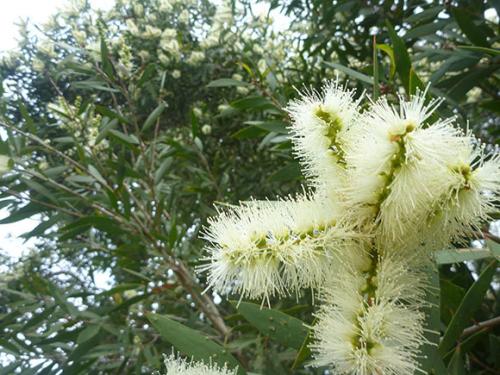
Melaleuca is a shade tree species with a tall trunk, dense foliage, white bark, and a fragrant scent. It also has cylindrical spike-like inflorescences borne at the tips of branches, shaped like small bottle brushes and cream-yellow in color, making it a beautiful courtyard tree, street tree, and windbreak tree.