What components make up lavender essential oil, and does it contain theophylline?
What are the main medicinal components and chemical components of lavender essential oil?
Essential oil is usually extracted from the flowers and leaves of lavender by steam distillation, but because most of the essential oil is in the flowers, the chemical components of the essential oil extracted from the leaves and flowers differ greatly. Terpenoids in commercial lavender essential oil were studied by C-NMR, and the main components of the essential oil were identified as linalool, linalyl acetate, eucalyptol, B-ocimene (including cis and trans), terpinen-4-ol and camphor. Because the lavender species used differ, their content in the essential oil can vary significantly, which determines their different market prices, different application ranges and different fragrances. Rosmarinic acid, caffeic acid, luteolin and luteoloside were isolated from the water-methanol extract of narrow-leaf lavender flowers, and their contents determined by TLC were 1.16%, 0.111%, 0.011% and 0.14%, respectively.
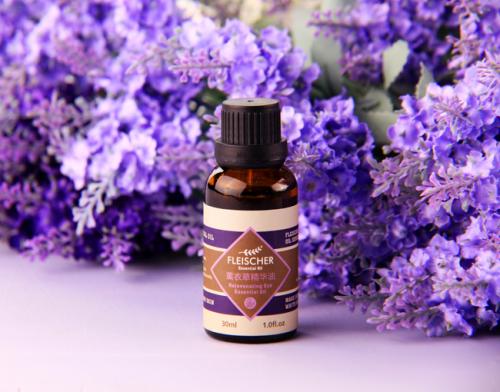
Does lavender essential oil contain theophylline?
The essential oils of French lavender and woolly lavender have a relatively high camphor content and an obvious insect-repellent effect; while the camphor content in the essential oils of narrow-leaf lavender and dentate lavender is very low (<2%). Lavender plants with low camphor content often have higher contents of terpenes (phellandrene) and sesquiterpenes (caryophyllene). Therefore, what lavender essential oil contains is camphor content, and it does not contain theophylline.