Characteristics of Chamomile Essential Oil: The Difference Between Roman Chamomile and German Chamomile
Characteristics of Chamomile Essential Oil: The Difference Between Roman Chamomile Essential Oil and German Chamomile Essential Oil
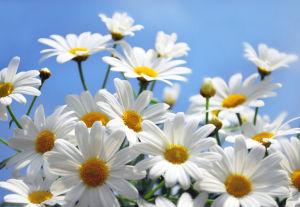
Roman chamomile is a small perennial herbaceous plant, about 25cm tall, with hairy stems, feathery soft leaves, and white daisy-like flowers (larger than the flowers of some German chamomile varieties); while German chamomile can grow to 60cm tall, with branched, hairless stems, and fragile, leathery leaves, with a single white flower head borne on a single stem. Roman chamomile is mainly cultivated in Germany, Spain, Italy, Mexico and France, while German chamomile is mostly grown in Hungary, Egypt, Eastern Europe and France. In Egypt, it is the herb dedicated to the sun, used to treat fever; at the same time, it is also a gift dedicated to the moon. Because it has cooling properties. It is widely recognized as an essential oil that soothes nervous tension disorders and can be used in shampoos, cosmetics and perfumes. German chamomile contains azulene, a powerful anti-infective component; in fact, this blue crystalline substance is not present within the plant itself but is formed in the essential oil, and only a trace amount is needed to exert a powerful effect.