What are the characteristics of ginseng essential oil? An analysis of why ginseng "runs away"
Do you know what form and physical characteristics ginseng essential oil has? Why does ginseng "run away," and why is this said? Let's take a look together.
At room temperature below 25C°, it is close to a solid paste; above 25C°, it is a liquid oil. The active components of ginseng mainly include ginsenosides, ginseng polysaccharides, volatile oils, amino acids and polypeptides, etc. Research has found that ginseng extract promotes keratin degradation and delays aging, and has a certain effect against roughness and cracking.
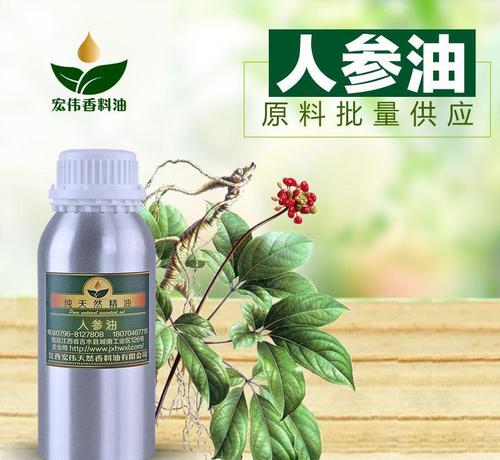
Why does ginseng "run away"
Why is it said that ginseng "runs away"? Veteran ginseng farmers reveal that, besides the root continuing to grow, the stem above ground withers and revives each year (the newly grown leaves are different every year). In addition, ginseng also has a dormant self-protective behavior, meaning that when they sprout, if they suffer insect damage, wild animal damage, etc., the bud will stop growing and will rest in the soil for one or several years without emerging. Therefore, many ginseng diggers find ginseng in a certain place one year and think it is too small, and when they come back the next year they cannot find it, which creates the illusion that ginseng "runs away." To recreate the scene, it is usually like this: "Huh, my ginseng was clearly right here?"
Therefore, ginseng-gathering families agree to tie a red string at the ginseng rhizome (the part above ground closest to the root), making it easier to find next time. Another purpose is that if you are the first to find this ginseng plant but find that its years are insufficient, you can tie a red string on it to tell other ginseng diggers that this plant has already been discovered. Usually a copper coin is also tied to the red string, and the copper coin has a mark on it indicating whose family it belongs to. People in the trade take one look: oh, this one has an owner and cannot be dug.