Birch Essential Oil Storage Methods and Detailed Explanation of White Birch Tree Characteristics
How should birch essential oil be stored? How can it be properly preserved and used for a long time? What are the characteristics of the white birch tree? If you do not know, then let us take a look together.
Use different droppers when blending different essential oils
The nature of essential oils makes them prone to oxidation, which determines that they cannot be disturbed by external factors. If you want to preserve your essential oils well and want the period of use to be six months, then when blending essential oils you must not let droppers from other different essential oils get in, otherwise the lifespan of your essential oil will be shortened to two months. You can buy several more droppers online to prevent not having enough when blending essential oils and using the wrong dropper.
Essential oils should be placed in a dark place
Essential oils must avoid contact with sunlight and strong light. Sunlight most easily causes essential oils to deteriorate, so exposure to sunlight must be absolutely avoided. Do not place essential oils in direct sunlight or in places with sunlight; nor should essential oils be exposed under lamplight, as the temperature and intensity of lamplight may also cause essential oils to deteriorate.
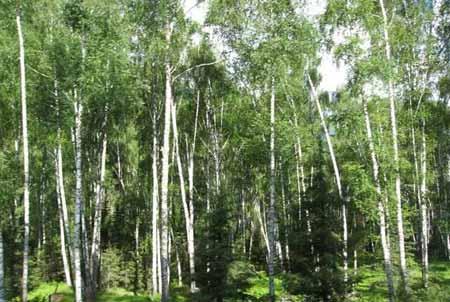
Characteristics of the white birch tree
Family and genus: Betulaceae, Betula
Distribution: produced in the Greater Khingan and Lesser Khingan Mountains, Changbai Mountains in the northeast, and high mountain areas of North China; vertical distribution in the northeast is below 1000m altitude, and in North China 1300-2700m. Also distributed in eastern Siberia of the Soviet Union, Korea, and northern Japan.
Morphological characteristics: deciduous tree, up to 25m tall, diameter at breast height 50cm; crown oval, bark white, peeling in papery layers, lenticels yellow. Branchlets slender, reddish brown, hairless, covered externally with a white waxy layer. Leaves triangular-ovate or rhombic-ovate, apex acuminate, base broadly cuneate, margin irregularly doubly serrate, lateral veins 5-8 pairs, sparsely bearing oil gland dots on the underside, hairless or with hairs in the vein axils. Infructescence solitary, pendulous, cylindrical. Nutlets small and flat, with broad wings on both sides. Flowering period May-June; fruit ripens August-October.
Ornamental characteristics and garden uses: white birch has sparse branches and leaves and a graceful posture, especially its trunk, which is straight and elegantly white, very eye-catching. Whether planted singly or in groups on lawns, by ponds, or lakesides in courtyards and parks, or planted in rows along roadsides, it is quite beautiful. If planted in patches on mountain or hilly slopes, it can form a beautiful scenic forest.