A detailed guide to the bowl lotus growing process, easy for beginners to learn too
Introduction: Below I will explain the bowl lotus growing process. First, you need to learn to tell the two ends of a bowl lotus seed apart. The two ends of a bowl lotus seed are actually quite easy to distinguish. The seed coat of the lotus seed is very thick, so for smoother germination, simple treatment is needed. First, please distinguish the two ends of the bowl lotus seed: one end has a small bump, and the other end has a small dent.
Below I will explain the bowl lotus growing process.
First, you need to learn to tell the two ends of a bowl lotus seed apart.
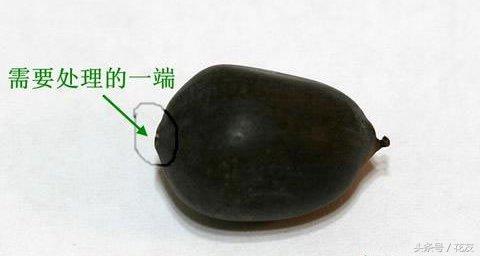
The two ends of a bowl lotus seed are still quite easy to distinguish
The seed coat of the lotus seed is very thick, so for smoother germination, simple treatment is needed. First, please distinguish the two ends of the bowl lotus seed: one end has a small bump, and the other end has a small dent. The end to treat is the dented end. Then comes the slightly more difficult step. There are several ways to treat the dented end, and the conventional methods usually include:
1. Grind off the seed coat on cement ground;
2. Crack it with pliers;
3. Cut off a small piece of the seed coat with a sharp knife. You can also first drill a small hole at the dent with an awl, soak it in water for a period of time, and then cut off a small piece of the seed coat with scissors. Note: do not drill too deep, and do not drill into the kernel inside.
Bowl lotus: The three major reasons bowl lotus does not bloom
Below is a lotus seed that has already been drilled with an awl:
Bowl lotus seed with a drilled hole
Use a small box, a plate, or any container to soak the treated seeds in water. Notes:
1. If the temperature is low, you can use a thermos cup with 30°C warm water. If the temperature is above 20°C, you can soak them indoors or outdoors.
2. Change the water twice a day. I usually change it once in the morning and once in the evening;
3. The water only needs to cover the seeds;
4. The higher the temperature, the faster the germination. Generally, above 20 degrees, germination takes 3 days to one week.
Soak in water
After soaking the lotus seeds through 1 or 2 water changes, the hard skin can easily be peeled off by hand. Peeling off no more than 1/3 of the seed coat helps the seeds sprout earlier.
Peeling
After peeling, continue soaking in water. On the fifth day, the green sprout head is visible.
Continue soaking
Starting from the seventh day, put it in the sun every day. In addition, the pot for planting the lotus is also ready, filled with soil, added water, and soaked well. After 9 days, the first floating leaf is about to unfold and the second leaf has also come out. On the tenth day, the first floating leaf unfolds, and the lotus seed also begins to grow roots.
Bowl lotus: Eight key points of bowl lotus cultivation techniques
Rooted bowl lotus
After the lotus seed grows roots, it can be planted. Lotus seeds planted after rooting have a high survival rate and are not easy to rot. As for the soil, personally I feel that the soil on hand is enough, and there is no need to look for pond mud. What I use is ordinary garden soil plus decomposed organic fertilizer. Friends who do not have organic fertilizer can use chicken manure, but the chicken manure must be fully decomposed, otherwise it will burn the lotus seeds. Two days before planting, soak the pot until the soil is completely soaked through. Bury the lotus seed roots downward into the mud.
Transplanting
As for the pot, a clay pot with a diameter of 30 cm and a height of 20 cm can grow 3-5 bowl lotus plants. I brought back two water vats from my mom's house, with a diameter of 50 cm and a height of 48 cm. Place the clay pot with the planted lotus seeds in the water vat and then add water. Look, this is how it looks on the 13th day.
The 13th day
From May 31 (the 13th day) to June 21, after 22 days, the two bowl lotus plants each grew an average of 5 floating leaves. Due to differences in temperature and sunlight, the growth rate will vary. If many seeds are planted in one pot, they will need to be divided into separate pots later. Generally, a pot with a diameter of 25 cm only needs one plant. Too many will compete with each other for sunlight.
Lotus leaves one after another
Notes on growing bowl lotus:
1. When planting or dividing lotus roots, pay special attention to protecting the terminal buds of the planting roots, and do not let them be damaged.
2. The container should be appropriately larger and deeper. Although it is called bowl lotus, if you use a vegetable bowl to grow it, it is too small and too shallow. If the bowl is too shallow and holds too little nutrient soil, the plant cannot get sufficient nutrients; if it is too small, it cannot accommodate the spreading fibrous roots, and it will not grow well.
3. Give it sufficient sunlight. Flower growers must not only place bowl lotus indoors to decorate the environment and admire it. Placing it indoors for a long time prevents it from seeing sunlight, forgetting that it is a plant that loves sufficient sunlight. Only when the pot soil is warmed by the sun can it grow rapidly.
4. Control the water supply according to the different stages of plant growth. When bowl lotus is first planted, the water should not be too much. Too much water will lower the temperature, which is unfavorable for the rooting and development of the young seedlings, and affects their breathing and ventilation, and may even cause root rot. When the plant's leaves grow larger, clean water needs to be gradually added to the bowl to meet its need for leaves to float on the water surface for photosynthesis. Otherwise, the leaf edges will become scorched, withered, and yellow.
Lotus flowers blooming one after another
5. Pay attention to applying fertilizer in appropriate amounts. Bowl lotus likes fertilizer. If it lacks fertilizer, roots and leaves will grow slowly and it will lack vitality. Therefore, before planting, a small amount of decomposed cake fertilizer liquid or bean bran or peanut bran should be mixed into the pot soil as base fertilizer. However, although bowl lotus is a fertilizer-loving plant, fertilizer must not be applied excessively. Especially because the bowl lotus container is small, the plant is small, and the fertilizer requirement is also small. If too much fertilizer is applied, it will only grow leaves and not bloom. In more serious cases, it can also cause the plant to die. If excessive fertilization is found, change the water frequently to wash away part of the fertilizer liquid and dilute it.
For more professional agricultural science and technology information, please scan the QR code to follow WeChat: NongXunNET

Please indicate the source when reposting.