How can edible mushrooms be encouraged to produce more mushrooms during the Spring Festival?
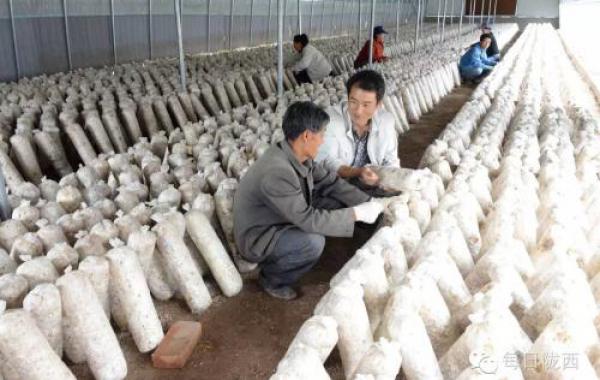
How can edible mushrooms be encouraged to produce more mushrooms during the Spring Festival.
The Spring Festival is almost here. Mushroom growers are advised to take the appropriate precautionary measures and aim for edible mushrooms to produce more mushrooms during the Spring Festival.
1. Increase the temperature. The north wall of the mushroom fruiting shed should be as thick as possible, or insulation material should be added in the middle, to guard against the north wind; use thick straw mats or insulated quilts as much as possible to keep the shed warm at night, and aim for more mushrooms.
2. Increase the humidity. The focus should be on raising the relative humidity of the air, bringing the relative humidity of the mushroom shed or mushroom house to 85%-90%. When humidity is low, the mushrooms grow more slowly, which not only lengthens their growth cycle but also lowers their yield. In addition, when the mushrooms are dry, their quality also becomes poorer. Only when the temperature is relatively high each day may water be sprayed into the air, onto the ground, walls and other places to raise the humidity inside the mushroom shed.
3. Ventilation. Ventilation timing should be scientific; in winter it is best to ventilate when there is plenty of sunshine and the weather is warm. The specific measures are: open the ventilation holes at midday, but on the premise of not making the temperature difference between inside and outside the shed too great; when the outside temperature is above 5°C, lift the plastic film at the lower part of the shed's south side to a width of about 10 cm, and the ventilation effect is very obvious.
4. Light. Light should be strong rather than weak; light is both an important way to raise the shed temperature in winter and an important means of increasing yield and improving the quality of edible mushrooms. If the mushroom shed has good insulation performance and the nighttime temperature can be maintained above 5°C, then the straw mats on the shed roof can be lifted early and covered late, extending the daytime light time as much as possible; otherwise, the daytime light time of the mushroom shed should be shortened accordingly. As for weather conditions, when the temperature is below 5°C, on sunny and cloudy days, while ensuring the mushroom shed stays at 5°C, the light time should be increased as much as possible; on overcast and rainy days, light can be added to the shed between 11 a.m. and 3 p.m., when daytime temperatures are relatively high; on snowy days, adding scattered light to the shed is enough.
This winter the climate has varied greatly. Besides low temperatures, extreme weather such as heavy snow, smog, and strong winds with cooling frequently occurs. The continuous low-temperature weather has a certain impact on the yield of edible mushrooms. If you want more mushrooms during the Spring Festival, you need to take good precautionary measures for edible mushrooms.
1. Increase the temperature. The north wall of the mushroom fruiting shed should be as thick as possible, or insulation material should be added in the middle, to guard against the north wind; use thick straw mats or insulated quilts as much as possible to keep the shed warm at night, and aim for more mushrooms.
2. Increase the humidity. The focus should be on raising the relative humidity of the air, bringing the relative humidity of the mushroom shed or mushroom house to 85%-90%. When humidity is low, the mushrooms grow more slowly, which not only lengthens their growth cycle but also lowers their yield. In addition, when the mushrooms are dry, their quality also becomes poorer. Only when the temperature is relatively high each day may water be sprayed into the air, onto the ground, walls and other places to raise the humidity inside the mushroom shed.
3. Ventilation. Ventilation timing should be scientific; in winter it is best to ventilate when there is plenty of sunshine and the weather is warm. The specific measures are: open the ventilation holes at midday, but on the premise of not making the temperature difference between inside and outside the shed too great; when the outside temperature is above 5°C, lift the plastic film at the lower part of the shed's south side to a width of about 10 cm, and the ventilation effect is very obvious.
4. Light. Light should be strong rather than weak; light is both an important way to raise the shed temperature in winter and an important means of increasing yield and improving the quality of edible mushrooms. If the mushroom shed has good insulation performance and the nighttime temperature can be maintained above 5°C, then the straw mats on the shed roof can be lifted early and covered late, extending the daytime light time as much as possible; otherwise, the daytime light time of the mushroom shed should be shortened accordingly. As for weather conditions, when the temperature is below 5°C, on sunny and cloudy days, while ensuring the mushroom shed stays at 5°C, the light time should be increased as much as possible; on overcast and rainy days, light can be added to the shed between 11 a.m. and 3 p.m., when daytime temperatures are relatively high; on snowy days, adding scattered light to the shed is enough.