What are some practical ways to improve the effectiveness of pesticides?
Pesticides are key substances used to prevent plant diseases and pests. No matter what crop is grown, it will more or less suffer from diseases and pests. At this point, pesticides need to be used for control. But many people find when using pesticides that the effectiveness is not very good. So how can we improve the effectiveness of pesticides? Below, the editor will give everyone a brief introduction. Let's take a look!
1. Choose pesticides according to the problem
There are now very many varieties of pesticides, with various uses such as insect killing and sterilization, pest removal and weed control. So if we want to ensure pesticide effectiveness, the first thing we must do well is choose suitable pesticides according to the target that needs to be controlled. They must not be abused or used indiscriminately; the main approach should be choosing pesticides according to the problem. At the same time, no matter what pesticide is chosen, the main focus should be on high efficiency, low toxicity and low residue, which can both ensure the control effect and reduce environmental pollution. And after choosing, we should once again understand the main performance characteristics and the control targets.
2. Application time
The occurrence of diseases and pests follows certain patterns, and most diseases and pests require specific environments to develop. Therefore, we should pay attention to choosing a suitable application time, so that the pesticide effectiveness can be maximized. Usually, for disease prevention and control, it should be done at the early stage of the disease, while pest control naturally needs to be done at the young larval stage. Therefore, this requires us to do a good job of field investigation to determine the pesticide application time. At the same time, we should also pay attention to prevention and control according to the climate environment. For example, under high temperatures with a large difference between day and night temperatures, diseases such as gray mold are prone to occur.
3. Application amount
When spraying pesticides, the amount used is also very important. The amount must not be too high. If it is too high, it will not only lead to waste and increase the cost of pesticide use, but also cause greater pollution to the environment. It may even cause pesticide damage to crops. But the amount used must not be too low either. If it is too low, the control effect will be very poor. So when using them, we should pay attention to strictly controlling the amount according to the pesticide instructions, and must not blindly increase it at will. However, we also need to adjust flexibly according to factors such as crop type and growth stage.
4. Application method
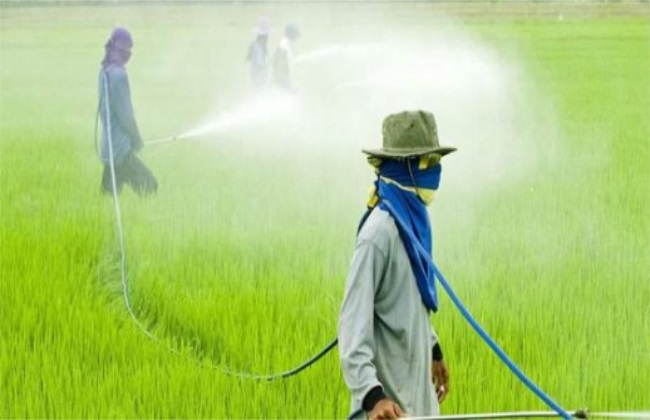
The application method is also a main factor affecting pesticide effectiveness. Because there are very many targets that need to be controlled, there are also many application methods. Among them, a relatively common application method is spraying. When spraying, the sprayers for diseases and pests and for herbicides need to be kept separate. This avoids affecting pesticide effectiveness and causing pesticide damage to crops. If soil-borne diseases are severe, then the application method should mainly be root drenching. For underground pests, it should be broadcasting or drenching. For some pests whose adults harm leaves and whose larvae harm roots, only a combined method of spraying and irrigation can ensure effectiveness.
The above is a brief introduction to how to improve the effectiveness of pesticides. That is all for today's introduction. This article is for reference only, and I hope it can help everyone!