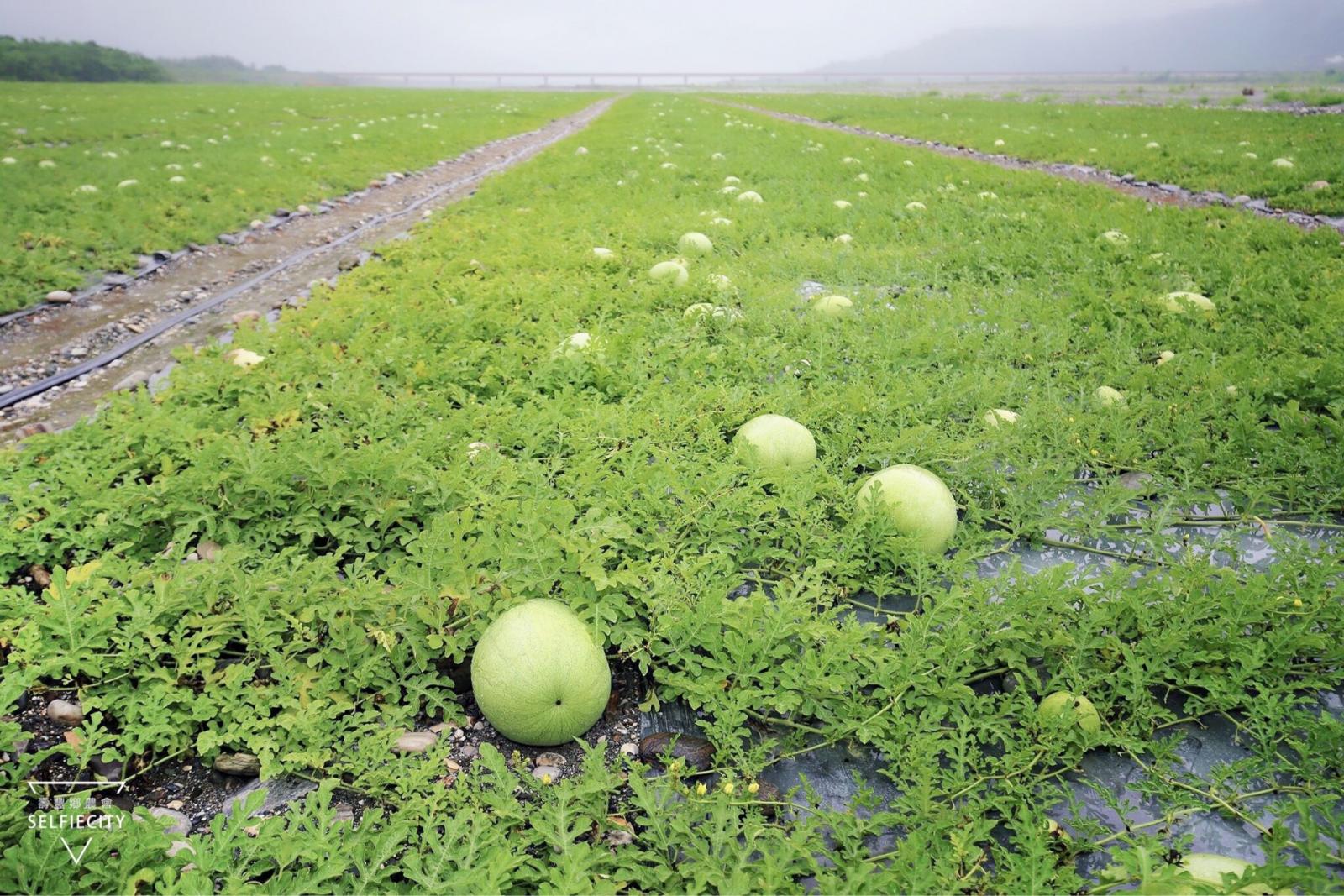
How Does the Weather Before Harvest Affect Watermelons? Watermelons in Taiwan, China Are Getting Smaller
The weather is really hot. At times like this, isn't a slice of ice-cold watermelon so refreshing?! A warm winter plus drought has already affected this year's summer fruit production, and watermelons are no exception. The weather pattern is sunshine after showers, and the unsettled climate conditions before harvest have affected the size of the watermelons.
The watermelons of the Shoufeng Township Farmers' Association have already made a name for themselves. The long, round, red-fleshed large watermelons have their own loyal customers, and the branding strategy has worked, so that while the watermelons are still in the field waiting to grow, people are already placing pre-orders on the website, and every year they also go north to sell at the Banqiao Farmers' Association exhibition.
Huang Qixiang said that the Shoufeng Farmers' Association's watermelons are grown under contract with farmers, with a planting area of nearly 7 hectares. The contract stipulates that farmers must plant according to the Farmers' Association's requirements, from bringing in seedlings, planting, and harvesting, through all the field management along the way, all of which must meet the Farmers' Association's requirements. It is precisely because of this that although the climate conditions this year were poor, it only affected the size of the watermelons and did not affect the quality.
The Shoufeng Farmers' Association's watermelons receive a special method of care, but because it is "too labor-intensive," even though it is not a secret, not many fruit farmers are willing to do it. Caring for watermelons relies on microorganisms to protect the plants and suppress the occurrence of pests and diseases. This wonderful method is earthworm droppings. Huang Qixiang said that earthworm droppings have a rich microbial flora. Feeding it with molasses and adding some organic materials makes the microbial flora more active. Then, spraying it on the watermelon leaves can effectively reduce pests and diseases.
Huang Qixiang said that even in Shoufeng, only the Farmers' Association's watermelon fields use microbial bacteria to prevent and control pests and diseases. Ordinary farmers are unwilling to adopt this method because it is too labor-intensive, but the Farmers' Association's contract watermelon fields must spray microbial bacteria on the leaves starting from the arrival of the seedlings, and it must be applied once every 1 to 2 weeks, making the procedure complicated.
The contracted planting area for the Shoufeng Farmers' Association's watermelons in this period is nearly 7 hectares. Each hectare can harvest about 2,000 large watermelons, but it is impossible for all of them to be good. About 80%, or 1,600, meet a certain standard and can be sold, so the harvest for one season is roughly just over 10,000.
Selling watermelons depends heavily on the weather. Huang Qixiang said that if the weather stays hot for a continuous period, watermelons sell at an astonishing speed, because it is too hot, and everyone feels refreshed when they see and eat watermelon. Just as climate affects crop growth, the speed at which watermelons sell out is significantly correlated with the temperature in the main consumption areas.