How to Use Greenhouse Smoke Agents: Detailed Guide to Methods and Precautions
For greenhouse growers, greenhouse smoke agents are quite familiar. In winter and spring, many farmers use them to control pests and diseases. They not only save time and effort, but are also an efficient and environmentally friendly method. Most importantly, they are not affected by climate and can be used even on cloudy and rainy days. So how should smoke agents be used? What should be noted? Let's take a look together.
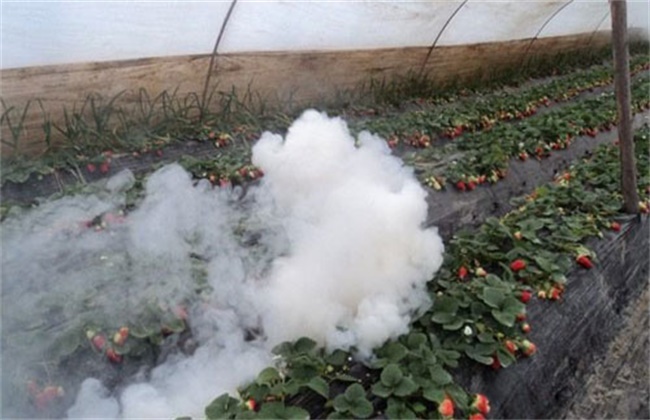
1. The Function of Smoke Agents
Smoke agents are fumigants. Their principle is to produce smoke through combustion, which disperses onto plants or insect bodies to take effect. Generally, smoke agents are mainly divided into two types: insecticides and fungicides. Each type of smoke agent targets different diseases based on different active ingredients. Because of the characteristics of smoke agent varieties, smoke agents can only be used to control downy mildew, Phytophthora blight, gray mold, damping-off, anthracnose, etc., while insecticidal action is mainly aimed at aphids and whiteflies.
2. Usage Methods
Smoke agents are best used in the evening, because in the evening the soil temperature is lower than the air temperature. When used at this time, a relatively stable layer of smoke cloud will form inside the greenhouse, and the effect is more obvious. Once pests and diseases are detected, medication must be applied promptly. Smoke agents are a protective fungicide or insecticide and cannot be absorbed by plants. Therefore, they must be applied in the early stage of disease onset to control pest and disease damage. The dosage should also be noted, generally 300-400 grams per mu is sufficient. The fumigation time should also be noted, controlled within 4-5 hours, and should not exceed 10 hours at most. In addition, attention should be paid to certain special periods of crops. For example, using them during the seedling stage of cucumber and watermelon may cause phytotoxicity.
3. Precautions
There are many varieties of greenhouse smoke agents, and the appropriate type should be selected according to the characteristics of the greenhouse. Tablets are suitable for greenhouses with many placement points, such as narrow and long chive greenhouses; powders and granules are suitable for wider vegetable greenhouses and fruit greenhouses such as tomato and cucumber. In addition, the same agent should not be used continuously; various agents should be used alternately to avoid developing resistance. During storage, they should also be placed in a dry place. When using them, the greenhouse must be sealed, and the greenhouse film must not have damaged holes; any holes should be repaired promptly. Another point to note is that smoke agents can only be applied in large greenhouses, medium greenhouses, and conservatories, and cannot be used directly in small arched sheds, to avoid phytotoxicity caused by excessively high concentration.
The above is an introduction to the usage methods and precautions of greenhouse smoke agents. We hope it can help you. To learn more related knowledge, please stay tuned to us.