What are the precautions for using pesticides in winter?
In winter, temperatures are relatively low, and most pests and diseases are in a sheltered and dormant state. However, many greenhouse growers still cultivate vegetables out of season. At this point, many friends may wonder: if vegetables are grown in winter and pesticides need to be applied, what should be paid attention to? Let's take a look together.
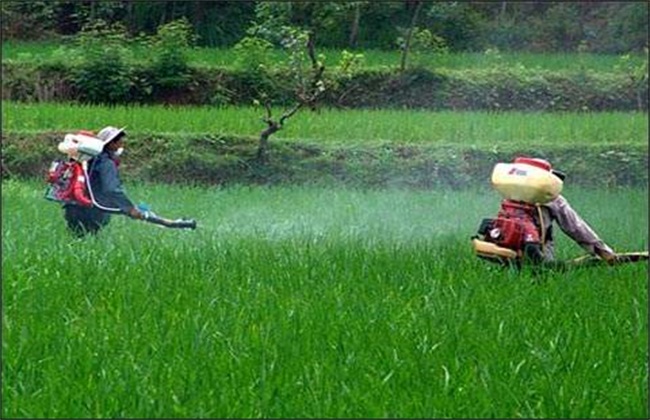
1. Application temperature
Temperature plays a very important role in the use of pesticides. When greenhouse conditions are suitable, pesticides will be more effective and will not cause phytotoxicity. Conversely, if the temperature is too high, this will not only cause the pesticide to become too concentrated, but once phytotoxicity occurs, the loss often outweighs the gain. Therefore, when using pesticides in winter, it is recommended to choose a temperature above 10°C. Of course, 15°C or above 20°C is even better. At the same time, pay attention to the weather forecast to ensure that in the period after spraying the pesticide, there will be no sharp drop in temperature or rainfall.
2. Spraying time
The temperature mentioned earlier when spraying is actually the temperature at the time of application, and the period with the highest temperature in a day is of course around noon. Therefore, when using pesticides in winter, it is best to choose the period after 10 a.m. and before 3 p.m. During this period, the temperature is relatively high, and the effect after spraying is also better. If it is too early or too late, the temperature is lower, the effect will not be very good, causing waste, and phytotoxicity may also occur.
3. Application weather
When spraying pesticides, attention should also be paid to weather changes. Among these, pesticides cannot be sprayed on cloudy and rainy days. We all know that after spraying, the pesticide will be washed away by rain, which is equivalent to not spraying at all, and on the contrary, it may also cause phytotoxicity. Therefore, the spraying time is best chosen on a sunny day, and preferably windless, because wind will blow the pesticide solution onto other crops. If a herbicide is being sprayed and the wind blows it onto vegetable leaves, causing phytotoxicity, the losses can be relatively large. So try to choose sunny and windless weather for spraying.
4. Pesticide dosage
As for the dosage of pesticide spraying, it must not be increased arbitrarily without authorization. In winter, because the temperature is relatively low, whether weeds or pests and diseases, their resistance is relatively low, so it is only necessary to apply according to the normal dosage. Do not arbitrarily increase the dosage out of worry that the control effect will be poor, because the final result is often that the crops are harmed along with them.
The above is an introduction to the precautions for using pesticides in winter. I hope it can help you. If you want to learn more related knowledge, please follow us.