Detailed Explanation of Pothos Propagation Methods and Precautions
Pothos is a common indoor green plant. It has the effect of absorbing impurities and purifying the air, and can absorb harmful substances in the air such as benzene, trichloroethylene, and formaldehyde. It is one of the preferred green plants for ventilation and odor removal in newly renovated homes. When combined with other methods of removing formaldehyde and benzene, it can better exert its air-purifying effect. At the same time, pothos is a plant with very strong climbing and twining characteristics, evergreen in all four seasons, very suitable for beautifying indoor environments, and highly ornamental. However, pothos propagation is rather complicated. Today let's talk aboutpothos propagationmethods and precautions.
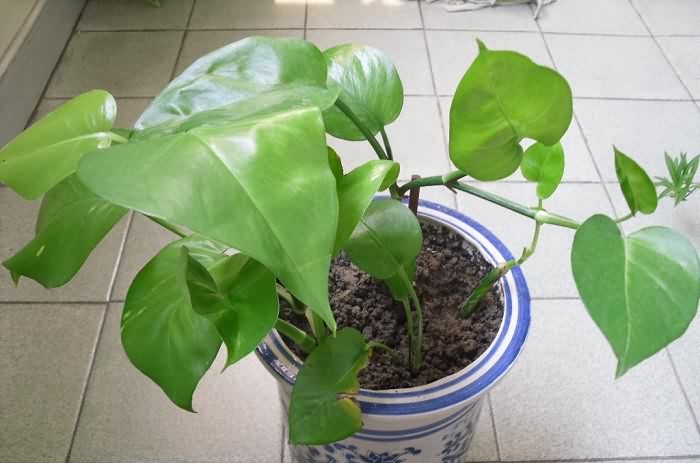
▶Propagation Methods for Pothos
Pothos is mostly propagated by cuttings. There are two types: stem cuttings and leaf cuttings.
1. Pothos Stem Cutting Method
This is generally carried out in spring and autumn. Select one-year-old branches with bright leaf color, thick leaves, and robust growth, and cut stem sections about 15 cm long with 2 to 3 nodes as cuttings. When cutting the cuttings, do not damage the aerial roots. After cutting, insert them promptly into plain sand at a depth of 1/3 of the cutting, water thoroughly, and place in a shaded spot, or shade the cutting bed. Spray water on the leaves twice a day, and keep the soil and air moist at all times. At a temperature above 25°C and in a semi-shaded environment, roots and leaves can grow in about 15 to 20 days.
2. Pothos Leaf Cutting Method
The leaf cutting method means using pothos leaves for cuttings. The advantage is that it does not damage the plant shape. The method is to select robust leaves from the middle and upper parts of the branches, cut them from the base of the leaf stalk with a small knife, and then insert them into water or a growing medium. Water cuttings root quickly and are suitable for small-scale propagation at home. When inserting, the depth of the leaf stalk in water should preferably be 1 to 1.5 cm. If too shallow, the leaves may wilt if the water evaporates and is not replenished in time; if too deep, the leaf stalk is prone to rot. After insertion, change the water once every 5 to 7 days, and they can be planted in about 50 days. The cutting medium should preferably be a mixture of fine sand and furnace slag. Before planting, disinfect the medium by sun exposure or pouring boiling water over it. When inserting, use a bamboo stick to make a hole to avoid damaging the leaf stalk. After insertion, water thoroughly, and pay attention to humidity and ventilation. Leaf cuttings sprout relatively slowly and take about 6 to 7 months.