How to prune a leggy Haworthia cooperi? A guide to care methods and disease prevention
Haworthia cooperi prefers a growing environment with plenty of scattered light. If the light in the care environment is insufficient, the plant cannot carry out photosynthesis and metabolism normally, and when there is relatively ample water, this phenomenon is prone to occur. A normally growing Haworthia cooperi usually has very plump and round leaves, but once leggy growth occurs, its leaves often become relatively long.
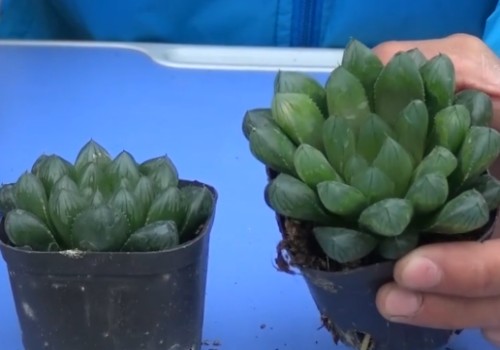
When Haworthia cooperi becomes leggy, the state of its leaves is not attractive, which lowers the ornamental value of the potted plant and may even cause it to lose its ornamental appeal. When the leaves of Haworthia cooperi become leggy, we can generally handle it by pruning. At the same time, it is also necessary to increase light and control watering so that the plant consumes its own excess water, thereby achieving the goal of inhibiting leggy growth. So how do you prune a leggy Haworthia cooperi?
When pruning a leggy Haworthia cooperi, you do not cut off all the leggy leaves completely. Instead, choose the leaves that have already become leggy and cut or snip off the upper half, while preserving the leaf core and normal leaves as much as possible. Normally, wait until the potting soil is completely dry before giving a small amount of water, and combine this with increased light, and the new leaves that regrow will be in a normal state.
Of course, by pruning and caring according to the above method, although the leaves that Haworthia cooperi grows will return to a normal growth state and leggy growth can also be inhibited, the plant will still remain single-headed. If we want it to produce multiple rosettes while also inhibiting leggy growth, then we can achieve this by cutting or snipping off the leaf core. But it is likewise necessary to remove the upper part of the thin, elongated leggy leaves according to the above operation method.
Both of the above methods can inhibit leggy growth through pruning, but with the first method, the result is inhibiting leggy growth while maintaining a single-headed state, while the result of the second method is inhibiting leggy growth while producing multiple heads, making the potted plant's shape fuller. However, no matter which method is used to prune and inhibit leggy growth, wounds will be left on the plant, and Haworthia cooperi is a succulent plant, so the sap in its body will seep out from the wounds, and over time infection is likely to occur. Therefore, after pruning, be sure to dry the wounds in time.