Can the aerial roots of Sedum pachyphyllum be cut off? Teach you how to prevent diseases
Although the ornamental value of the succulent Sedum pachyphyllum is very high, like other succulent varieties such as Haworthia cooperi and Sedum adolphi, it is also relatively prone to growing aerial roots when the root system cannot absorb the nutrients and water needed for growth, which not only reduces the ornamental value of the potted plant, but also affects the normal growth of the plant. So, can the aerial roots grown by Sedum pachyphyllum be cut off?
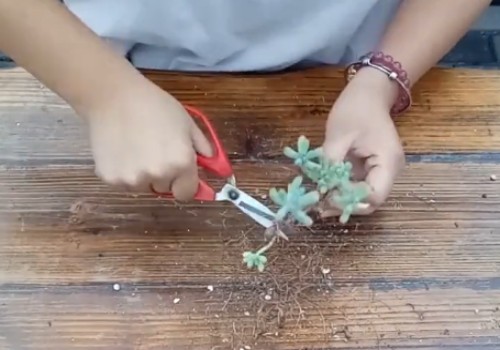
If we directly cut off the aerial roots growing on the plant without doing any other treatment, this will not work, and after cutting off the aerial roots the plant will die quickly. Because Sedum pachyphyllum grows aerial roots due to being unable to obtain the nutrients and water needed for growth from the potting soil through its root system, the aerial roots can obtain a limited small amount of nutrients and water from the air to maintain survival.
If we only cut off the aerial roots without doing any other remedial treatment, the plant can neither absorb water and nutrients through the main roots, nor will it have the chance to obtain water and nutrients from the air, so the plant will naturally die faster. If we do not cut off these aerial roots, at least it can still obtain a small amount of water and nutrients from the air to maintain survival for a period of time.
Of course, if the roots and stems of Sedum pachyphyllum are all still in good condition, and the potting soil has not become compacted, then the aerial roots are mainly caused by lack of water. So in this case we only need to water it thoroughly. After the main roots of the plant recover their normal absorption capacity, the grown aerial roots will also gradually wither and fall off, and we do not need to bother with these aerial roots at all.
But if the potting soil becomes compacted and affects the respiration of the root system of Sedum pachyphyllum and the penetration of watering, and the plant cannot get the water needed for growth and thus grows aerial roots, then we need to repot and change the soil for it in time. At this point, whether it is necessary to cut off the aerial roots is decided according to personal preference; usually they can either be cut off or kept.
If Sedum pachyphyllum not only develops root rot, but at the same time even the root-stem area has dried up, then the aerial roots grown from places outside the dried area are generally not recommended to be cut off. We can cut off the rotten part along the rotted part of the stem and root, then keep the healthy upper part, and after drying the roots for 2-3 days, repot it in a pot and plant it again.
Since the plant has no main roots but only aerial roots, if the aerial roots are kept and it is replanted, the plant can also absorb nutrients and water from the air through the aerial roots. In this case it is often easier to establish and survive than planting without main roots and aerial roots. Of course, we can also cut off the aerial roots together with the root-stem part of the plant, and the plant will still survive, only the time to establish may be a bit longer.
Therefore, whether the aerial roots grown by Sedum pachyphyllum can be cut off is mainly decided according to our personal needs and preferences, because this issue is no longer urgently in need of solving. The most important thing is how we remedy the situation after the plant grows aerial roots, not whether to keep the aerial roots. From the ornamental point of view, keeping the aerial roots is naturally not attractive; but from the point of view of establishing, keeping the aerial roots often makes it easier to survive.