Is abnormal leaf drop in the Radermachera sinica due to a lack of fertilizer? An analysis of disease prevention measures
The Radermachera sinica is a plant very well suited to indoor foliage display; it can be grown either as a small potted plant or as a medium-to-large potted specimen. Moreover, many people who grow Radermachera sinica in pots at home do so not only because they find its ornamental value and air-purifying function strong, but more importantly because it carries the lovely meaning of “long-lasting happiness.”
However, if you want to grow household potted green plants well, you cannot do it without mastering a certain amount of care and management skill. The same is true for growing Radermachera sinica: we likewise need to understand this plant's growth habits in advance, and then manage and care for it according to those habitual characteristics; otherwise we may run into situations where the plant grows poorly and its value is reduced.
And abnormal leaf drop in Radermachera sinica is often one of the poor-growth phenomena that people encounter relatively easily. So what is going on when Radermachera sinica drops its leaves abnormally? And what methods can effectively solve this problem?
Under normal circumstances, as long as the growing environment is suitable, Radermachera sinica can remain evergreen all year round. Even if a small amount of old leaf shedding sometimes occurs, this is usually a normal phenomenon. After all, during the growth process the plant continuously carries out metabolism and the replacement of new and old growth.
But if a large amount of leaf drop occurs, especially when young leaves also drop in large numbers along with it, or when the leaves fall over a large area at the slightest touch or a puff of wind, then this indicates an abnormal leaf-drop situation. Abnormal leaf drop in Radermachera sinica may be a sign of fertilizer deficiency. At this point, we can supplement it with some nitrogen fertilizer and potassium fertilizer.
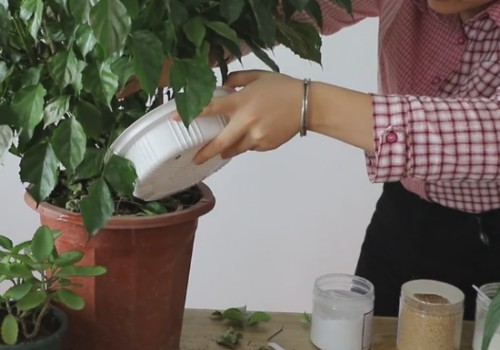
The fertilization method is also fairly simple: fully dissolve a good water-soluble nitrogen-potassium fertilizer in water and stir it evenly, then pour it into the flower pot of the Radermachera sinica. In this way, a good deal of nutrients will be added to the potting soil, and once these nutrients are smoothly absorbed by the plant's root system, they will be supplied to the entire plant. This can not only reduce or avoid leaf drop, but also promote the plant's growth, making the potted plant present a scene of flourishing branches and leaves with glossy, emerald-green foliage.
But the editor suggests supplementing the Radermachera sinica with a little iron element when topdressing; the original author usually uses ferrous sulfate to promote leaf growth and at the same time make the leaf color even more emerald green. Combined with the intake of nitrogen and potassium elements, applying iron element together with them can not only avoid the fertilizer-deficiency leaf drop in Radermachera sinica, but also promote the growth of branches and leaves.
The specific method is: first take two small spoons of ferrous sulfate powder, weighing about 2 grams, and put it into an appropriate amount of clean water; then take one small spoon of nitrogen fertilizer and one small spoon of potassium fertilizer, and add them both to the clean water in which the ferrous sulfate has been dissolved. Finally, stir the mixed solution evenly so that the powdered fertilizers dissolve fully.
Before use, dilute the mixed fertilizer liquid in an appropriate ratio, then directly pour the diluted and evenly stirred fertilizer water onto the Radermachera sinica. It is believed that before long, the abnormal leaf drop in the Radermachera sinica will gradually disappear, and the plant will also grow with flourishing branches and leaves and verdant foliage.