How to cultivate strong flower tobacco seedlings? Detailed cultivation methods
Before sprouting, tobacco seeds should be placed in sunlight at 15-20°C for 2-3 days to improve seed vigor and germination rate. To cultivate strong seedlings: First, adopt the new double-layer film paper tube seedling technique, with paper tubes no less than 4 cm in diameter and 6-7 cm in height, raising 625 seedlings per square meter, and a 10 sq m seedbed of 1 plot can provide seedlings for 4 mu of tobacco field planting. Second, prepare nutrient soil, using 60% field soil and 40% decomposed pigpen manure as the substrate, each plot requires about 0.8-1 cubic meter of nutrient soil, and after disinfection, mix in 3-4 kg of compound fertilizer. Third, sow early at the right time and transplant early, which can increase yield by 20% and improve quality by 25%. The Huanghuai tobacco region should sow around the Beginning of Spring to mid-February. Fourth, seedbed management: since temperatures are relatively low during sowing and seedlings are susceptible to low-temperature damage, timely regulation should be carried out according to the temperature and humidity requirements of tobacco seedling growth. Generally, thinning is done twice: the first after the "cross stage," with a seedling spacing of 1.5-2 cm, and the second thinning (final spacing) at the 4-5 true leaf stage, with a seedling spacing of 6-8 cm.
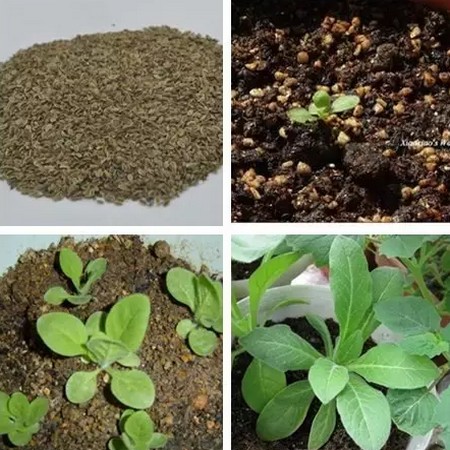
Strong seedlings are the foundation for achieving high-quality and suitable yield in tobacco, and cultivating strong seedlings is an extremely important part of the tobacco production process. Regardless of the seedling method used, the requirements for seedling cultivation are basically the same. Only by cultivating high-quality tobacco seedlings can timely transplanting be achieved, ensuring uniform growth of tobacco plants in the field, allowing various field management measures to function better, and ultimately achieving the goals of increasing yield, improving quality, and increasing economic benefits. Overall, the requirements for seedling cultivation can be summarized in 4 words: "strong, uniform, suitable, sufficient."
Strong -- tobacco seedlings grow robustly
Based on experience and experimental research results from various regions of China, strong tobacco seedlings should have the following characteristics.
Being free of pests and diseases is the primary characteristic of strong seedlings. During the seedbed stage, tobacco seedlings are small, tender, and weak, with relatively poor resistance, just like a person with poor physical fitness, they are very susceptible to infection when attacked by pathogens. The environmental conditions of the seedbed are favorable not only for the growth of tobacco seedlings but also for the breeding and reproduction of pathogens and pests. In addition, due to high seedling density, high temperature and humidity, and poor ventilation and light penetration, pests and diseases are very likely to occur.
Strong seedlings have strong and well-developed root systems, with many white fibrous roots and strong soil-holding ability, resulting in a high survival rate after transplanting, quick recovery, and rapid growth and development; the stems are upright and highly resilient, the plant shape is compact, the leaves are green, neither too dark nor too light, and the leaves stand upright rather than drooping; growth is moderate, development is normal, uniform and consistent, with a seedling age of 50-60 days. Strong seedlings are formed under steady and rhythmic growth conditions; growth that is too fast or too slow is unfavorable for forming strong seedlings. Tobacco seedlings that are neat and uniform facilitate management after transplanting.